Tarantula Hawk Identification Guide
Learn to identify this striking, oversized wasp with a metallic blue-black body and vivid burnt-orange wings.
Read the full Tarantula Hawk encyclopedia entry →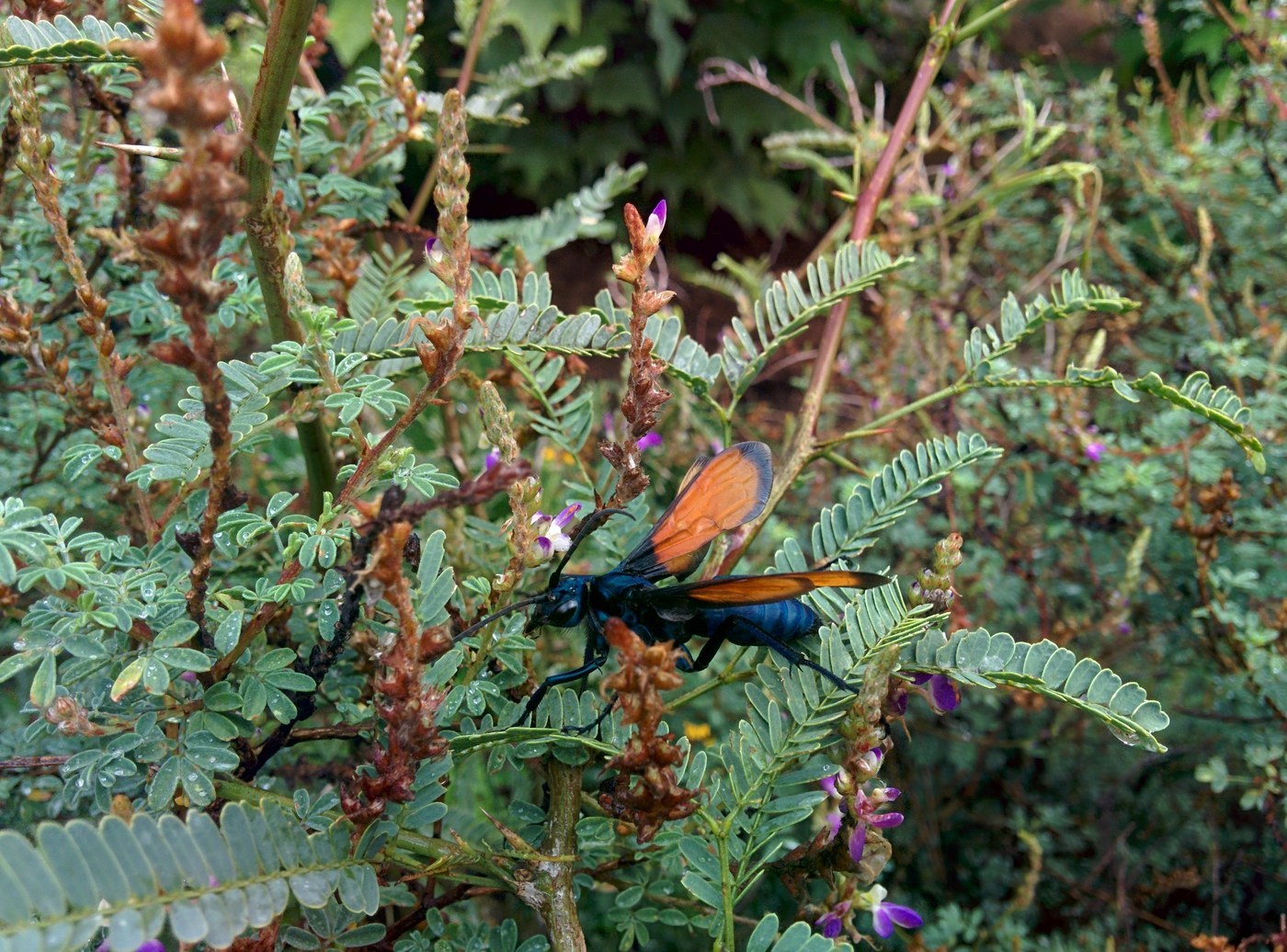
Key Visual Features
Tarantula hawks are among the largest wasps in the world and are hard to mistake once you know the color combination.
- Size: Very large, commonly 25–50 mm (1–2 inches) long, with some of the biggest individuals among the largest wasps found in their range.
- Color: A deeply iridescent metallic blue-black body paired with vivid burnt-orange to rust-red wings, an unusually striking combination.
- Body shape: Robust thorax, a narrow waist, and a smooth, elongated abdomen.
- Wings: Solid orange or reddish-orange, opaque-looking rather than clear, and often held out to the sides at rest.
- Legs: Very long, thin, and dangling, tipped with strong curved claws used for grappling prey on the ground.
- Antennae: Long, thin, and dark, often curled at the tips in females.
Where and When You'll See One
Tarantula hawks favor warm, dry habitats where their namesake prey is common.
- Look in deserts, arid scrubland, and dry open grasslands, especially in the warmer months of summer.
- Adults are frequently seen on the ground moving in a fast, jerky walk, searching burrows and leaf litter, or crawling into tarantula burrows.
- They are also commonly spotted visiting flowers, especially milkweed and mesquite blooms, where adults feed on nectar.
- Most active during the heat of the day in summer, often seen flying low and fast between ground level and low vegetation.
Similar-Looking Bugs
- Other spider wasps (Pompilidae): Share the thread-waisted body and spider-hunting behavior but are considerably smaller and lack the striking metallic blue-black-and-orange combination.
- Carpenter bees: Robust and dark like tarantula hawks but rounder, fuzzier, and lacking the vivid orange wings.
- Velvet ants (wingless female mutillid wasps): Fuzzy and often orange or red, but wingless and much smaller, moving across open ground rather than flying.
- Cicada killer wasps: Large like tarantula hawks but have yellow-and-black banded abdomens rather than a solid metallic blue-black body.
Quick ID Checklist
- Very large wasp, often over an inch long
- Metallic blue-black body contrasted with bright orange wings
- Extremely long, dangling legs with strong claws
- Fast, jerky walking behavior on open desert or scrubland ground
- Found in warm, arid habitats during summer, often on flowers or near burrows
Frequently asked questions
Why are the wings such a bright orange color?
The vivid orange to rust-red wing color is a natural pigmentation pattern characteristic of this wasp group and, along with the metallic blue-black body, is one of its most recognizable identification features.
How big does a tarantula hawk actually get?
They are among the largest wasps in the world, with many individuals reaching one to two inches in body length.
What habitat is most likely to have tarantula hawks?
Warm, dry environments such as deserts, arid scrubland, and open grasslands are the typical habitat, especially in regions that also support ground-dwelling tarantulas.
How can I tell a tarantula hawk from a cicada killer?
Cicada killers have a yellow-and-black banded abdomen and clear or lightly tinted wings, while tarantula hawks have a solid metallic blue-black body paired with distinctly opaque orange wings.
Tarantula Hawk identified by the community
Recent Tarantula Hawk finds identified with Bug Identifier.