Tarantula Identification Guide
Recognize this large, heavy-bodied, hairy spider by its size, thick legs, and ground-dwelling burrow habits.
Read the full Tarantula encyclopedia entry →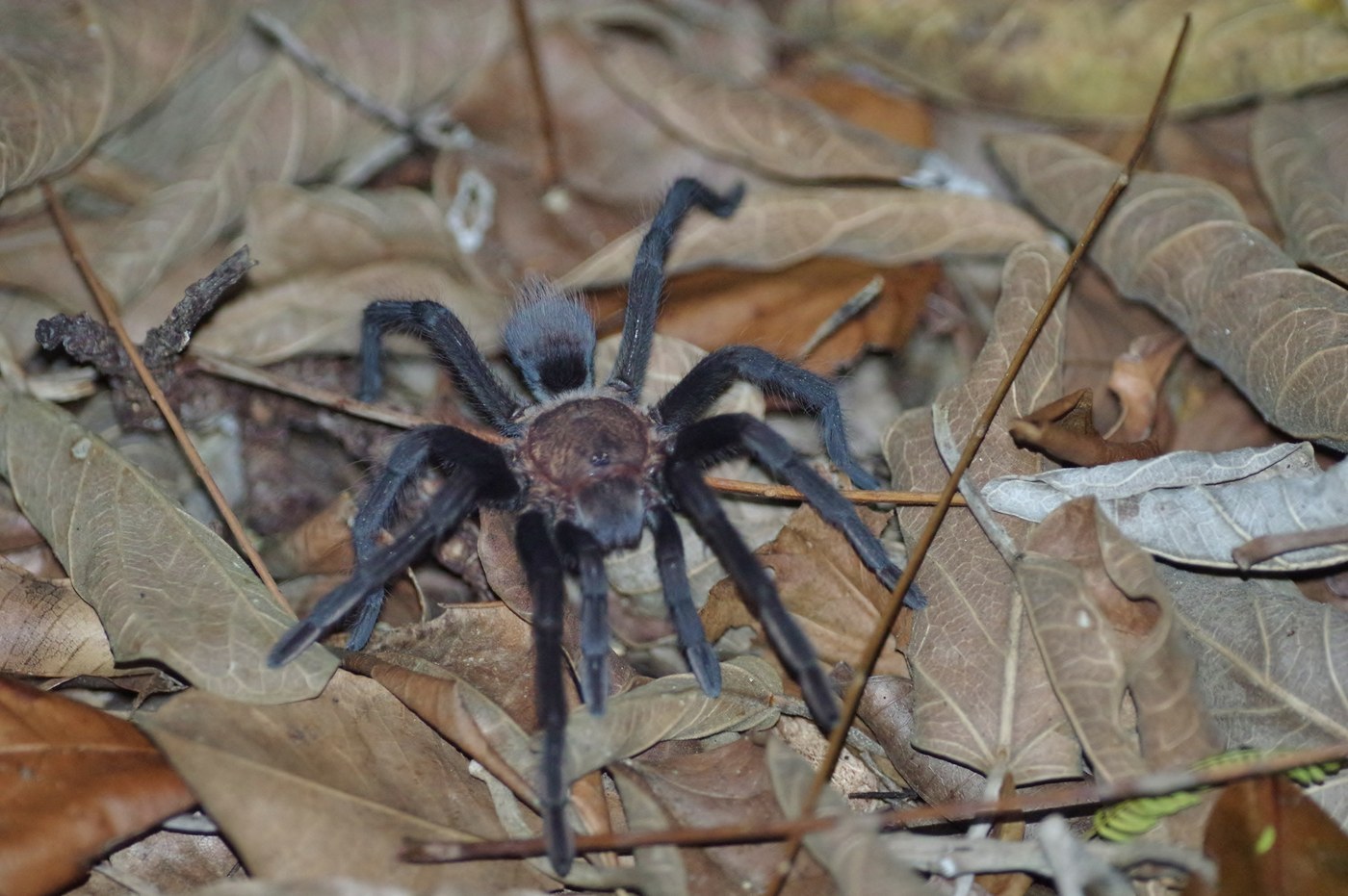
Key Visual Features
Tarantulas are among the largest spiders and are easy to distinguish from smaller house and garden spiders through sheer size and build:
- A robust, heavily built body, with leg spans in many species reaching 3 to 5 inches or more
- Dense, visible hair covering the legs and body, giving a fuzzy, velvety appearance
- Thick, muscular legs compared to the thin legs of most common spiders
- Two prominent, forward-facing fangs (chelicerae) that move up and down rather than side to side
- Coloring typically in earthy browns, tans, blacks, or greys, with some species showing reddish or orange leg hairs
- A relatively compact, rounded abdomen compared to the long legs
Where and When You'd See It
Tarantulas are ground-dwelling spiders, often found in burrows in dry, open habitats such as grasslands, deserts, and scrublands, though some species use natural crevices or logs instead of digging. They are largely nocturnal, tending to stay hidden in a burrow entrance or shelter during the day and emerging at night to move about. In many regions, mature males are most commonly seen wandering in the open during late summer and fall as they search for mates.
Similar-Looking Bugs
- Wolf spiders are also large and hairy but are much smaller overall, with proportionally thinner legs and a more mottled brown pattern; they do not reach tarantula-scale size.
- Huntsman spiders have a similarly large leg span but a flatter body and smoother, less densely hairy appearance, along with legs that extend more sideways in a crab-like posture.
- Fishing spiders share a large size but have longer, thinner legs and are typically found near water rather than in burrows.
Quick ID Checklist
- Very large size with a thick, robust body
- Dense, visible hair covering legs and body
- Thick, muscular legs compared to typical spiders
- Fangs that point downward and move vertically
- Found in a burrow or ground shelter in dry, open habitat
Frequently asked questions
What is the easiest way to confirm a large spider is a tarantula?
Check for dense, visible body hair combined with thick, muscular legs and an overall size well beyond typical house or garden spiders — tarantulas are noticeably bulkier than similarly leggy spiders.
How can I tell a tarantula from a wolf spider?
Tarantulas are considerably larger and have thicker legs and denser body hair, while wolf spiders, though hairy, are smaller with thinner legs and more mottled brown patterning.
Why do I see more tarantulas wandering in late summer?
In many regions, this is when mature males leave their burrows to search for mates, making them far more visible out in the open than usual.
Do tarantulas build webs to catch prey?
Most species do not rely on webs for capturing prey; they are ground dwellers that use silk mainly to line their burrows rather than to spin a prey-catching web.
Tarantula identified by the community
Recent Tarantula finds identified with Bug Identifier.