
Tawny Emperor Identification Guide
A hackberry-loving lookalike of the Hackberry Emperor, identified by its plainer forewing and faint hindwing eyespots.
Read the full Tawny Emperor encyclopedia entry →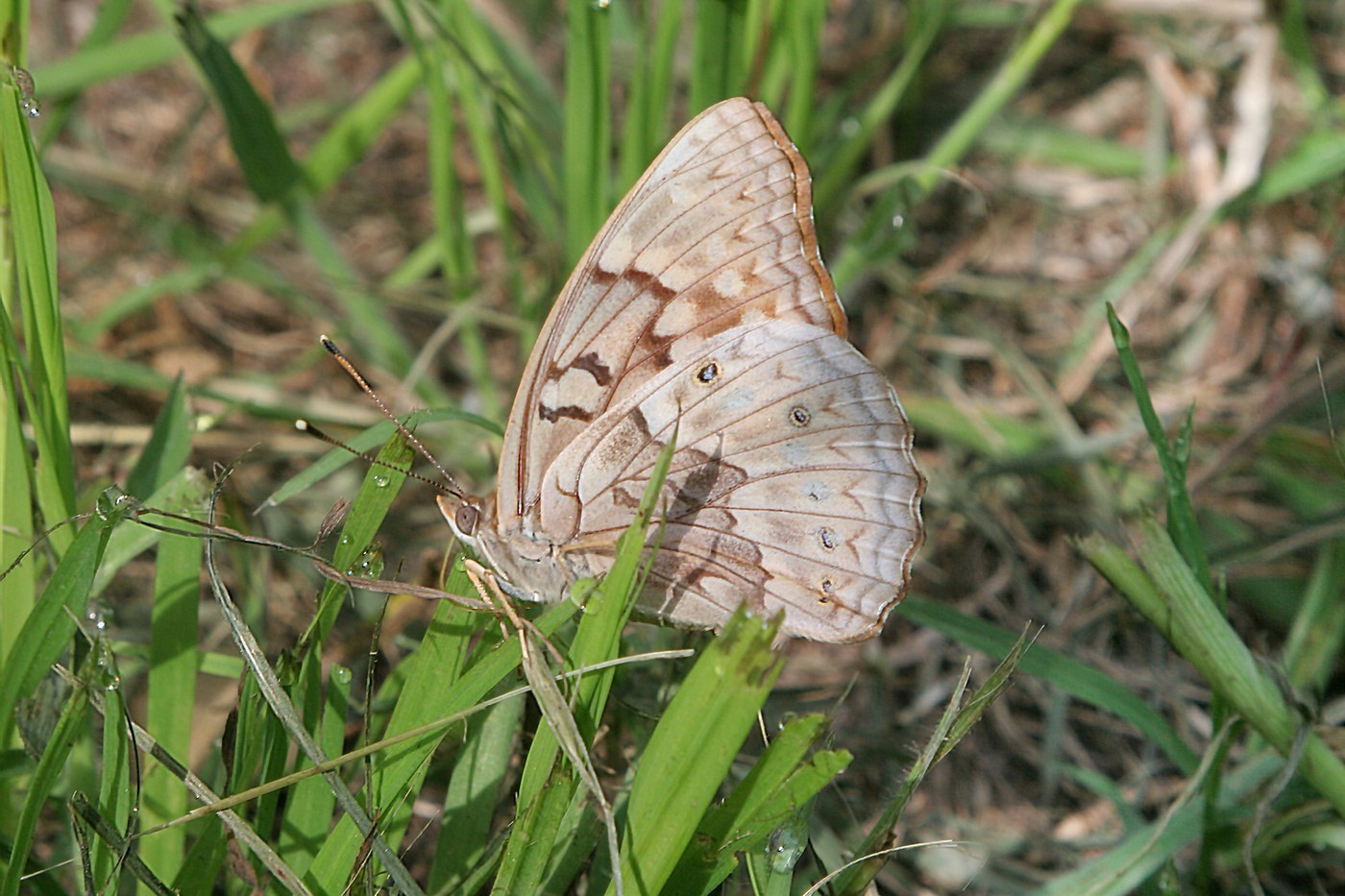
Key Visual Features
The Tawny Emperor (Asterocampa clyton) is a medium-sized butterfly, slightly larger than its close relative the Hackberry Emperor, with a wingspan of roughly 2 to 2.8 inches.
- Upperside is a warm tawny-orange to golden brown, generally plainer and less contrasty than the Hackberry Emperor
- Forewing lacks the solid black spot in the discal cell that the Hackberry Emperor shows, and it lacks crisp white spots near the wingtip
- Hindwing eyespots along the outer margin are faint, reduced, or sometimes nearly absent, compared to the more defined eyespots of the Hackberry Emperor
- Underside is pale grayish-tan with fine mottling, giving good camouflage against tree bark
- Body is stout with clubbed antennae; flight is quick, darting, and often close to tree trunks
Where and When to Look
Like the Hackberry Emperor, this species depends entirely on hackberry trees (Celtis species) as its larval host plant, so it is found in the same wooded habitats: woodland edges, river bottoms, shaded lanes, and parks with mature hackberries across the eastern and central United States. Adults perch on trunks and branches at various heights and feed on sap, rotting fruit, and mud rather than flower nectar. Look for them from late spring into late summer, with overlapping broods farther south.
Similar-Looking Species
- Hackberry Emperor: the most likely confusion species; separate the two by checking the forewing discal cell (Tawny Emperor lacks the solid black spot) and by noting the Hackberry's crisper white apical spots and bolder hindwing eyespots
- Anglewings (Question Mark, Comma): share a bark-camouflaged underside but have ragged, notched wing margins, unlike the smoother wing outline of the Tawny Emperor
- Satyrs and wood-nymphs: also show eyespots but occupy grassy habitats rather than sticking close to hackberry trees, and lack the emperor's overall tawny tone
Quick ID Checklist
- Warm tawny-orange, relatively plain upperside
- No black spot in the forewing discal cell
- Faint or reduced hindwing eyespots compared to Hackberry Emperor
- Perches on bark and feeds on sap or fruit, not flowers
- Restricted to areas with hackberry trees
Frequently asked questions
What is the main difference between a Tawny Emperor and a Hackberry Emperor?
The Tawny Emperor lacks the solid black spot in the forewing discal cell and the crisp white apical spots that the Hackberry Emperor shows, and its hindwing eyespots are fainter.
Will I find Tawny Emperors away from hackberry trees?
Rarely; the species is closely tied to hackberry trees as its host plant, so its presence almost always tracks the location of mature Celtis trees.
Does the Tawny Emperor visit flowers for nectar?
It mostly avoids flowers, instead feeding on tree sap, rotting fruit, and damp soil or mud.
What time of year are Tawny Emperors most commonly seen?
Adults are active from late spring into late summer, with multiple broods occurring in warmer parts of their range.