
Thorn Bug Identification Guide
Spot this small treehopper disguised as a sharp plant thorn growing right out of a stem.
Read the full Thorn Bug encyclopedia entry →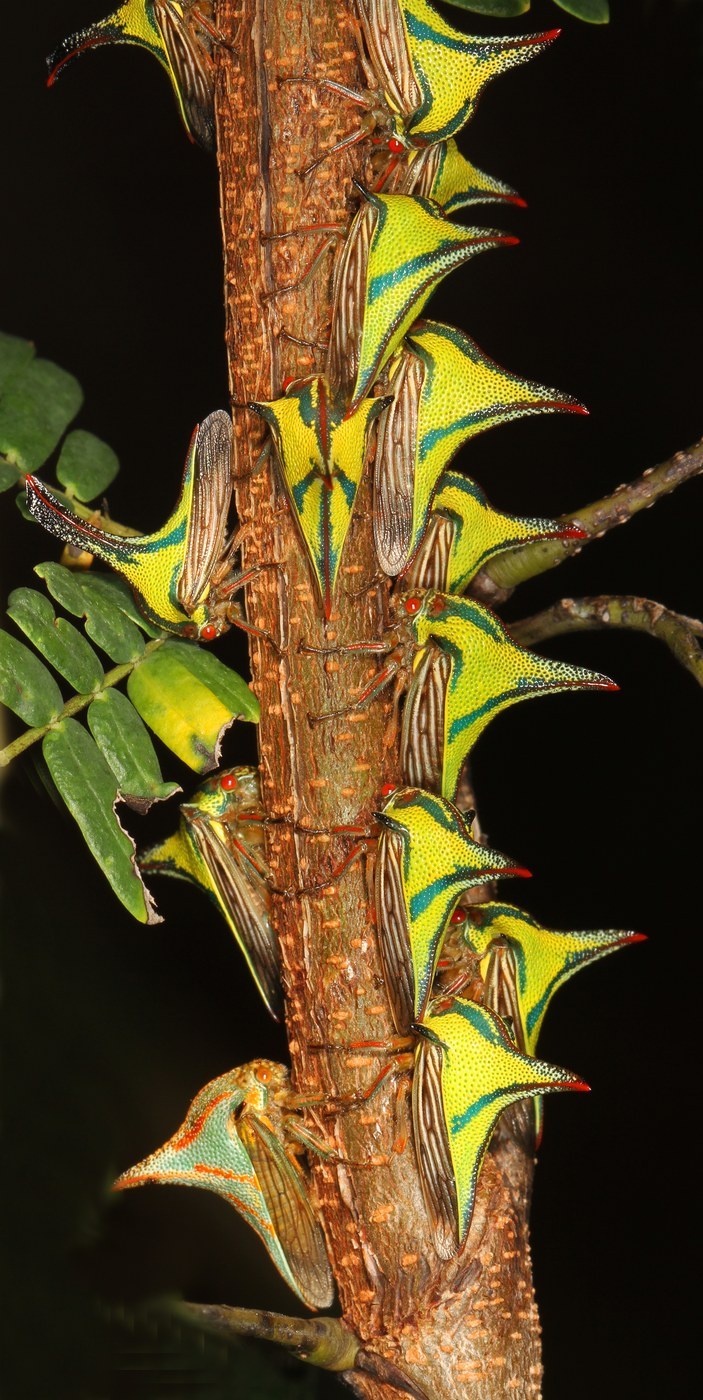
Key Visual Features
- Very small insect, typically under half an inch (1 cm) long, with a body shape dominated by an enlarged pronotum (the plate behind the head).
- The pronotum is extended into one or more sharp, thorn-like spikes, often curved or angled, giving the insect its name.
- Coloring is usually brown, tan, or greenish, closely matching the stem or twig it sits on.
- The true body and legs are small and mostly hidden beneath the oversized thorn-shaped shield.
- Wings are present but folded and largely concealed under the pronotum extension at rest.
- Antennae are short and easily overlooked against the thorn-like silhouette.
Where and When You'd See It
- Found clinging to the stems, twigs, and branches of shrubs and trees, often in small clustered groups along a single stem.
- Most commonly seen during the growing season in warm climates where host plants are actively growing new shoots.
- Active during the day, typically remaining still and relying on camouflage rather than fleeing when approached.
- Frequently found in gardens, hedgerows, and shrubby edges rather than deep forest interiors.
Similar-Looking Species
- Actual plant thorns are the most common false match; true thorn bugs can be distinguished by their slightly glossy or textured surface, tiny visible legs at the base, and the tendency for several individuals to be spaced along the same stem in a row.
- Other treehoppers may have variously shaped pronotum extensions (humps, horns, or ridges) rather than the sharp single or double thorn shape typical of thorn bugs.
- Aphids may cluster on the same stems but are soft-bodied, rounded, and lack the hardened thorn-shaped shield.
Quick ID Checklist
- Tiny body under half an inch, mostly hidden by an enlarged pronotum.
- Pronotum shaped into a sharp, thorn-like spike matching stem color.
- Found clustered in a row along a single stem or twig.
- Little visible leg or wing detail at first glance.
- Remains motionless when approached, relying on camouflage.
Behavior Notes
- Groups typically arrange themselves in a single-file row along a stem, all facing the same general direction, which is a helpful pattern to watch for.
- If disturbed, individuals may shift position slightly or drop from the stem rather than flying away immediately.
- Different life stages can appear together on the same stem, with smaller, less developed thorn shapes belonging to younger nymphs and fuller, sharper spikes on mature adults.
Frequently asked questions
How do I tell a thorn bug from a real thorn on the plant?
Look closely for tiny legs at the base and a slightly glossy, textured surface; thorn bugs are also often found in a spaced row of several individuals along the same stem, which real thorns rarely form.
What part of the thorn bug forms the spike shape?
The enlarged pronotum, the plate located just behind the head, is extended and hardened into the sharp thorn-like projection that gives the insect its camouflaged appearance.
Where on a plant would I look for thorn bugs?
Check the stems and twigs of shrubs and young tree growth, since thorn bugs cling directly to these surfaces and rely on blending in with the plant's own thorns or bark texture.
Do thorn bugs move around much?
They tend to remain still on their host stem during the day, relying on camouflage, and are more often noticed by careful observation than by movement.