
Thorn Bug
Umbonia crassicornis
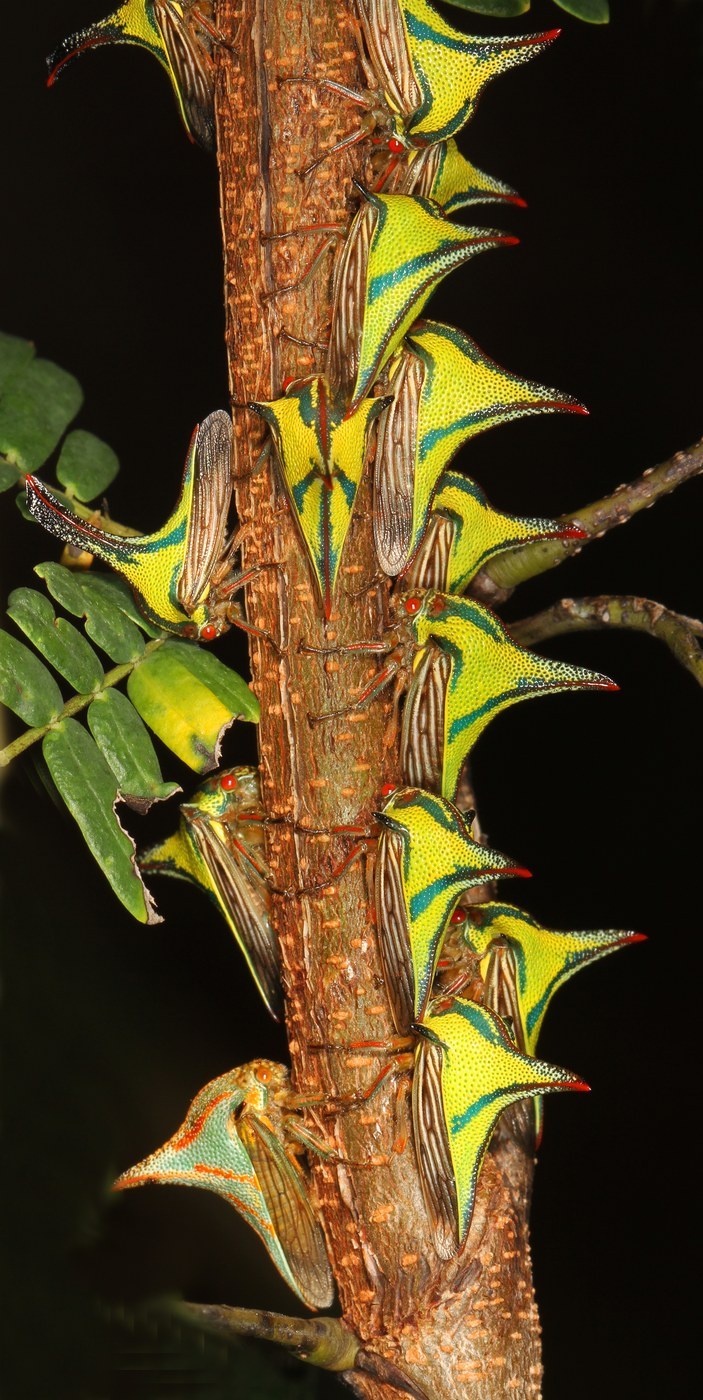
A tiny treehopper whose greatly enlarged, thorn-shaped pronotum lets it disappear in plain sight among the real thorns of the branches it clusters on.
- Size
- 8-11 mm
- Habitat
- Branches and stems of leguminous trees and shrubs
- Danger
- Harmless
Spotted a bug like this?
Identify any bug or insect from a photo, free.
Overview
The thorn bug is a small treehopper native to the tropical and subtropical Americas, ranging from the southern United States through Central America and parts of South America and the Caribbean, and it has also become established in other warm regions where suitable host trees grow. It belongs to the family Membracidae, a large group of Hemiptera known for the dramatically enlarged, often bizarrely shaped pronotum, the plate covering the thorax, which in this species is drawn out into a sharp, laterally flattened spine resembling a thorn.
This exaggerated body shape is a striking example of camouflage, allowing individuals, and especially clusters of thorn bugs lined up along a stem, to closely mimic a row of woody thorns to the eye of a potential predator. Colours range from green to orange, red, or brown depending on age, and nymphs and adults are commonly found together in dense groups feeding on the same host plant.
Thorn bugs feed on plant sap and are frequently attended by ants, which protect them from predators in exchange for the sugary honeydew the treehoppers excrete as a by-product of feeding, an example of a mutualistic relationship common among sap-feeding Hemiptera.
How to Identify
- Small, wedge-shaped body with a greatly enlarged pronotum extended backward and upward into a sharp, laterally compressed thorn-like spine
- Colouring varies with age and can be green, yellow, orange, red, or brown, often with darker mottling
- Found in dense clusters of nymphs and adults lined up along a single branch or stem, enhancing the thorn-mimicking effect
- Piercing-sucking mouthparts typical of true bugs, used to feed on plant sap rather than to bite
- Nymphs are smaller and often more brightly coloured than adults, lacking the fully developed thorn shape until later instars
- Distinguished from true plant thorns by careful inspection revealing legs, antennae, and slight movement when disturbed
Habitat & Range
Thorn bugs are found on the branches and young stems of a variety of trees and shrubs, particularly members of the legume family such as mimosa, acacia, and related species, in warm subtropical and tropical climates. Their native range extends from the southern United States, including Florida and Texas, south through Mexico, Central America, and into parts of South America and the Caribbean. They are active year-round in frost-free climates, with populations often building up on host trees during the warmer growing season.
Behavior & Diet
Thorn bugs feed in aggregations of nymphs and adults on the stems of host plants, inserting their needle-like mouthparts into plant tissue to feed on sap, which can occasionally stress ornamental or garden host plants when populations are dense. Feeding produces excess sugary honeydew, which is commonly collected by ants that tend the thorn bugs in a mutualistic relationship, gaining a food source while providing the treehoppers some protection from predators and parasites. Female thorn bugs also show a degree of maternal care, sometimes remaining near their egg masses and offspring, an unusual trait among true bugs. The thorn-like pronotum serves primarily as camouflage against visually hunting predators such as birds, allowing groups of thorn bugs to blend in with the actual thorns and buds of the host plant.
Life Cycle
Females lay eggs in slits cut into the bark or stems of the host plant using a saw-like ovipositor, sometimes covering the egg mass with a frothy secretion for protection. Nymphs hatch and feed in groups on the same stem, passing through several instars with increasingly developed pronotal spines, in an incomplete metamorphosis without a pupal stage. Development from egg to adult typically takes a few weeks to a couple of months depending on temperature, and in the warm climates thorn bugs inhabit, multiple overlapping generations can occur throughout the year. Adults continue to feed and reproduce on the same or nearby host plants, often remaining in loose aggregations with nymphs of various stages.
Frequently asked questions
Why does the thorn bug look like a thorn?
Its pronotum, the plate covering the thorax, is greatly enlarged and shaped into a sharp spine, and when many individuals line up along a stem they closely mimic a row of real thorns, helping to avoid detection by predators.
Do thorn bugs bite?
They feed only on plant sap using piercing-sucking mouthparts and are not known to bite people.
Why are ants often seen near thorn bugs?
Ants collect the sugary honeydew that thorn bugs excrete while feeding on plant sap, and in return the ants provide the treehoppers some protection from predators, a mutualistic relationship.
What do thorn bugs eat?
They feed exclusively on the sap of host plants, particularly legume trees and shrubs, by piercing the stem with specialised mouthparts.
Thorn Bug guides
In-depth guides for identifying, understanding, and living alongside Thorn Bug.
Other bugs you may enjoy
Bagrada Bug
Arid gardens, crucifer fields, desert-adjacent croplands
Assassin Bug
Gardens, meadows, and vegetation worldwide
Water Boatman Bug
Ponds, lakes, and slow-moving freshwater
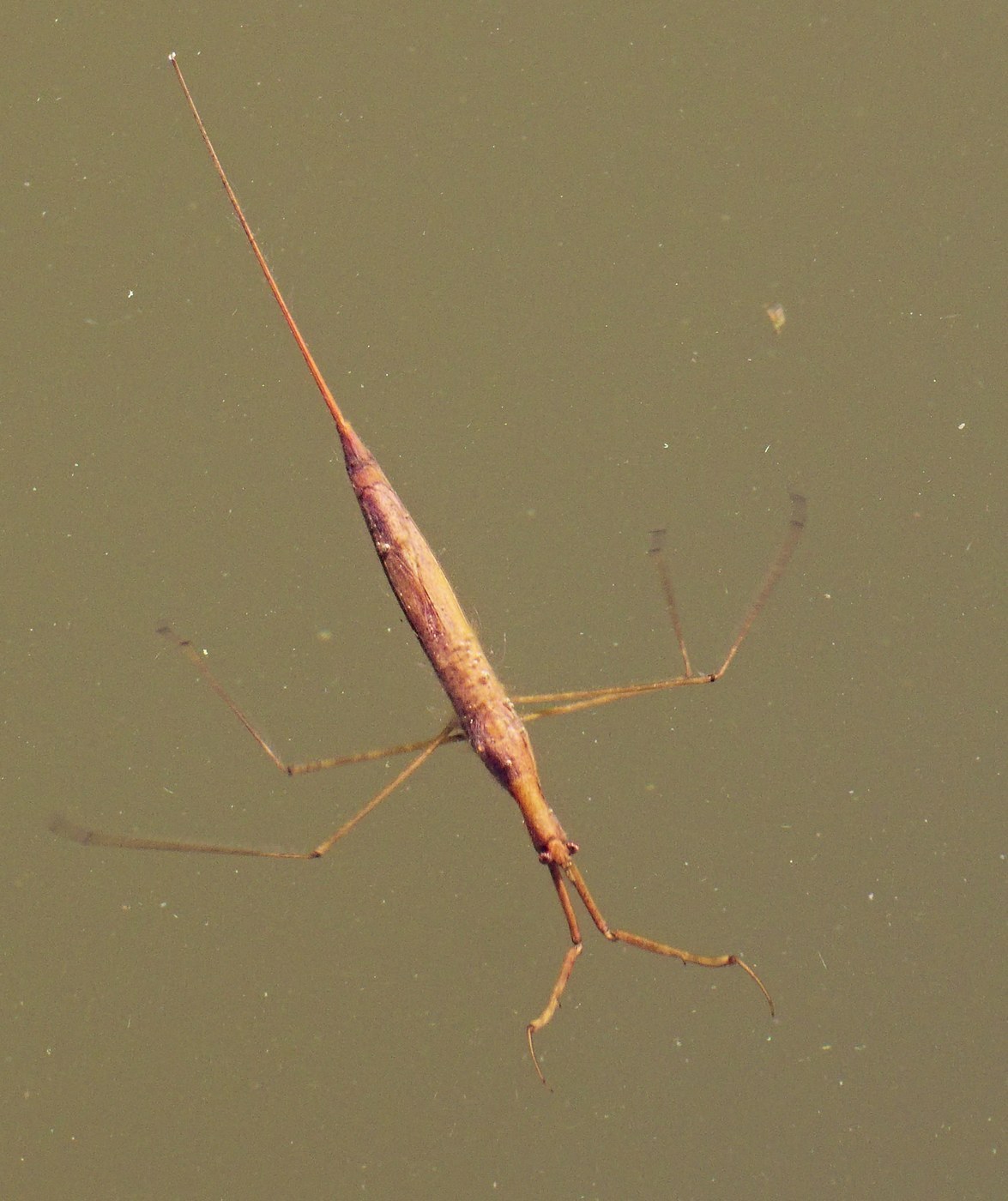
Water Stick Insect
Still and slow-moving water with dense submerged vegetation
Rough Stink Bug
Tree bark, woodlands, orchards, and shrubby vegetation
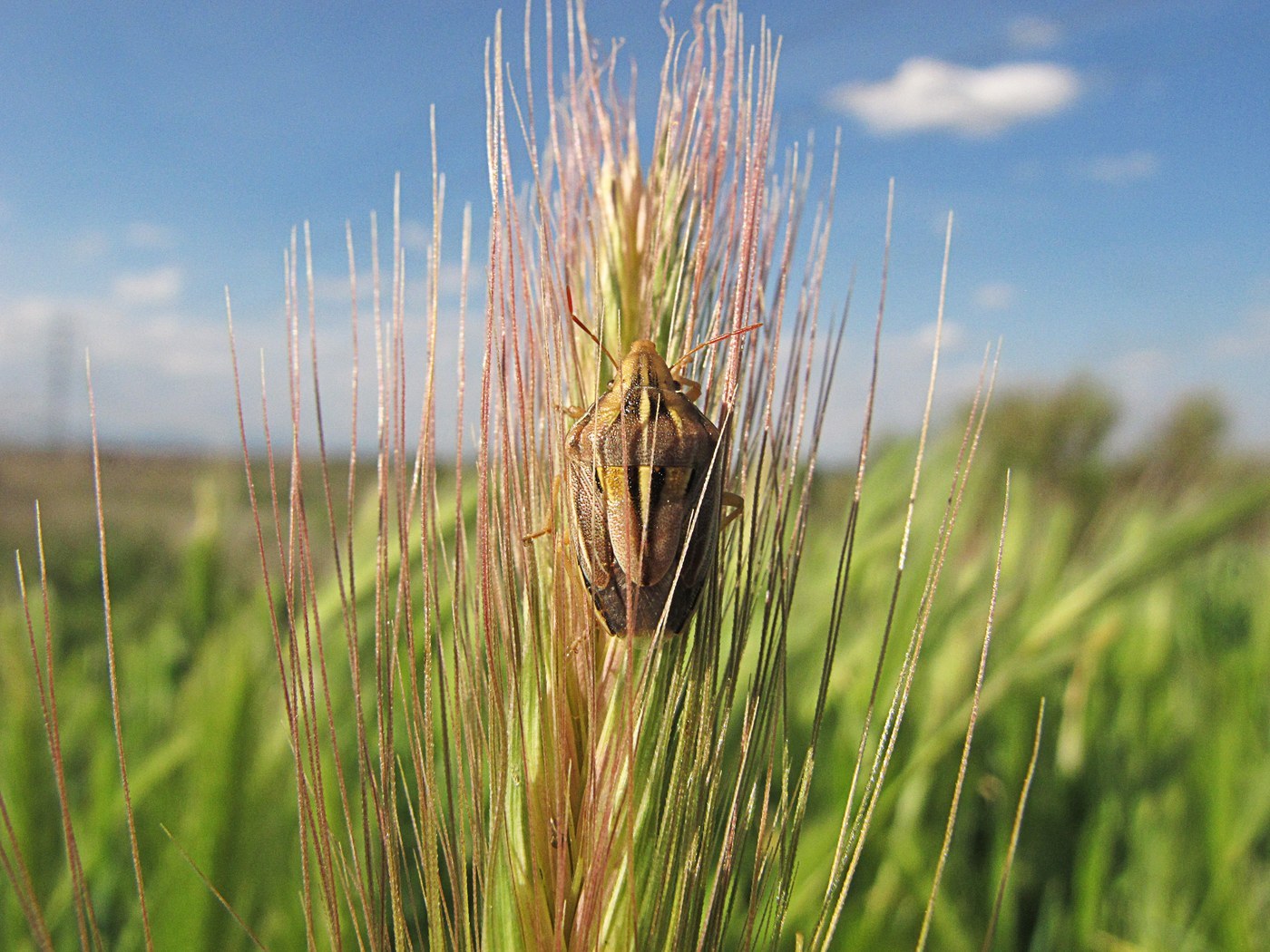
Stink Bug
Gardens, crop fields, and woodlands across temperate and subtropical regions
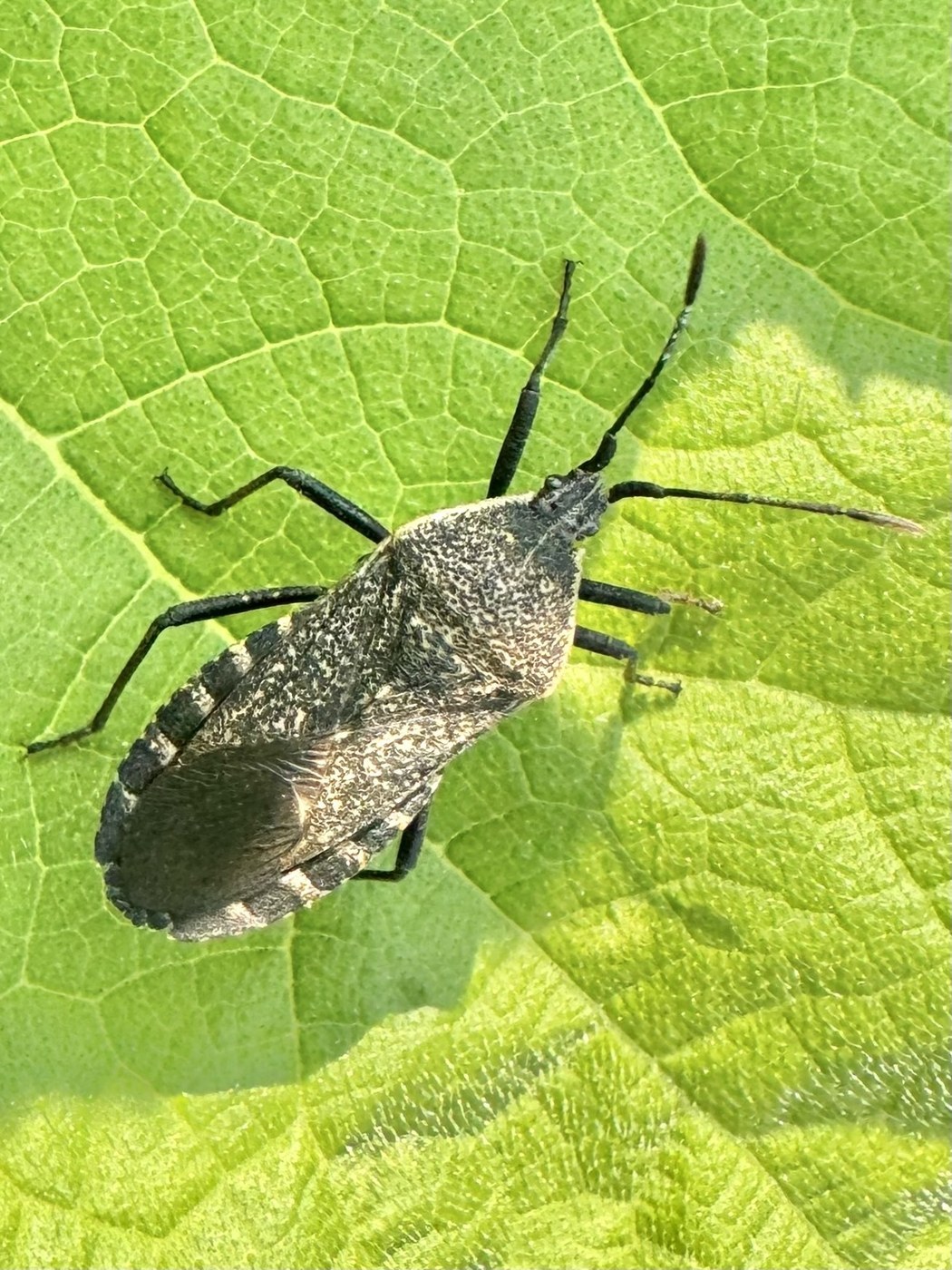
Squash Bug
Vegetable gardens and farm fields growing squash, pumpkin, and other cucurbits
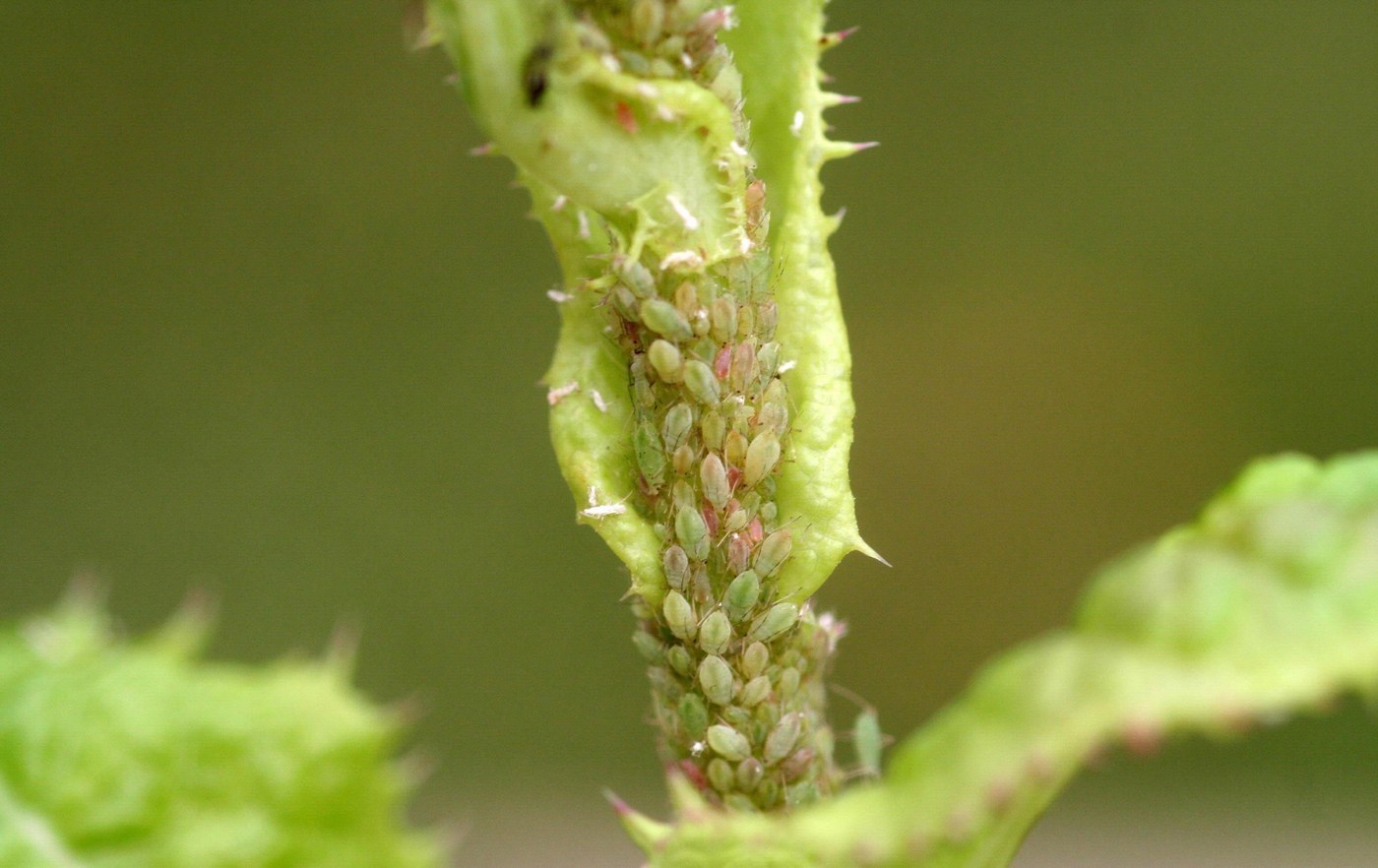
Aphid
On stems, leaves, and buds of a very wide range of host plants
Woolly Aphid
Bark crevices, root collars, and twigs of apple, elm, and alder trees
Whitefly
Greenhouses, gardens, and undersides of leaves on host plants
Water Measurer
Quiet edges of ponds, marshes, and slow streams
Two-Spotted Stink Bug
Gardens and fields with potato and nightshade-family plants