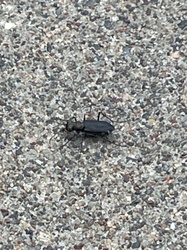
Tiger Beetle Identification Guide
Spot this fast-running, metallic-bodied predator by its long legs, bulging eyes, and sprinting bursts across open ground.
Read the full Tiger Beetle encyclopedia entry →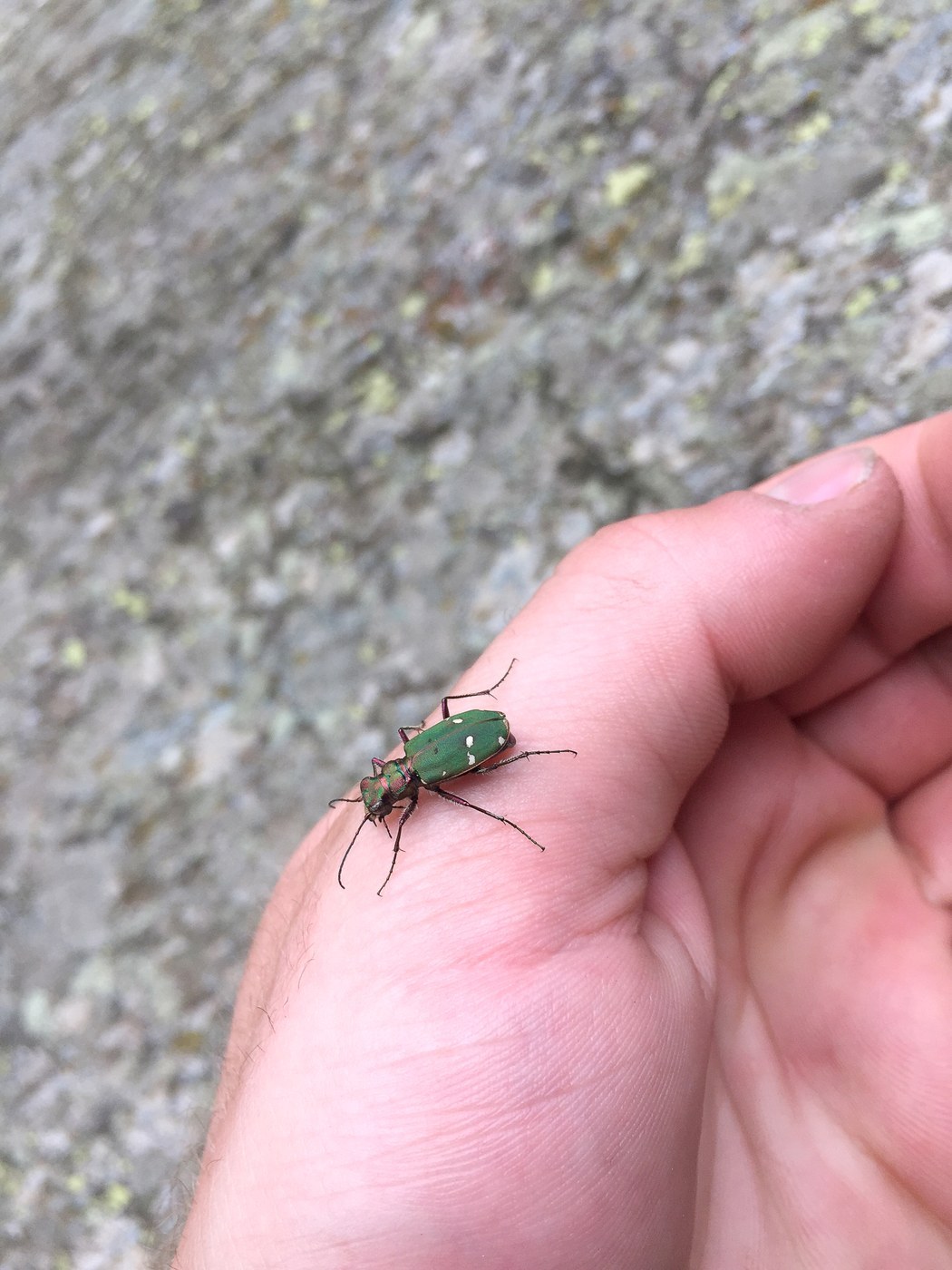
Key Visual Features
Tiger beetles are sleek, fast-moving predatory beetles named for their speed and hunting style rather than any resemblance to a tiger.
- Size: Typically 0.4 to 0.8 inches (10-20 mm) long, slender-bodied.
- Color: Often brilliantly metallic — iridescent green, bronze, blue, or purple — though some species are duller brown or tan with pale markings for sand camouflage.
- Body shape: Long, slender, and somewhat flattened, with a distinctly narrow "waist" between the thorax and abdomen.
- Wings: Hardened elytra frequently patterned with pale cream or white spots, dashes, or wavy lines that help distinguish species; capable of quick, low flight bursts.
- Legs: Notably long and thin relative to body size, built for extremely fast running across open ground.
- Eyes: Large, bulging compound eyes that give the head a wide, prominent appearance and excellent vision for spotting prey.
- Mandibles: Long, sickle-shaped, crossed jaws visible even at rest, used to seize prey.
Where and When You'd See One
Tiger beetles favor open, sunny ground with sparse vegetation — sandy trails, beaches, dry stream beds, dirt paths, and bare patches in fields. They are most active on warm, sunny days from late spring through summer, darting ahead of walkers along paths in short, rapid sprints before stopping abruptly. Many species are diurnal, though a few are active at dusk. Larvae live in vertical burrows in bare soil and ambush prey from the burrow entrance.
Similar-Looking Bugs
- Ground beetles: Generally more robust, darker, and slower-moving, lacking the tiger beetle's bulging eyes and extremely long legs; ground beetles rarely show the same metallic sheen or pale wing-cover markings.
- Fireflies (some day-flying species): Softer-bodied, non-metallic, and much slower on foot.
- Metallic wood-boring beetles (Buprestidae): Also metallic, but with a more bullet-shaped, tapered body and shorter legs; they're associated with wood and trees rather than open ground sprinting.
- Rove beetles: Elongated and fast on foot, but with short wing covers exposing much of the abdomen, unlike the fully wing-covered tiger beetle.
Quick ID Checklist
- Long, thin legs built for rapid sprinting
- Large, bulging eyes and prominent crossed mandibles
- Metallic green, bronze, or blue sheen (or pale sand-camouflaged tan)
- Pale spots or wavy lines on the wing covers
- Found darting in short bursts on open sunny trails or sand
Frequently asked questions
What makes a tiger beetle easy to identify in the field?
Its behavior is a strong clue — tiger beetles sprint rapidly a short distance, stop abruptly, and repeat this pattern along open sandy or dirt trails, faster than most other ground-dwelling beetles.
Are all tiger beetles metallic-colored?
Many are brilliantly iridescent green, bronze, or blue, but some species that live on pale sand are duller tan or brown, which helps them blend into their habitat.
How do tiger beetles differ from ground beetles?
Tiger beetles have noticeably longer legs, larger bulging eyes, and prominent crossed mandibles, and they move in fast, darting sprints, whereas ground beetles are typically stockier and slower-moving.
Where is the best place to look for tiger beetles?
Check open, sunlit areas with bare or sparsely vegetated ground, such as sandy trails, beaches, or dry creek beds, especially on warm days.
Tiger Beetle identified by the community
Recent Tiger Beetle finds identified with Bug Identifier.