
Tiger Centipede Identification Guide
Spot the bold black-and-yellow banding that gives the tiger centipede its striking, striped appearance.
Read the full Tiger Centipede encyclopedia entry →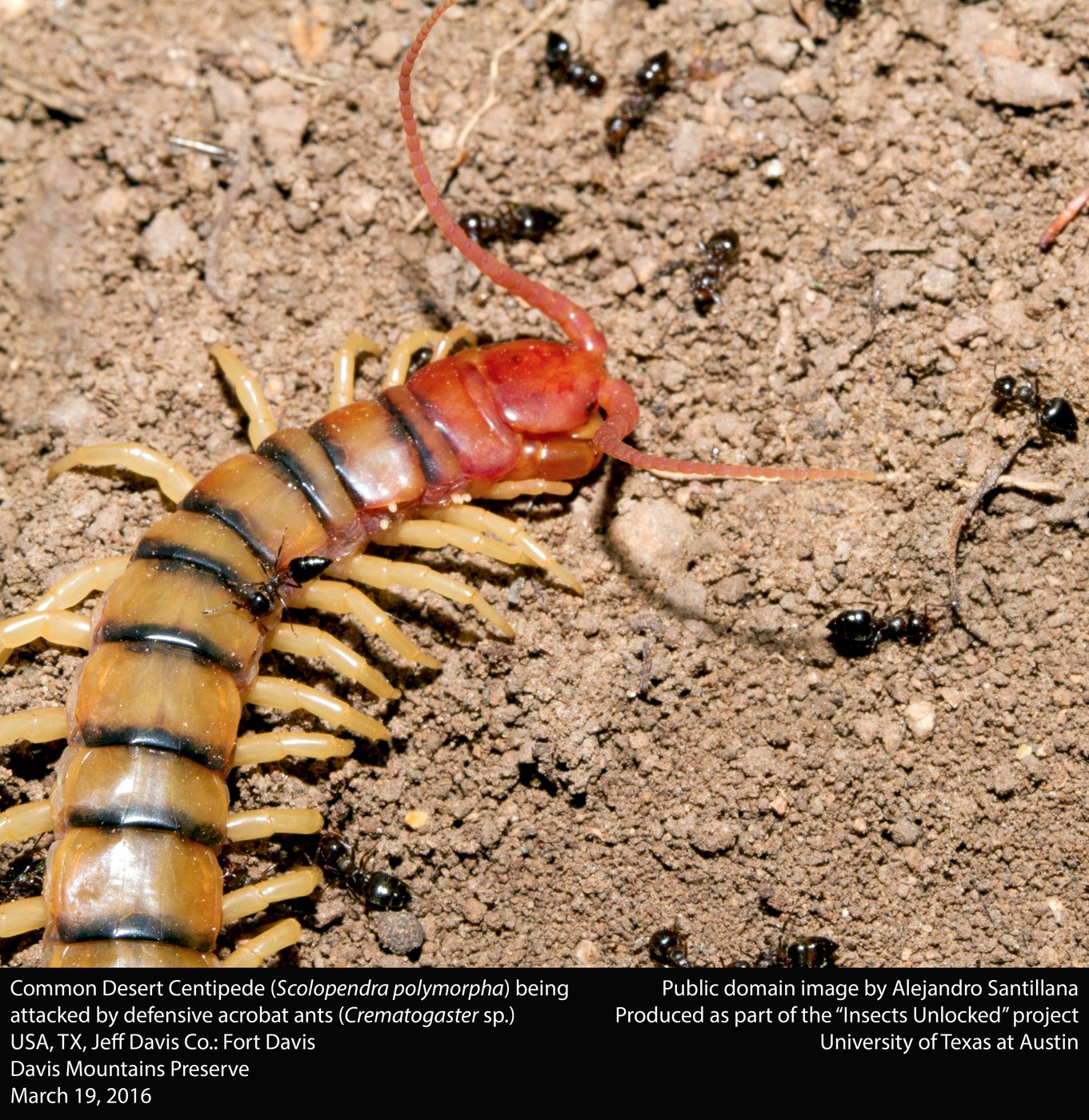
Key Visual Features
- Long, flattened, segmented body with alternating dark (black or deep brown) and yellow-orange bands, resembling tiger stripes
- One pair of legs per body segment, with legs often tinted yellow or orange to match the banding
- A pair of long, whip-like antennae at the front and a pair of rear legs that trail backward, sometimes mistaken for antennae
- Modified front legs (forcipules) tucked just behind the head, used to grasp prey
- Adults typically range from about 3 to 6 inches long depending on species and region
- Smooth, glossy exoskeleton that reflects light
Where and When You'd See Them
- Found under rocks, logs, bark, and leaf litter in warm, humid climates
- Prefers moist microhabitats and is mostly active after dark, hiding by day
- Most commonly encountered during warm months when turning over yard debris or garden stones
- Ranges across parts of the southern and southwestern regions in suitable warm-climate habitats
Similar-Looking Bugs
- Common house centipedes are much smaller, grayish with dark stripes, and have extremely long, delicate legs rather than bold banding.
- Giant desert centipedes may share a similar size but usually show a more uniform reddish or orange body with a dark head rather than distinct alternating bands.
- Millipedes are rounder-bodied, slower-moving, and have two leg pairs per segment instead of the tiger centipede's single pair.
- Wireworms are far smaller, stiff, and shiny with almost no visible legs compared to the tiger centipede's obvious banded, leggy body.
Quick ID Checklist
- Bold alternating black/dark and yellow-orange bands down a long, flat body
- One leg pair per segment, legs tinted to match body bands
- Long front antennae plus trailing rear legs
- Found under logs, bark, or stones in warm, humid areas
- Mostly active at night, hidden during the day
Frequently asked questions
What makes the tiger centipede's banding different from other centipedes?
Its stripes alternate sharply between dark and yellow-orange bands running the full length of the body, giving a more contrasted, tiger-like pattern than the subtler striping seen on species like the house centipede.
How do I tell the head end from the tail end?
The head carries the long sensory antennae and a pair of short, curved forcipules used for grasping, while the tail end has a single pair of longer rear legs that can look like a second set of antennae from a distance.
Where is the best place to look for a tiger centipede?
Check under logs, loose bark, flat rocks, and thick leaf litter in warm, humid areas, since they avoid direct sun and dry open ground.
Are tiger centipedes active during the day?
They are primarily nocturnal, staying hidden in cover during daylight and emerging to move about after dusk.