
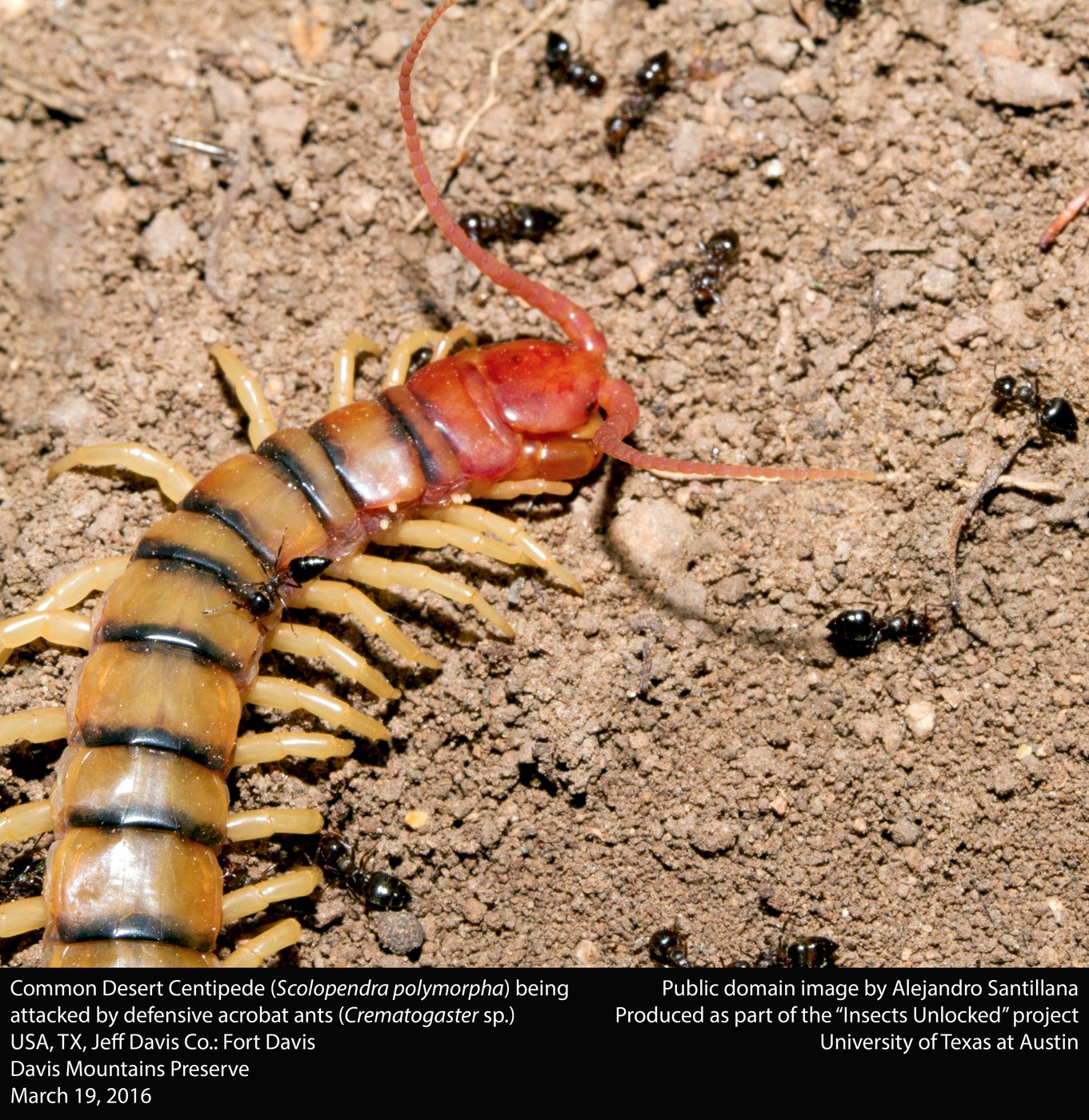
Tiger Centipede
Scolopendra polymorpha
A large, banded desert centipede with alternating dark and pale segments reminiscent of tiger stripes, capable of a fast, muscular scuttle across sand and rock.
- Size
- 8-15 cm (3-6 in) long
- Habitat
- Arid deserts, scrubland, and rocky terrain of the southwestern US and Mexico
- Danger
- Bites
Spotted a bug like this?
Identify any bug or insect from a photo, free.
Overview
The tiger centipede is a sizable member of the genus Scolopendra found throughout arid and semi-arid habitats of the southwestern United States and northern Mexico. Its common name refers to the alternating light and dark banding across its body segments, which can range from tan and brown to more vivid orange and black combinations depending on the population.
As one of the larger centipedes in its range, it is an efficient nocturnal predator of insects, spiders, and other small animals, using a powerful bite delivered through a pair of venom-injecting forcipules to subdue prey. It is highly adapted to dry conditions, remaining hidden in burrows or under rocks during the heat of the day and emerging to hunt after dark.
How to Identify
- Elongated, segmented body with alternating banded pattern in shades of tan, brown, orange, or yellow
- 21 or 23 pairs of legs depending on species and age, with the last pair often elongated and trailing
- Robust, flattened head bearing a pair of long antennae and forcipules (venom claws) beneath the head
- Adults commonly reach 8-15 cm in length
- Glossy, hardened exoskeleton compared to the softer look of house centipedes
- Distinguished from other Scolopendra species by its more subdued, banded coloring rather than solid or bright red-and-black patterning
Habitat & Range
Native to the arid and semi-arid regions of the southwestern United States, including California, Arizona, Nevada, and New Mexico, extending into northern Mexico. It favors desert scrub, rocky outcrops, and sandy soils, sheltering under rocks, logs, or in burrows during the day and emerging at night, especially after rain or during cooler evening hours.
Behavior & Diet
Tiger centipedes are active nocturnal hunters, preying on insects, spiders, scorpions, and other small invertebrates using speed and a venomous bite delivered through their forcipules. They are solitary and territorial, avoiding one another outside of mating encounters, and rely on burrows or natural crevices to escape the extreme daytime heat of their desert habitat. As mid-level predators, they help control insect and arachnid populations and are in turn preyed upon by owls, roadrunners, and other desert predators.
Life Cycle
Females lay a clutch of eggs in a burrow or sheltered chamber and coil around them, guarding and grooming the eggs until they hatch, a behavior typical of the genus Scolopendra. Young centipedes hatch with the adult number of legs and segments and grow through a series of molts, remaining under maternal protection for a period after hatching. Maturity can take a year or more, and adults may live for several years in favorable desert conditions.
Frequently asked questions
Why is it called a tiger centipede?
The name refers to the alternating dark and light banding across its body segments, which resembles tiger stripes.
Where do tiger centipedes live?
They are native to arid deserts and scrubland of the southwestern United States and northern Mexico.
What do tiger centipedes eat?
They hunt insects, spiders, scorpions, and other small invertebrates at night using their venomous forcipules.
Are tiger centipedes active during the day?
No, they shelter under rocks or in burrows during daylight and become active after dark, especially in cooler or humid conditions.
Tiger Centipede guides
In-depth guides for identifying, understanding, and living alongside Tiger Centipede.
Other bugs you may enjoy
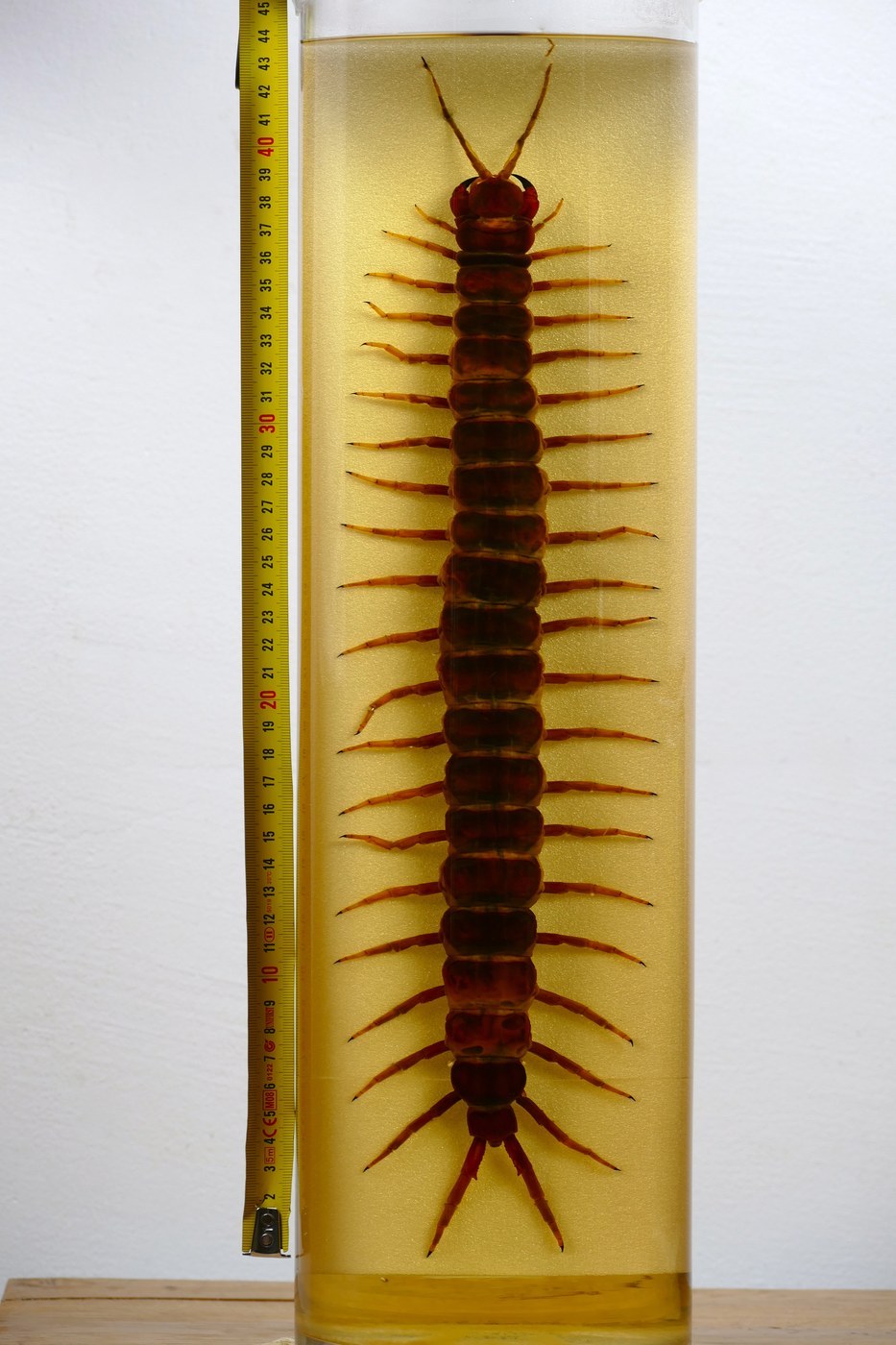
Amazonian Giant Centipede
Tropical rainforests and caves of northern South America and nearby Caribbean islands
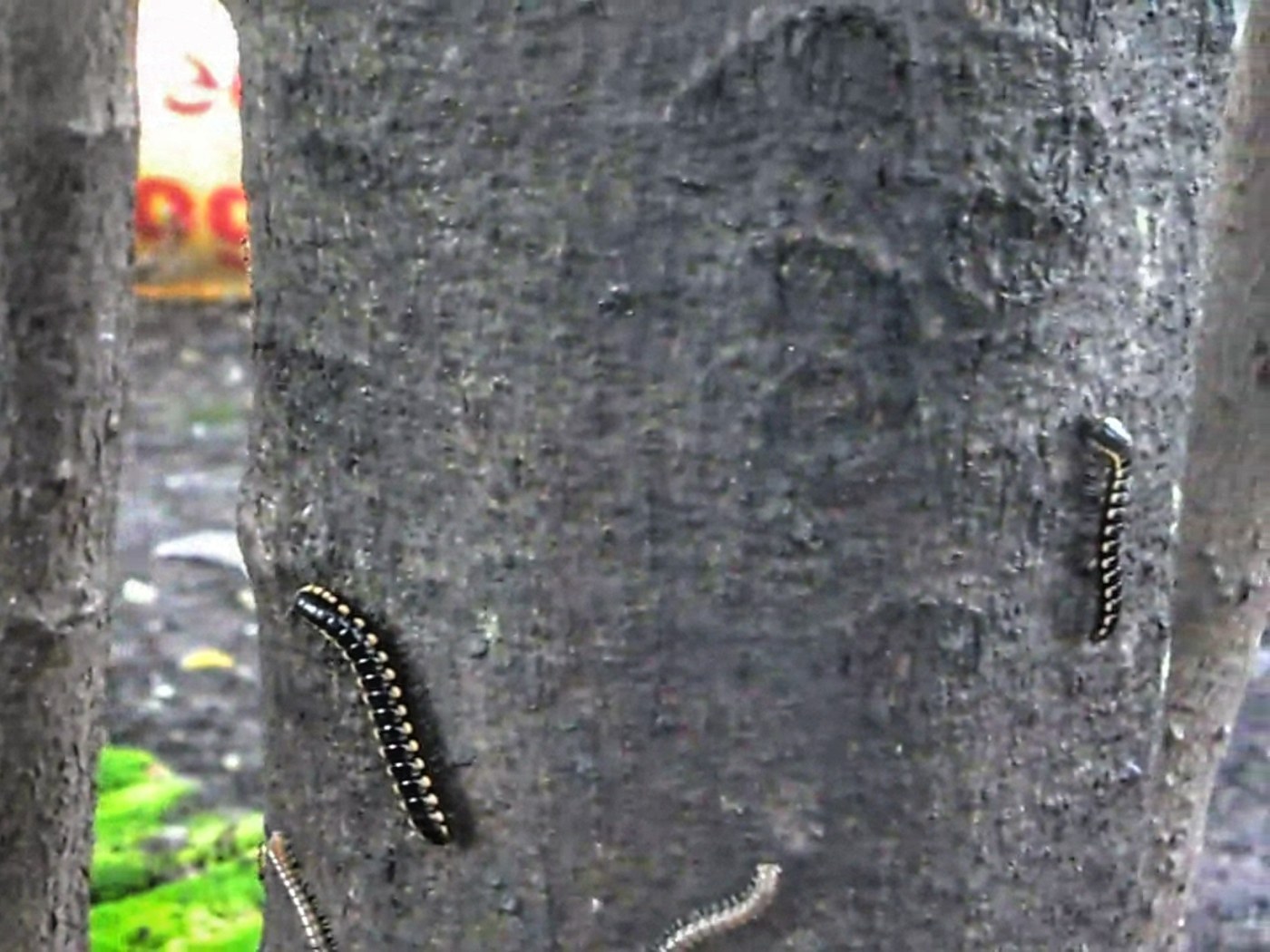
Yellow-spotted Millipede
Moist coniferous and mixed forests of the Pacific Northwest
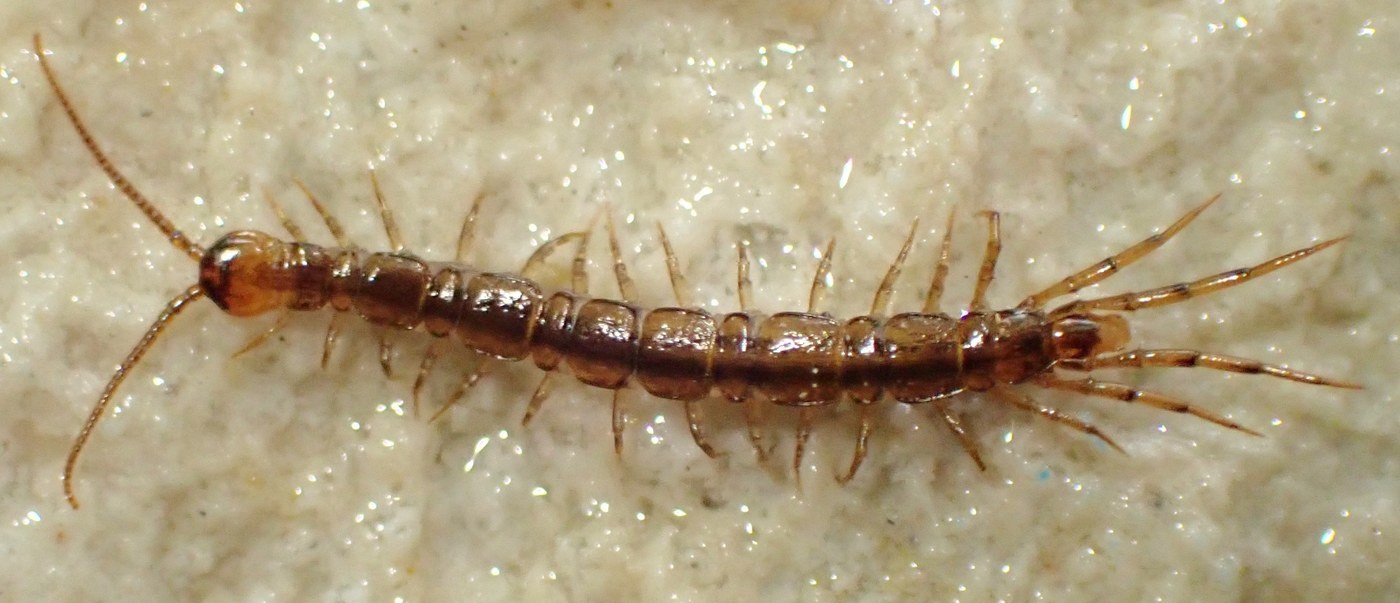
Stone Centipede
Under stones, bark, and soil in gardens and woodlands
Pill Millipede
Leaf litter, forest floors, and moist soil in temperate and tropical regions
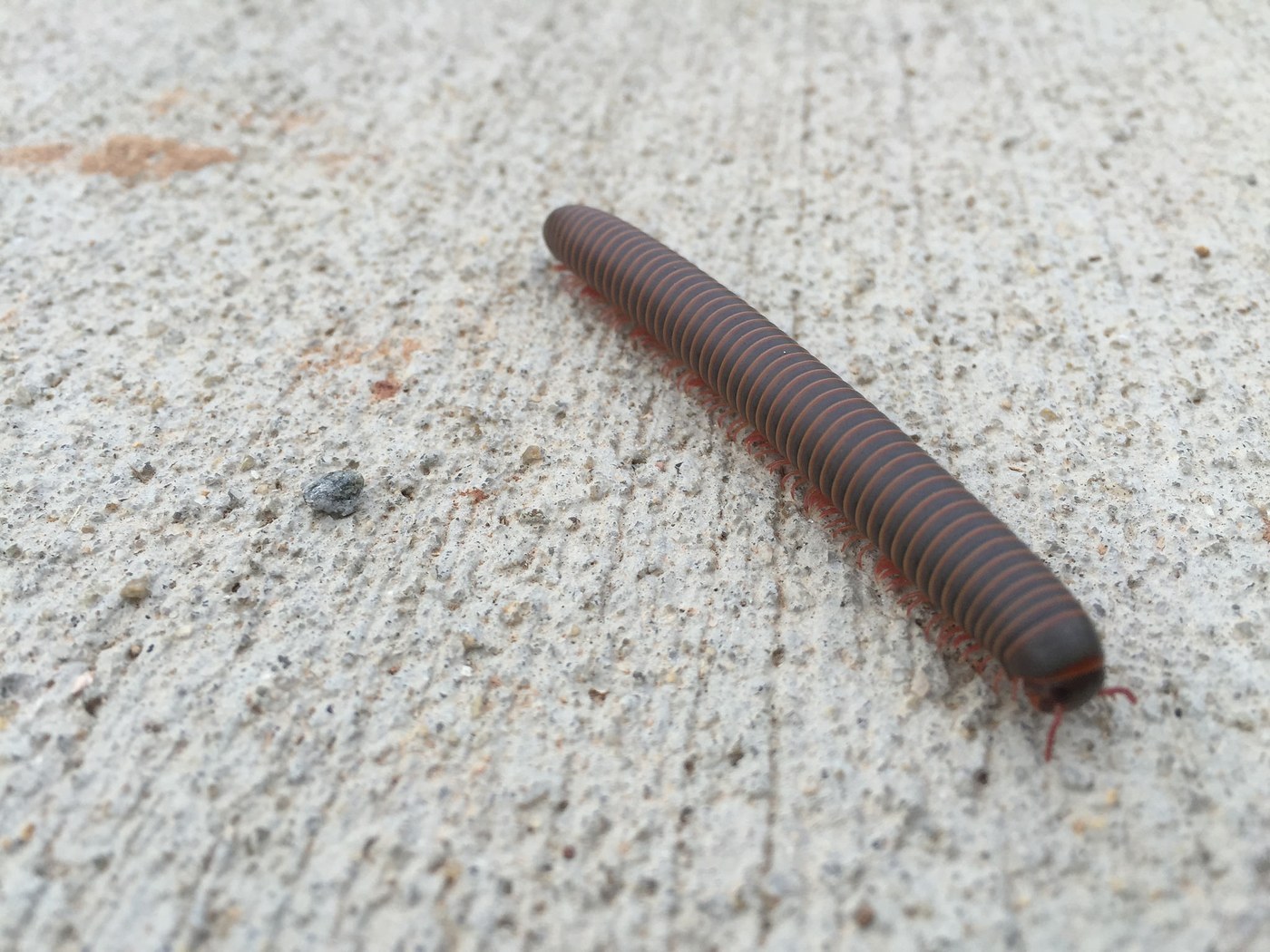
Millipede
Leaf litter, mulch, damp soil, and under logs, bark, and stones
Soil Centipede
Deep soil, leaf litter, and decaying wood
Snake Millipede
Moist soil, leaf litter, and decaying plant material
Flat-backed Millipede
Leaf litter, mulch, and damp soil in gardens and woodlands
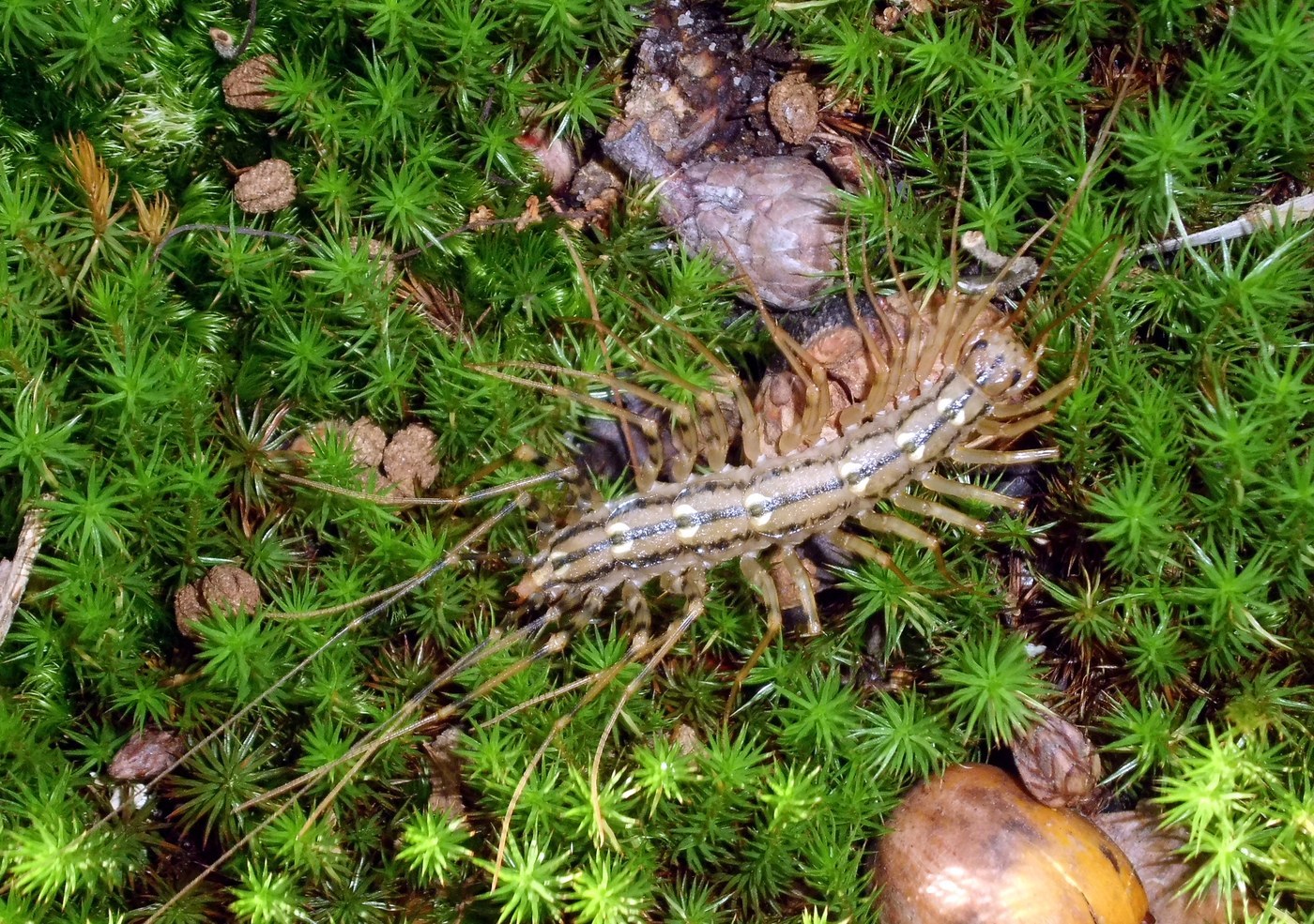
House Centipede
Damp basements, bathrooms, leaf litter
Giant Centipede
Tropical, subtropical, and warm temperate forests, deserts, and grasslands worldwide
Giant African Millipede
Tropical forests and moist lowlands of East Africa
Centipede
Damp, dark places such as basements, bathrooms, leaf litter, and under rocks and logs