Titan Beetle Identification Guide
Learn to identify one of the largest beetles in the world by its massive size and heavily armored body.
Read the full Titan Beetle encyclopedia entry →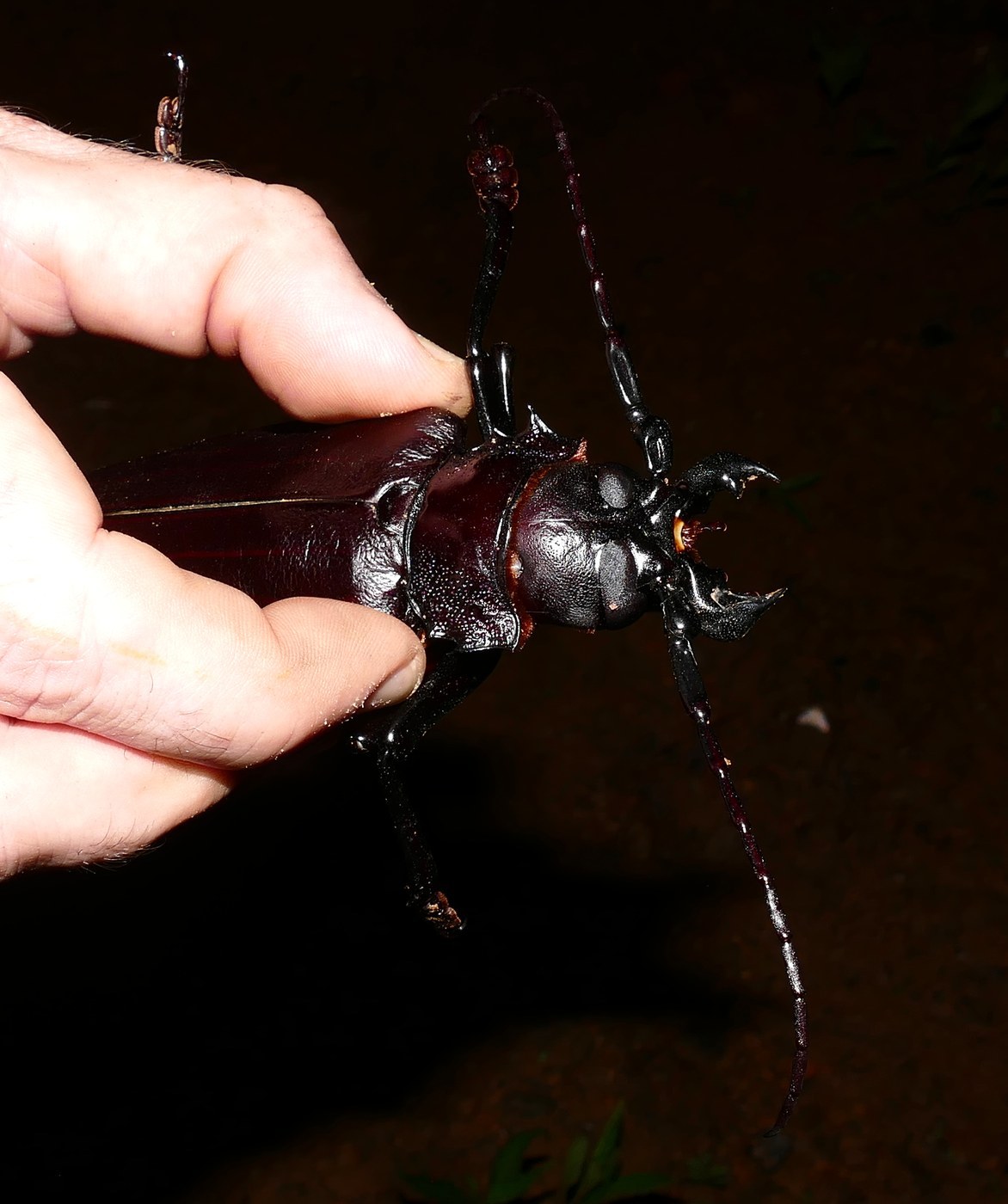
Key Visual Features
- Extremely large beetle, with body length reaching up to about 6.5 inches (16.7 cm) in the biggest recorded individuals, making it one of the largest insects by length.
- Body is a glossy, dark reddish-brown to black, with a hard, heavily armored exoskeleton.
- Head bears large, prominent, curved mandibles capable of an audible clicking or hissing sound when the beetle feels threatened.
- Antennae are relatively short and segmented compared to the beetle's overall large size.
- The thorax has small spines or projections along its edges, adding to the rugged, armored appearance.
- Wing covers are smooth, elongated, and cover most of the abdomen, with the overall body shape being broad, flattened, and elongated.
Where and When You'd See It
- Native to the rainforests of northern South America, particularly in lowland tropical forest regions.
- Primarily nocturnal, most often encountered at night, sometimes attracted to lights near forested areas.
- Adults are seen far less often than larvae, since the adult stage is relatively short-lived compared to the multi-year larval development that occurs hidden inside decaying wood.
- Found on forest floors, tree trunks, and occasionally on the ground after being attracted to artificial lighting at night.
Similar-Looking Species
- Other large longhorn beetles exist worldwide, but few match the titan beetle's combination of extreme size and short, thick antennae relative to body length (most longhorn beetles have much longer antennae).
- Large stag beetles can appear similarly massive and dark, but stag beetles typically have branching, antler-like mandibles rather than the titan beetle's simpler curved pincers, and a more domed thorax shape.
- Rhinoceros beetles are also large and dark but are distinguished by a prominent horn projecting from the head or thorax, which titan beetles lack.
Quick ID Checklist
- Enormous body size, up to about 6.5 inches long.
- Glossy dark reddish-brown to black, heavily armored exoskeleton.
- Large curved mandibles capable of producing a clicking or hissing sound.
- Short antennae relative to the beetle's large body size.
- Found in South American rainforest habitat, mostly active at night.
Frequently asked questions
How large can a titan beetle get compared to other beetles?
It can reach up to about 6.5 inches in body length, making it one of the largest beetles in the world by length, far exceeding most other beetle species found in its range.
How do I tell a titan beetle from a stag beetle?
Titan beetles have simpler, curved mandibles and relatively short antennae, while stag beetles typically have branching, antler-like mandibles and a more domed thorax shape.
When and where would I be most likely to see one?
They are found in lowland rainforests of northern South America and are mostly nocturnal, so night encounters, sometimes near artificial lights, are the most common sightings.
What sound might a titan beetle make?
It can produce an audible clicking or hissing sound with its mandibles or body when it feels threatened, which can help confirm identification alongside its massive size.
Titan Beetle identified by the community
Recent Titan Beetle finds identified with Bug Identifier.