
Trichogramma Wasp Identification Guide
Learn to spot this pinhead-sized parasitic wasp that is almost invisible without magnification.
Read the full Trichogramma Wasp encyclopedia entry →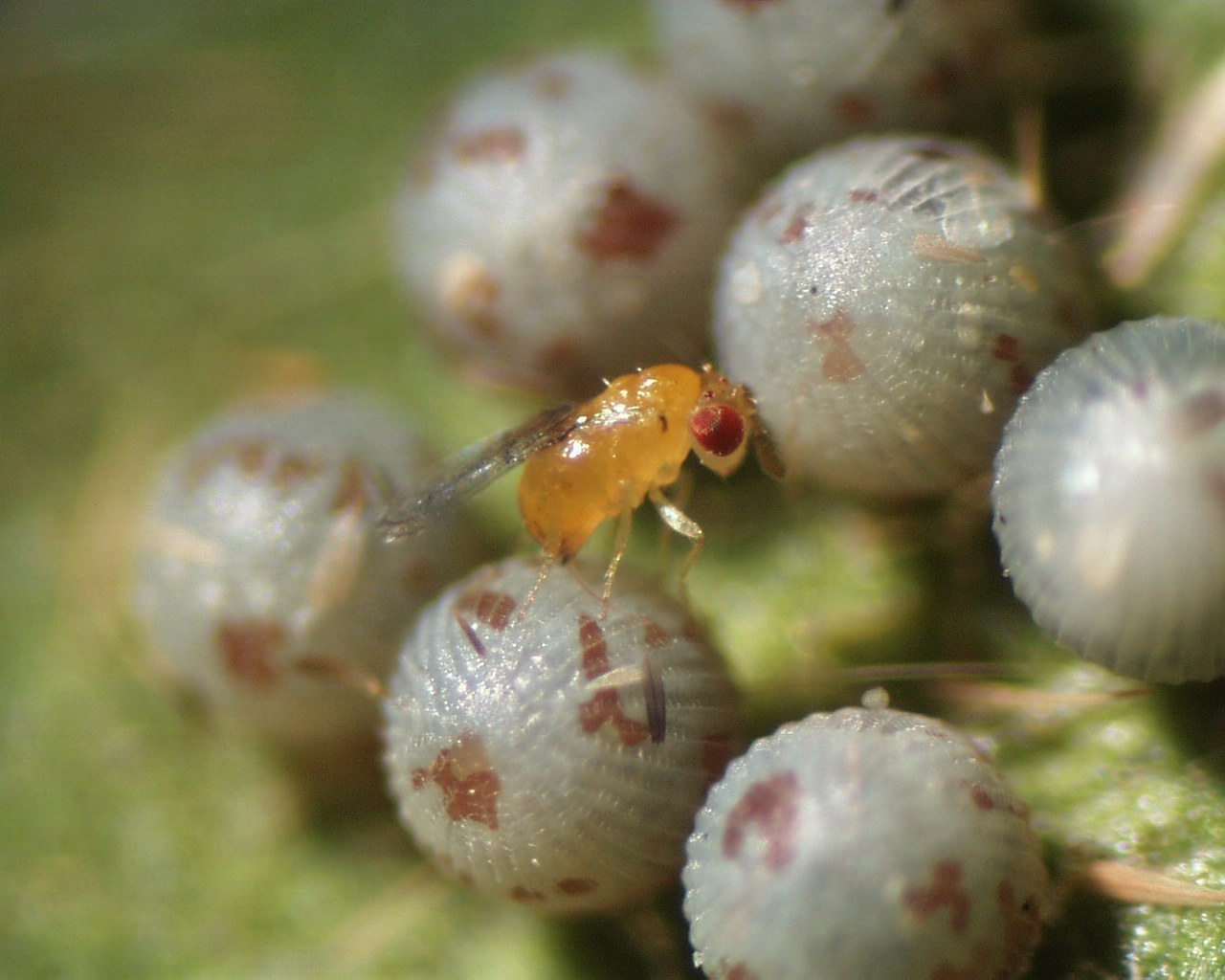
Key Visual Features
Trichogramma wasps are among the smallest insects most people will ever try to identify, typically measuring only 0.3 to 1 millimeter long — roughly the size of the period at the end of this sentence. Because of their tiny size, most identification relies on a hand lens or macro photo rather than the naked eye.
- Body color: Usually pale yellow, tan, or amber, with some species showing darker brown or black patches on the thorax or abdomen.
- Body shape: Compact, stocky, and slightly hunched, with a short abdomen attached broadly to the thorax (not narrowly waisted like many other wasps).
- Wings: Two pairs of clear, fringed wings that are broader and rounder than typical wasp wings, often held flat over the back at rest. Fine hair-like fringes line the wing edges, visible only under magnification.
- Antennae: Short, elbowed antennae with a small club at the tip.
- Legs: Short and pale, not adapted for jumping or grasping.
Where and When You'd See Them
Trichogramma wasps are found worldwide in gardens, farm fields, orchards, and meadows wherever moth and butterfly eggs are present, since they develop inside those eggs. They are most active during the warm growing season, from late spring through early fall, and are more likely encountered on sunny days when they fly short distances between egg clusters on leaves. You are far more likely to notice their effects — parasitized eggs turning black or gray instead of hatching — than to see the wasp itself.
Similar-Looking Bugs
- Fungus gnats: Similar in size but have long thread-like antennae and a more elongated, fly-like body with a single pair of wings.
- Parasitic mites: Lack wings entirely and have eight legs rather than six.
- Other tiny parasitic wasps (chalcids, aphelinids): Nearly identical without a microscope; body proportions and wing venation are the main distinguishing traits, best left to specialists.
- Winged aphids: Larger, soft-bodied, and pear-shaped, with long antennae and piercing mouthparts rather than a wasp's compact build.
Quick ID Checklist
- Under 1 mm long, requiring magnification to see detail
- Pale yellow-to-brown, stocky body with a broadly attached abdomen
- Two pairs of clear, fringed, rounded wings held flat at rest
- Short, elbowed antennae with a small terminal club
- Found near host eggs on leaf surfaces rather than in the open air
Frequently asked questions
Can I identify a Trichogramma wasp without a microscope?
Not reliably. Their size (under 1 millimeter) means most field marks are only visible with at least 10x magnification, such as a jeweler's loupe or macro lens.
What time of year are Trichogramma wasps active?
They are most commonly observed from late spring through early fall, coinciding with the activity of the moth and butterfly eggs they develop in.
How can I tell a Trichogramma wasp from a gnat?
Look at the wings and antennae: the wasp has two pairs of broad, fringed wings and short elbowed antennae, while gnats have a single pair of wings and long thread-like antennae.
Do Trichogramma wasps build nests?
No, they do not build nests. Females simply fly to host eggs on leaves and lay their own eggs inside them.