
Twenty-plume Moth Identification Guide
A tiny micro-moth whose wings are split into narrow feathery plumes, held flat in a distinctive fan shape at rest.
Read the full Twenty-plume Moth encyclopedia entry →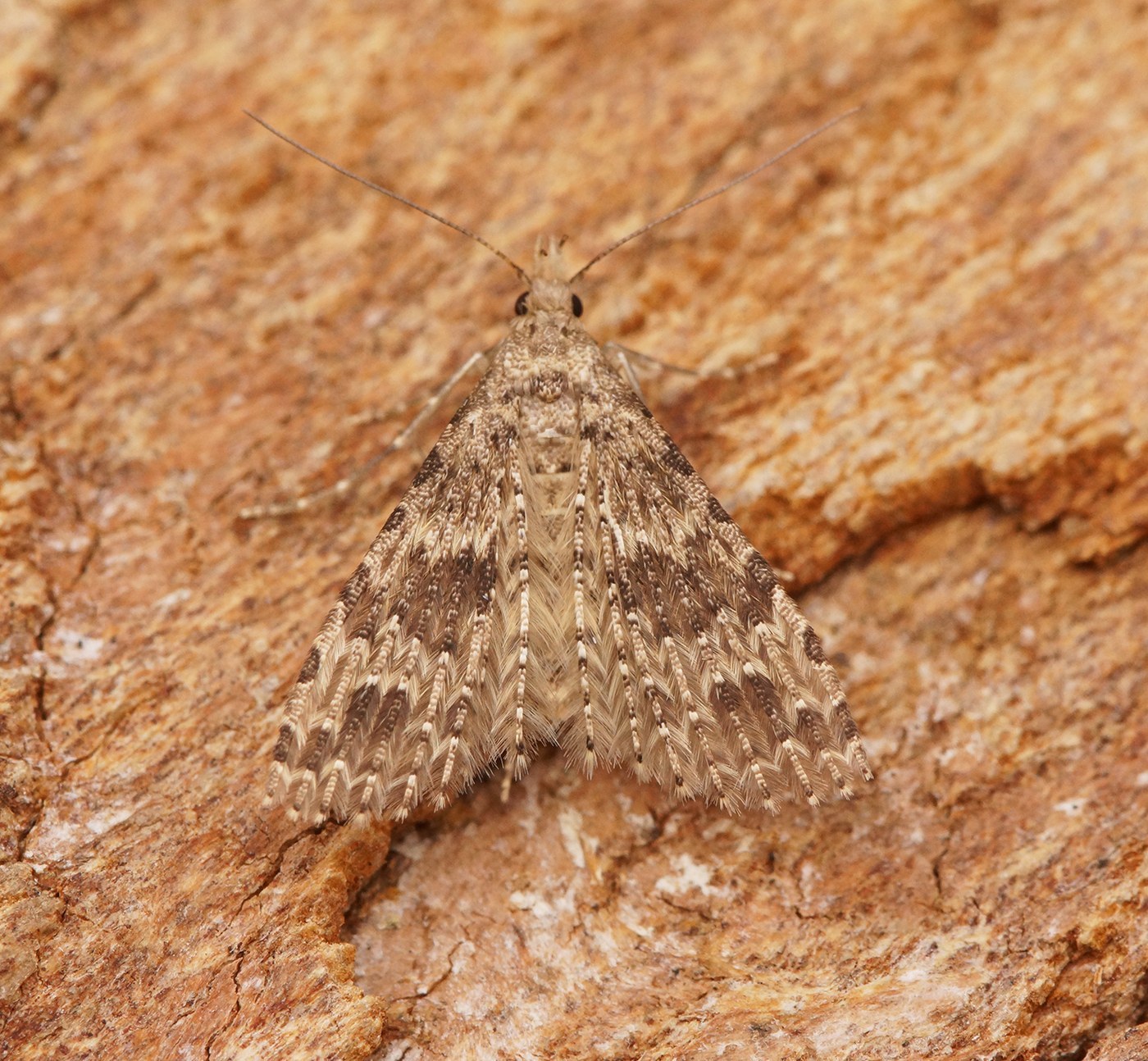
Key Visual Features
The Twenty-plume Moth is a tiny micro-moth with a wingspan of about 12-17mm and one of the most unusual wing structures among common moths.
- Wings: Each wing is deeply divided into narrow, feather-like plumes fringed with fine hair-scales, giving the moth its distinctive multi-plumed, comb-like appearance.
- Color: Mottled grey-brown to tan, with darker speckling scattered across the plumes.
- Resting posture: Unlike most moths, it holds its wings flat and fully outstretched to the sides rather than folded over the body, producing a distinctive fan or star-shaped silhouette.
- Legs: Long and thin, adding to the delicate, spidery overall look.
- Size: Very small, easily mistaken for a speck of debris until viewed closely.
Where and When You'll See It
This moth is closely tied to honeysuckle, its larval host plant, and is commonly found in gardens, hedgerows, and woodland edges where honeysuckle grows. Unusually for a moth, some adults overwinter and can be spotted resting on walls, ceilings, or indoors during mild winter days, in addition to being active during the warmer months. It is often noticed resting on flat surfaces such as windows or walls rather than in flight.
Similar-Looking Species
- Plume Moths (Pterophoridae) - wings are divided into fewer, broader lobes (usually two per forewing, three per hindwing) and are typically held rolled and perpendicular to the body in a T-shape, rather than spread flat like the Twenty-plume Moth.
- Other micro-moths - lack the deeply divided, multi-plumed wing structure that makes this species so distinctive once seen up close.
Life Cycle & Behavior
Caterpillars feed inside the flower buds and developing berries of honeysuckle, later moving to feed more openly on leaves. Adults that emerge in late summer commonly overwinter in sheltered spots such as outbuildings, hollow trees, or even indoors, becoming active again on mild days before completing their life cycle the following spring. This overwintering habit is unusual among small moths and explains sightings well outside the main summer flight period.
Quick ID Checklist
- Very small moth with wings divided into many narrow, feathery plumes
- Mottled grey-brown to tan coloring with darker speckling
- Wings held flat and spread in a fan shape at rest, not folded
- Long, thin legs
- Found near honeysuckle; may be seen indoors or outdoors even in mild winter weather
Frequently asked questions
What makes the Twenty-plume Moth so easy to recognize?
Its wings are divided into numerous narrow, feather-like plumes and held flat and outstretched at rest, creating a distinctive fan or star shape unlike almost any other common moth.
Why might I see this moth in winter?
Unlike most moths, some adult Twenty-plume Moths overwinter as adults and can be spotted resting on walls or indoors during mild winter days.
How is it different from a typical Plume Moth?
Plume Moths have fewer, broader wing lobes and rest with wings rolled into a T-shape, while the Twenty-plume Moth has many narrow plumes held flat and spread out.
What plant should I look near to find this moth?
Honeysuckle is the key host plant, so gardens, hedgerows, and woodland edges with honeysuckle are the best places to search.