Vaporer Moth Identification Guide
Learn to tell apart the day-flying chestnut-brown males and the flightless, wingless females of this tussock moth.
Read the full Vaporer Moth encyclopedia entry →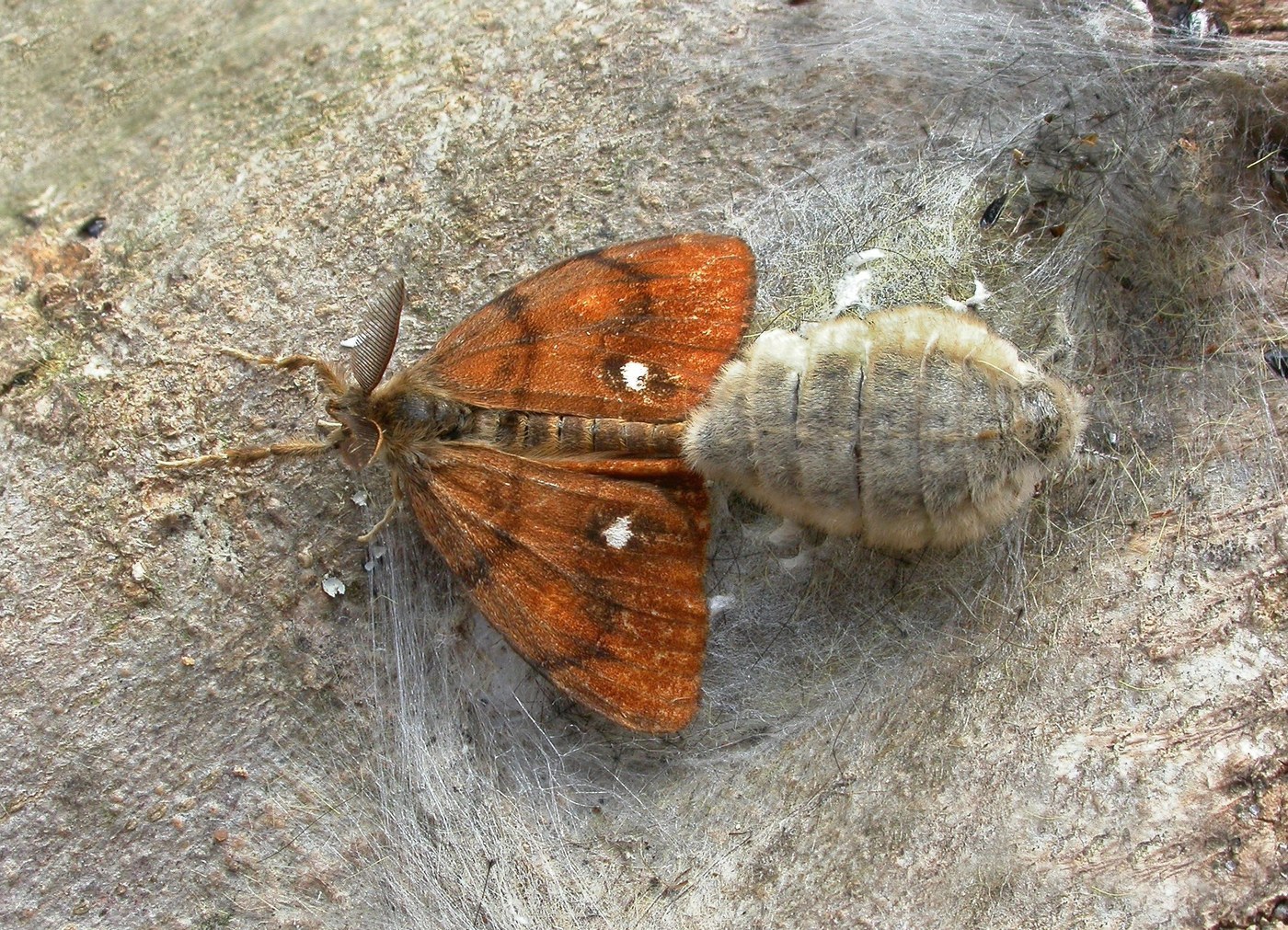
Key Visual Features
The vaporer moth shows extreme differences between males and females, making identification straightforward once you know which sex you're looking at.
- Size: Males have a wingspan of about 30mm; females are similar in body length but lack functional wings and remain much bulkier in proportion.
- Color and pattern (males): Chestnut-brown wings with a distinct pale white spot near the trailing edge of each forewing, a marking that stands out clearly even in flight.
- Color and pattern (females): Grayish, hairy, and stout, with only vestigial wing stubs or no visible wings at all, giving them a caterpillar-like appearance at first glance.
- Body shape: Males are slender-bodied, agile fliers; females are plump, sedentary, and grub-like.
- Legs and antennae: Males have broad, feathery (plumose) antennae used to detect female pheromones from considerable distances; female antennae are simpler and less developed, matching their sedentary lifestyle.
Where and When You'll See It
This species is found in gardens, parks, woodland edges, and hedgerows across Europe, with caterpillars feeding on a wide range of trees and shrubs, including many common ornamental and fruit trees. Adults are active mainly from late summer into autumn, sometimes with an earlier generation in spring depending on region. Males fly rapidly and erratically during the day in bright sunshine, darting about in search of females, while females never leave the cocoon from which they emerged, remaining there to release pheromones and lay their eggs nearby.
Similar-Looking Moths
Other tussock moths in the genus Orgyia show similar dramatic differences between winged males and flightless females, but they vary in overall size and wing coloring. The vaporer moth's male is best distinguished by its reddish-brown wing color and the single pale forewing spot combined with its distinctive daytime flight habit. Females are essentially unmistakable among common garden moths since they never fly and remain permanently attached to their cocoon on bark or foliage.
Quick ID Checklist
- Males: small, chestnut-brown, day-flying, with a white forewing spot
- Males have broad, feathery antennae
- Females: wingless, gray, hairy, and stay on the cocoon
- Found in gardens, parks, and hedgerows across Europe
- Adults active mainly in late summer and autumn
Frequently asked questions
Why do male and female vaporer moths look so different?
Females are flightless and remain on their cocoon, while males are fully winged and fly by day to find them.
What is the easiest way to identify a male vaporer moth?
Look for its chestnut-brown wings with a pale white spot near the trailing edge, plus broad feathery antennae.
Can female vaporer moths fly?
No, females are wingless or have only vestigial wing stubs and cannot fly.
When is this species most active?
Adults are most active from late summer into autumn, with males flying in daytime sunshine.
Vaporer Moth identified by the community
Recent Vaporer Moth finds identified with Bug Identifier.