
Vapourer Moth Identification Guide
A small orange day-flying moth whose females never fly at all, instead waiting flightless on their cocoon for a mate.
Read the full Vapourer Moth encyclopedia entry →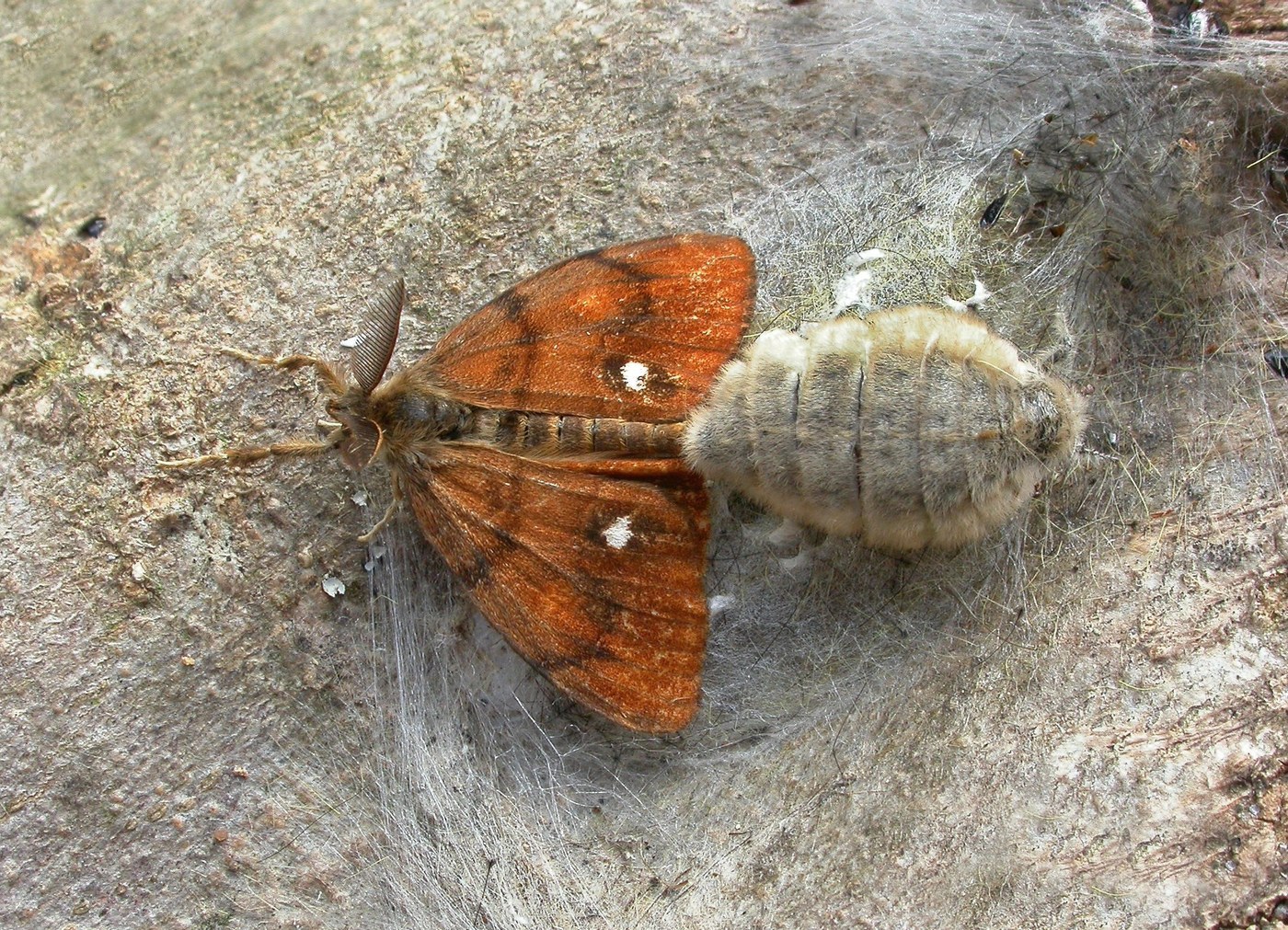
Key Visual Features
The Vapourer Moth shows one of the most extreme examples of sexual dimorphism among common moths.
- Males: Wingspan around 30mm, with chestnut to orange-brown wings marked by one or two small white crescent-shaped spots near the trailing edge of the forewing; antennae are noticeably feathery.
- Females: Almost unrecognizable as the same species - wings are reduced to tiny, non-functional stubs, and the body is plump, grey, and densely furry. Females never fly and remain on or near the cocoon they emerged from.
- Flight style: Males have a fast, erratic, zig-zagging flight typical of day-flying moths searching for mates.
Where and When You'll See It
Vapourer Moths are common in parks, gardens, hedgerows, street trees, and woodland edges, including in urban areas. Males can be seen flying rapidly in sunshine, typically from midsummer into early autumn, as they search out the scent trails left by flightless females. Females themselves are rarely noticed unless you find one sitting on its cocoon on bark, fences, or walls.
Similar-Looking Species
- Other Orgyia species (e.g., Rusty Tussock Moth) - males look very similar externally and are best told apart by geographic range or subtle differences in the caterpillars, since adult males across the genus share the same basic orange-brown, white-spotted pattern.
- Small orange day-flying moths in general - the flightless, wingless female is the most reliable distinguishing feature of the Vapourer, since few other common moths share this trait.
Life Cycle & Behavior
After mating, the flightless female lays her eggs directly on the outside of her own cocoon rather than dispersing to find a new site, and the eggs overwinter there until hatching in spring. The hairy caterpillars, marked with tufts of bristles, feed on a wide variety of trees and shrubs through summer. Multiple generations can occur in a year in milder climates, keeping males on the wing across a long season.
Quick ID Checklist
- Small orange-brown male with fast, darting daytime flight
- One or two white crescent spots near the forewing edge in males
- Feathery antennae on males
- Females are flightless, grey, furry, and wingless - found on or near cocoons
- Common in gardens, parks, and urban trees
Frequently asked questions
Why don't female Vapourer Moths fly?
Female Vapourer Moths have wings reduced to small, non-functional stubs, so they remain flightless throughout their adult life, staying close to the cocoon where they emerged.
How can I identify a male Vapourer Moth?
Look for a small, chestnut-orange moth flying rapidly in daylight, with one or two small white crescent marks near the edge of the forewing and feathery antennae.
When is the best time to see Vapourer Moths?
Males are most active on sunny days from midsummer through early autumn, when they fly quickly in search of mates.
Where are Vapourer Moths commonly found?
They are widespread in gardens, parks, hedgerows, and street trees, including within cities and towns, wherever suitable host trees and shrubs grow.