
Variable Dancer Identification Guide
A deep violet-purple damselfly named for its variable markings, found along streams in the eastern United States.
Read the full Variable Dancer encyclopedia entry →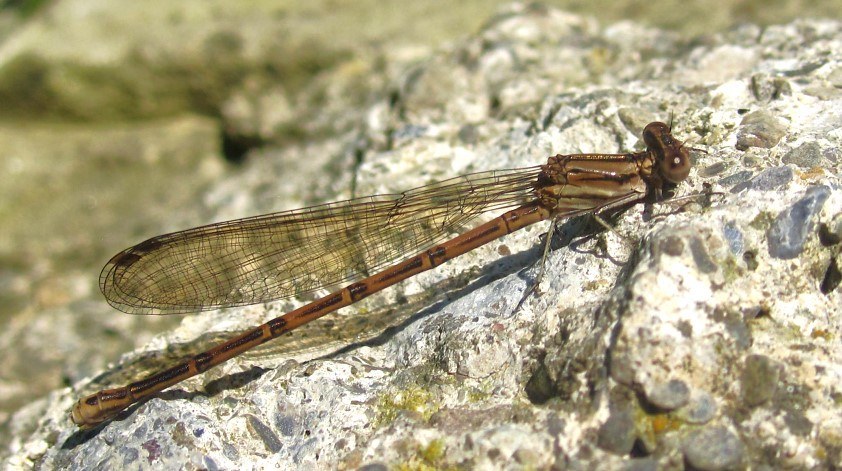
Key Visual Features
The Variable Dancer is a medium-sized damselfly, about 1.2 to 1.5 inches (30 to 38 mm) long, notable for its rich violet-purple coloring in mature males.
- Color: Mature males show a striking deep violet to purplish-blue body, often appearing darker and richer than other blue dancers. Females and immature males are usually tan, brown, or dull violet, with more visible dark markings.
- Pattern variability: As the name suggests, the exact extent and shape of dark markings on the thorax and abdomen can vary noticeably between individuals, making pattern alone a less reliable guide than overall color and habitat.
- Thorax: Shows dark stripes against the violet or brownish ground color, though the stripe width can differ from one individual to the next.
- Abdomen: Long and slender, typically with dark markings toward the tip that contrast against the violet base color in males.
- Eyes and wings: Well-separated eyes typical of damselflies; clear wings folded together over the back at rest, each with a small pterostigma near the tip.
Where and When You'd See It
Variable Dancers are found along slow to moderately flowing streams, rivers, and sometimes lake edges in the eastern and midwestern United States. They perch on streamside rocks, overhanging branches, and low vegetation, frequently in partial shade near wooded stream corridors. The flight season runs from late spring through summer into early fall, with adults most visible during warm, sunny afternoons.
Similar-Looking Species
- Vivid Dancer: Shows a brighter, more electric violet-blue rather than the deeper purple tone of the Variable Dancer, and tends to favor more open, rocky streams.
- Blue-fronted Dancer: Has blue concentrated at the front of the thorax and abdomen tip rather than an overall violet wash.
- Powdered Dancer: Displays a chalky, frosted bloom rather than a clean violet-purple color.
Because markings vary so much within the Variable Dancer itself, focusing on the overall depth of color (rich purple rather than bright blue) alongside habitat and range is often more useful than pattern details alone.
Quick ID Checklist
- Wings closed over the back at rest, typical of dancers
- Mature males show a deep violet-purple body color
- Individual markings can vary noticeably between individuals
- Found along shaded or partly shaded streams and rivers
- Slender body with widely separated eyes
Frequently asked questions
Why is this damselfly called 'Variable' Dancer?
The species gets its name because the dark markings on the thorax and abdomen can differ noticeably from one individual to the next, making pattern alone less reliable for identification compared to overall color and habitat.
How do I tell Variable Dancer from Vivid Dancer?
Variable Dancer males tend to show a deeper, more purplish tone, while Vivid Dancer males appear brighter and more electric blue-violet. Habitat can also help, since Variable Dancers often favor shadier, wooded stream edges.
Do Variable Dancers prefer sun or shade?
They are often found perching in partially shaded spots along streams with overhanging vegetation, unlike some other dancers that favor fully sunlit, open rocky stretches.
What is the easiest feature to check first when identifying this species?
Start with the overall body color of a mature male. A rich, deep violet-purple tone combined with a wooded stream habitat is a strong starting clue for Variable Dancer.