Variegated Fritillary Identification Guide
An orange-and-tan wanderer whose mottled, non-silvered underside sets it apart from true fritillaries.
Read the full Variegated Fritillary encyclopedia entry →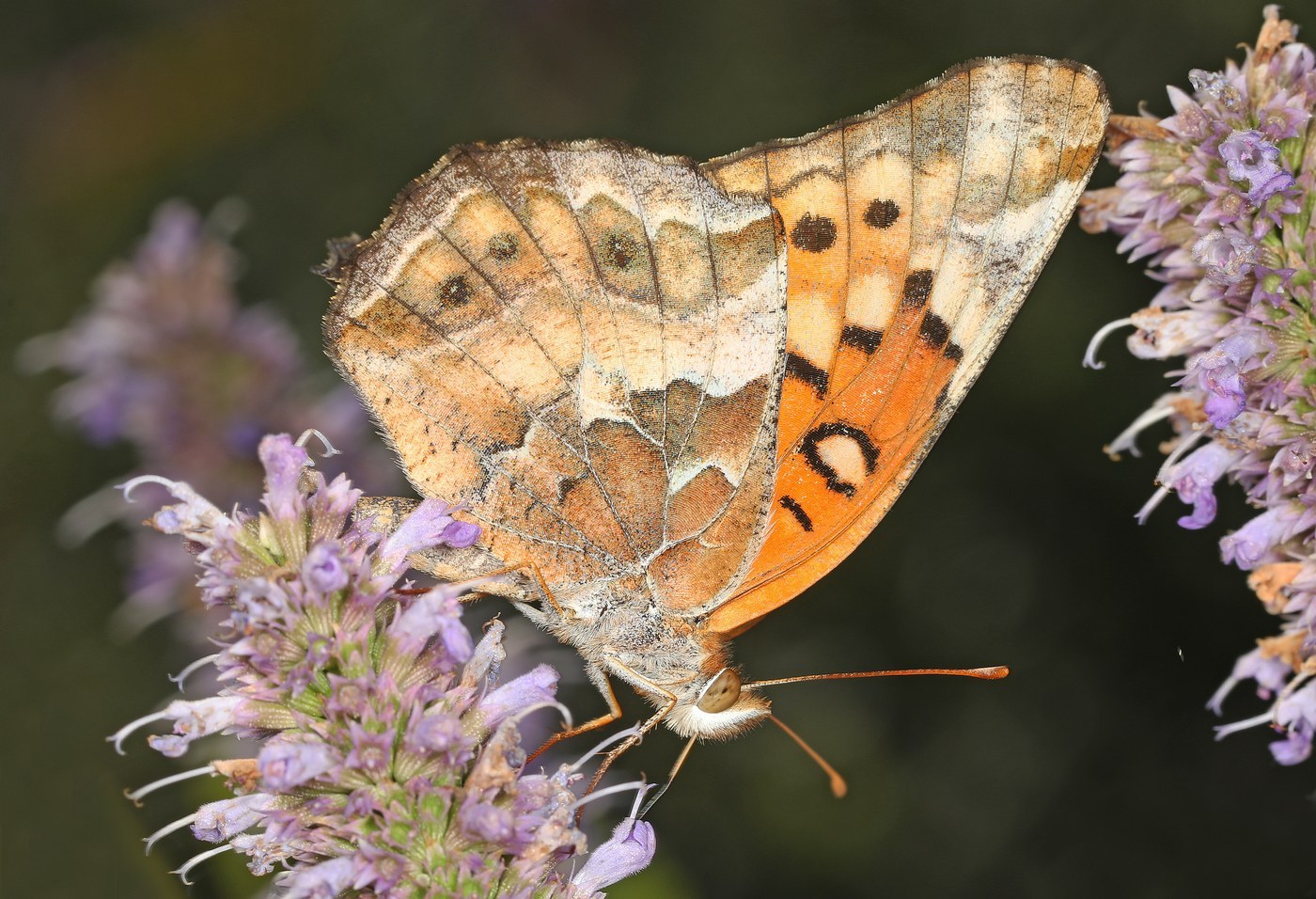
Key Visual Features
The Variegated Fritillary (Euptoieta claudia) is a medium-sized butterfly with a wingspan of about 1.7 to 2.9 inches. Despite the name, it is not a true fritillary of the genus Speyeria or Boloria and it shows this in its markings.
- Upperside is tawny orange with an intricate, variegated pattern of black lines, chevrons, and spots rather than simple round dots
- Underside is mottled tan, brown, and cream in an irregular, almost marbled pattern with no metallic silver spots
- Wings are somewhat elongated with pointed forewing tips, giving a slightly angular silhouette in flight
- Body is slender and orange-brown, blending with the wing color
- A dark, jagged zigzag band often crosses the outer part of the underside hindwing
Where and When to Look
This species thrives in open, disturbed habitats: dry fields, prairies, roadsides, vacant lots, and gardens. It is resident in the southern United States and much of Central America but strays or migrates north across most of the continental U.S. each summer, sometimes reaching southern Canada. Adults fly low and fast, stopping frequently at composite flowers. In warm climates it can be seen nearly year-round with multiple overlapping broods; farther north, look for it from mid-summer into fall.
Similar-Looking Species
- Greater fritillaries (Speyeria species): larger, with bold metallic silver spots on the underside hindwing that the Variegated Fritillary lacks
- Gulf Fritillary: has elongated wings and bright, large silver-white spots below, quite different from the mottled Variegated pattern
- Meadow Fritillary: smaller, more rounded wings, and a plainer orange-brown underside without the marbled variegation
The absence of any silver spotting below, combined with the busy, mottled brown-and-cream underside, is the best way to separate this species from true fritillaries.
Quick ID Checklist
- Tawny orange upperside with intricate black variegated markings
- Mottled tan-brown-cream underside, no silver spots
- Elongated wings with pointed forewing tips
- Found in open, disturbed sunny habitats
- Fast, low, darting flight between composite flowers
Frequently asked questions
Is the Variegated Fritillary a true fritillary?
Not in the strict sense; it belongs to a different genus (Euptoieta) and lacks the metallic silver underside spots typical of true fritillaries.
How can I tell it apart from other fritillaries in the field?
Check the underside hindwing: the Variegated Fritillary shows a mottled tan-and-brown marbled pattern with no silver spots, while true fritillaries show bold silvery-white spots.
What kind of habitat should I search for this butterfly?
Open, sunny, often disturbed areas such as dry fields, prairies, roadsides, and gardens are the most reliable places to find it.
Does the Variegated Fritillary stay in one place year-round?
It is a year-round resident in warmer southern regions but migrates or strays northward across much of the continent during the warmer months.
Variegated Fritillary identified by the community
Recent Variegated Fritillary finds identified with Bug Identifier.