
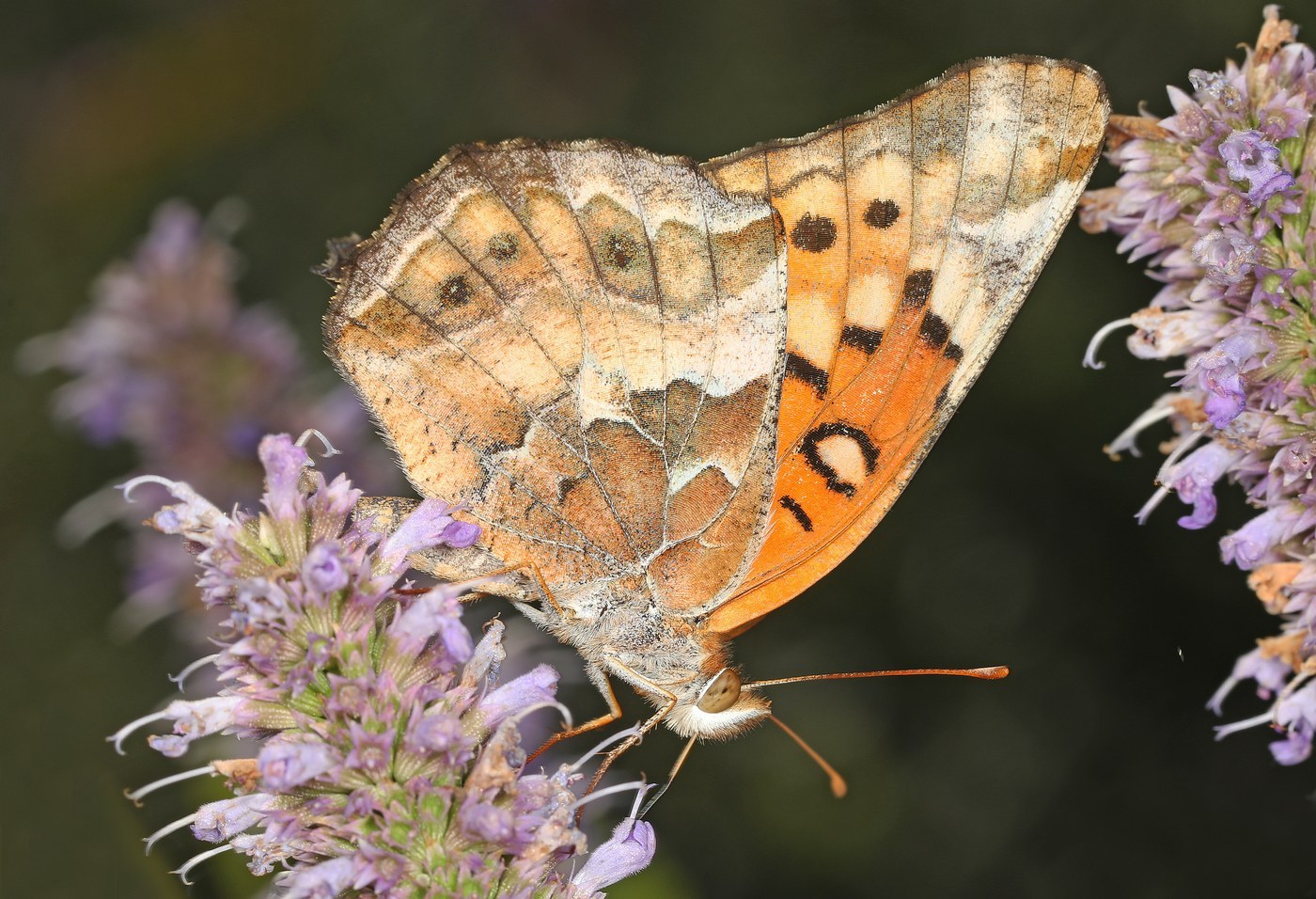
Variegated Fritillary
Euptoieta claudia
A wide-ranging, mottled orange-brown butterfly that lacks the silvery underside spots of true fritillaries and instead shows an intricate patchwork of tan, orange, and black markings, known for its wandering, migratory habits.
- Size
- 1.75–2.75 in wingspan
- Habitat
- Open fields, prairies, roadsides, and disturbed ground across most of the United States
- Danger
- Harmless
Spotted a bug like this?
Identify any bug or insect from a photo, free.
Overview
The Variegated Fritillary is a brushfoot butterfly (family Nymphalidae) found across most of the United States and into Mexico and Central America, making it one of the most widely ranging fritillary-type butterflies on the continent. Despite its common name and general resemblance to true fritillaries in the genera Speyeria and Boloria, it belongs to a different genus, Euptoieta, and notably lacks the metallic silver spotting on the underside hindwing that defines true fritillaries.
The species is known for its strong wandering and migratory tendencies, regularly appearing well outside its core breeding range during the summer months as individuals disperse northward. This mobility, combined with a caterpillar diet that spans an unusually broad range of unrelated host plants, has made it one of the more adaptable and widely distributed nymphalid butterflies in North America.
Its caterpillars feed on plants as varied as violets, passionflower, plantain, and stonecrop, an ecological flexibility uncommon among fritillary-type butterflies, most of which specialize narrowly on violets alone.
How to Identify
- Upperside is orange-brown with an intricate, mottled pattern of darker brown and black markings, giving a variegated (patchy, irregular) appearance rather than uniform spotting.
- Underside of the hindwing is mottled tan and brown without the metallic silver spots found in true fritillaries.
- Wings are somewhat elongated, with a slightly angular forewing shape.
- Moderate to large size for a brushfoot butterfly.
- Lookalikes: true fritillaries (Speyeria and Boloria species) show bright silvery-white spots on the underside hindwing, which the Variegated Fritillary lacks; its more irregular, patchy upperside pattern also differs from the more uniformly spotted pattern of true fritillaries.
Habitat & Range
Ranges across nearly the entire continental United States, breeding permanently in the southern states and Mexico and dispersing northward as a temporary breeding or wandering visitor into much of the rest of the country during summer. It favors open, sunny habitats including prairies, fields, roadsides, vacant lots, and other disturbed open ground. Adults can be seen from spring through fall in the south, with sightings concentrated in mid to late summer farther north as dispersing individuals arrive.
Behavior & Diet
Adults are fast, strong fliers known for wandering widely beyond their core breeding range, a behavior that allows the species to temporarily colonize northern areas each summer even though it generally cannot survive winter there. They nectar at a wide variety of open-field flowers including milkweed, red clover, and composites. Caterpillars feed on an unusually broad range of host plants across unrelated families, including violets, passionflower, plantain, and stonecrop, a dietary flexibility that sets it apart from most other fritillary-type butterflies. The species contributes to pollination across the many open habitats it occupies during its wandering flights.
Life Cycle
Eggs are laid singly on or near host plant leaves. Caterpillars are orange-red with rows of black branching spines and pale stripes, feeding on the varied host plants noted above. Pupation occurs in a distinctive chrysalis marked with metallic gold or silvery spots. In the warm southern parts of its range the species breeds continuously with multiple overlapping generations, while individuals that disperse northward generally cannot survive cold winters, making the species a temporary seasonal presence outside its permanent southern range.
Frequently asked questions
Is this a 'true' fritillary?
Not in the strict sense; it belongs to a different genus (Euptoieta) than true fritillaries (Speyeria and Boloria) and lacks their characteristic metallic silver spots on the underside hindwing, despite sharing a similar orange coloring and common name.
Why do I sometimes see it far outside its usual range?
It is a strong wanderer that disperses northward from its permanent southern breeding range each summer, temporarily appearing in areas where it cannot survive the winter.
What do the caterpillars eat?
They feed on an unusually wide variety of host plants, including violets, passionflower, plantain, and stonecrop, unlike most fritillary-type butterflies that specialize on violets alone.
How can I tell it apart from a true fritillary at a glance?
Check the underside of the hindwing: true fritillaries show bright silvery-white spots, while the Variegated Fritillary has a mottled tan-and-brown pattern without silver.
Variegated Fritillary guides
In-depth guides for identifying, understanding, and living alongside Variegated Fritillary.
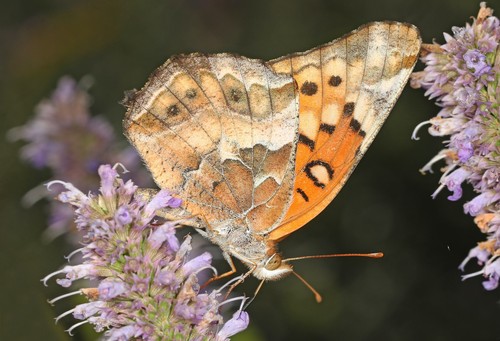
Variegated Fritillary identified by the community
Real finds identified with Bug Identifier.
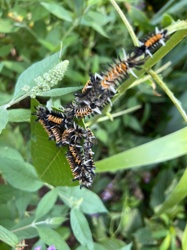
Other bugs you may enjoy
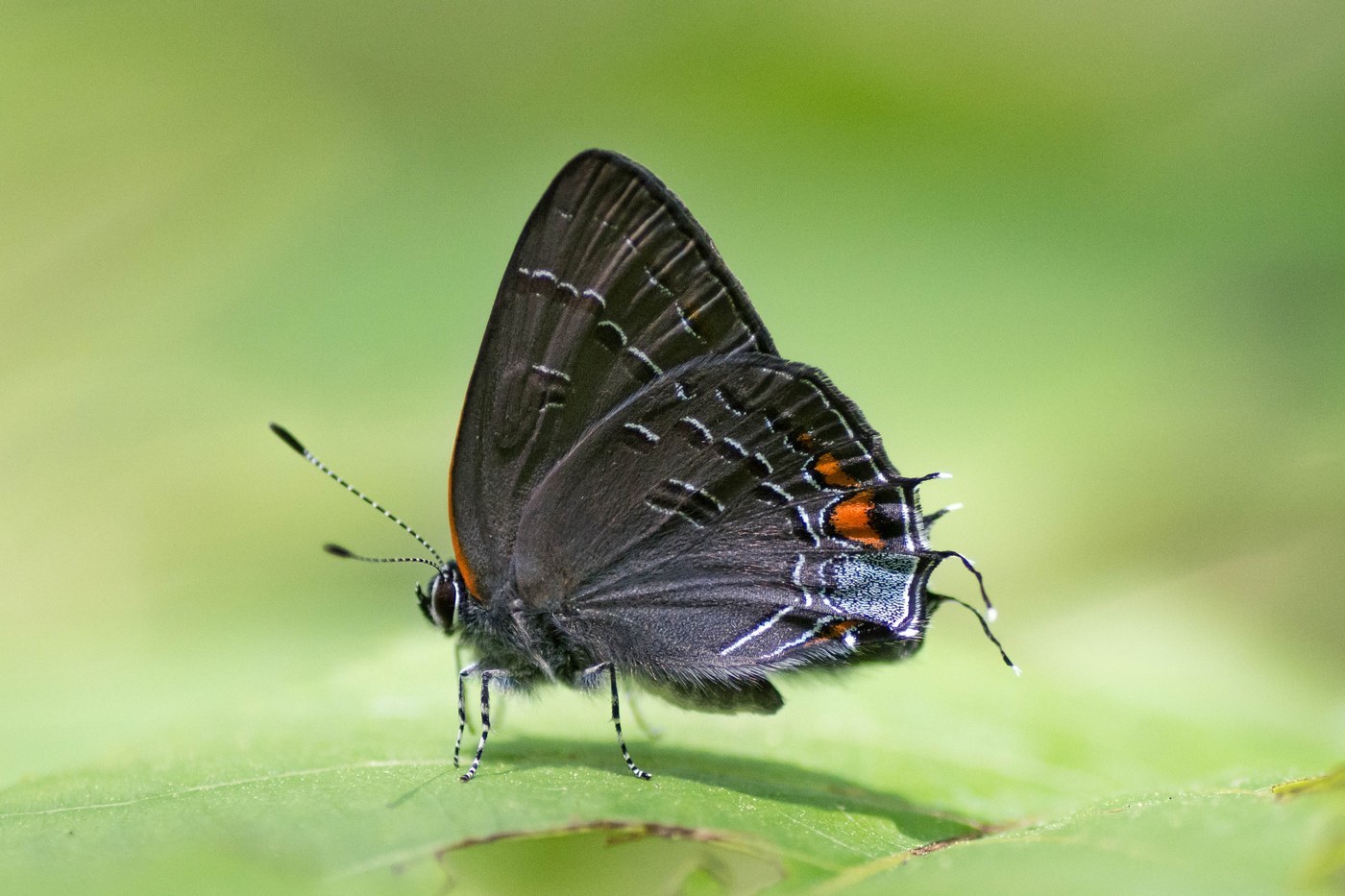
Banded Hairstreak
Deciduous woodlands and edges with oaks and hickories
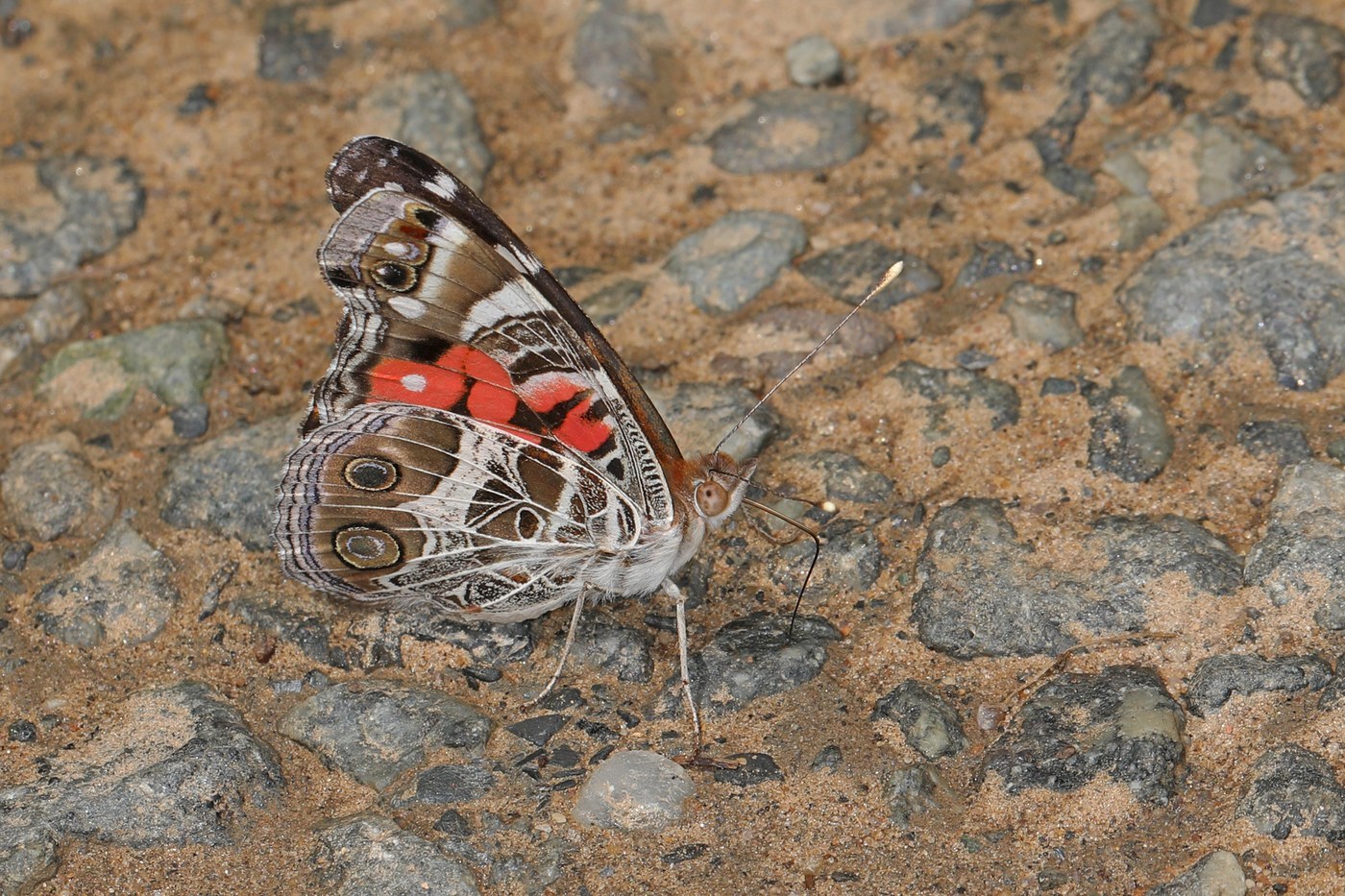
American Lady
Open fields, meadows, gardens, roadsides
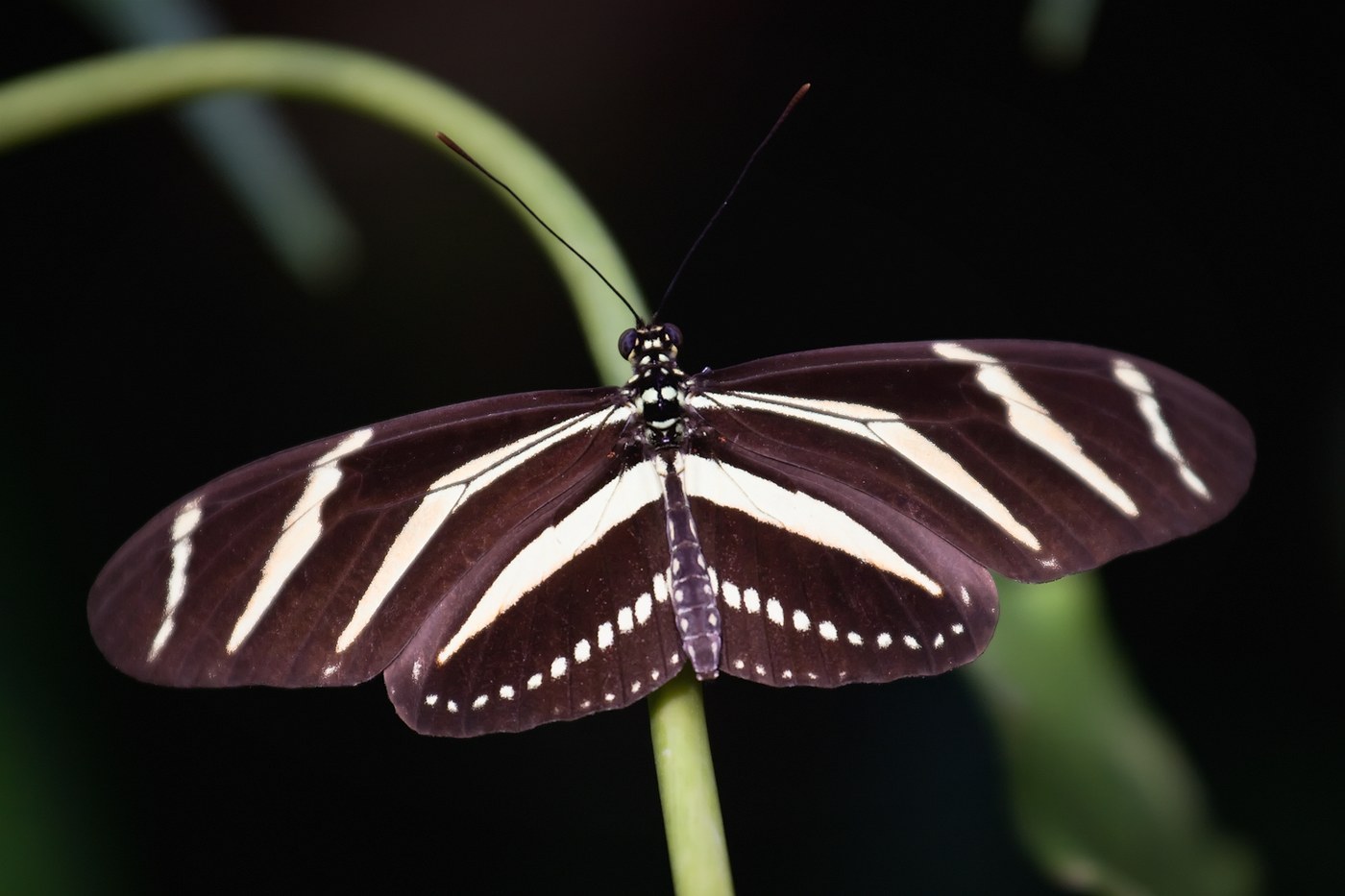
Zebra Longwing
Tropical hammocks, gardens, forest edges
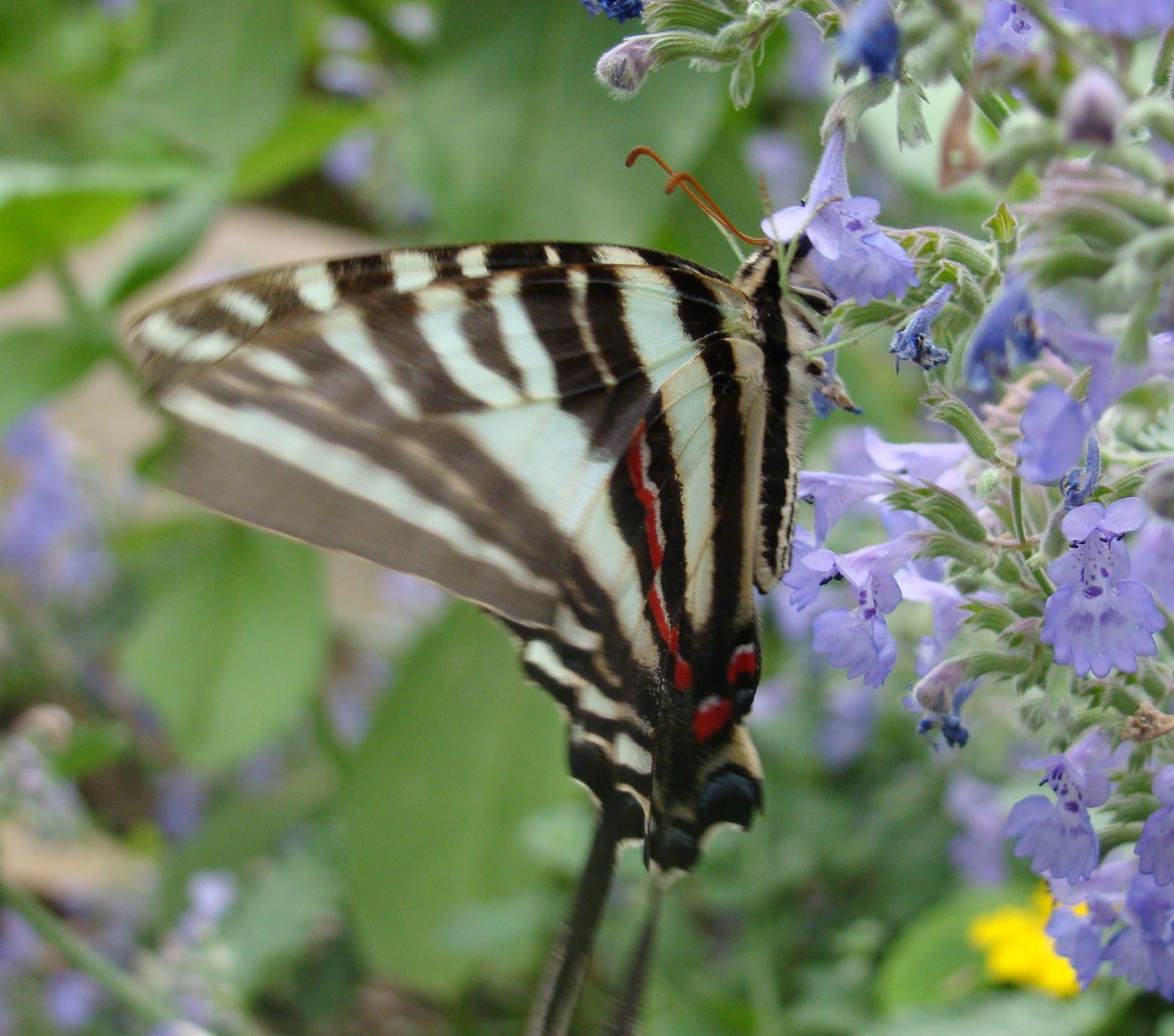
Zebra Swallowtail
Woodlands, floodplains, forest edges near pawpaw
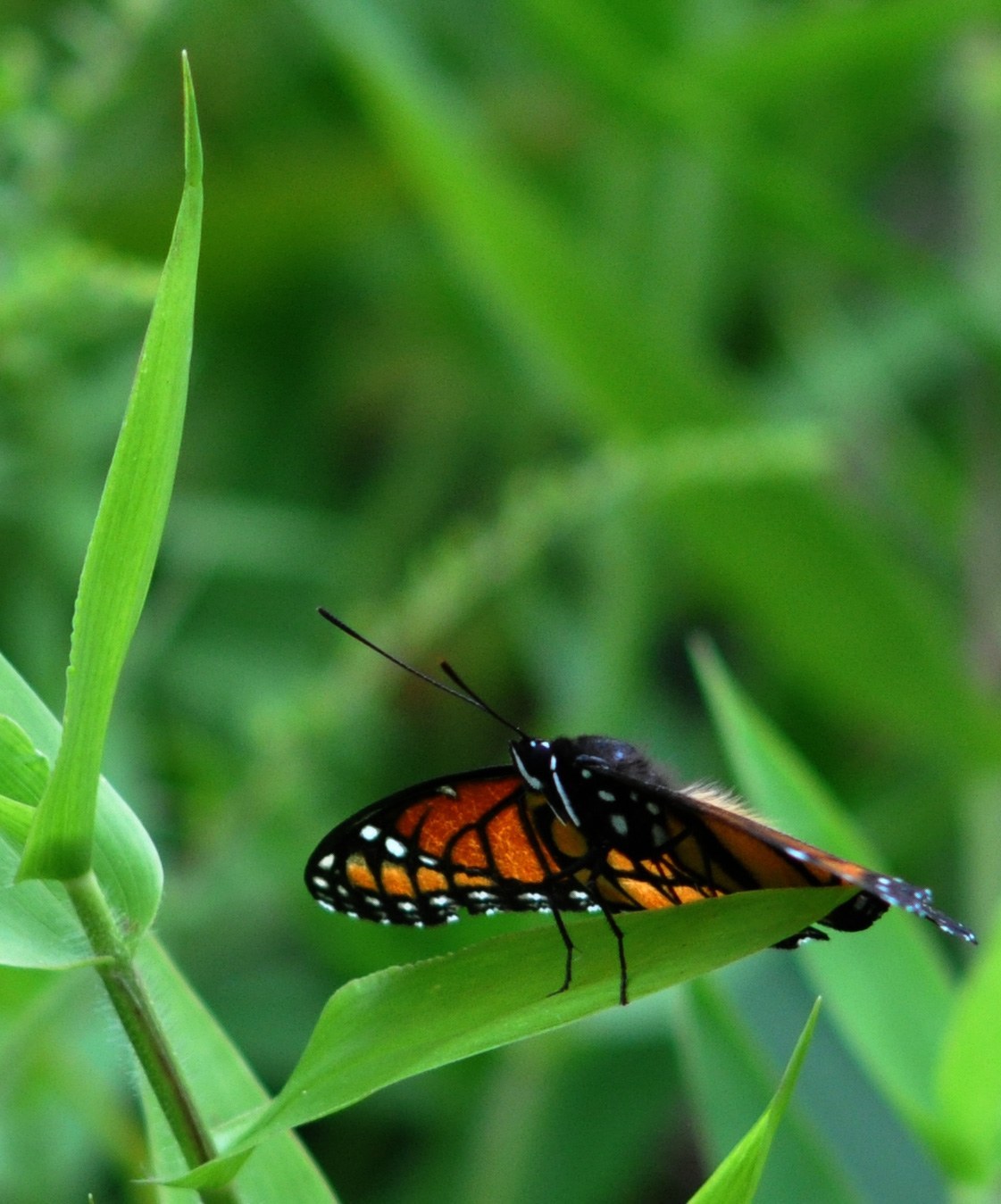
Viceroy Butterfly
Wetlands, meadows, riverbanks, willow thickets (North America)
Baltimore Checkerspot
Wet meadows, bogs, and marshy fields in the northeastern and Appalachian US
American Copper
Old fields, roadsides, and disturbed open ground with sorrel or dock
West Virginia White
Rich deciduous forest floors, especially near seeps and streams
Spring Azure
Woodland edges, gardens, shrubby clearings
Red Admiral
Gardens, woodland edges, parks, meadows
Sleepy Orange
Open woodland, fields, roadsides, and disturbed ground
Spicebush Swallowtail
Deciduous forests, woodland edges, gardens