Velvet Ant Identification Guide
Learn to recognize velvet ants — actually wingless wasps — by their dense, brightly colored fuzzy coat and fast ground-scurrying gait.
Read the full Velvet Ant encyclopedia entry →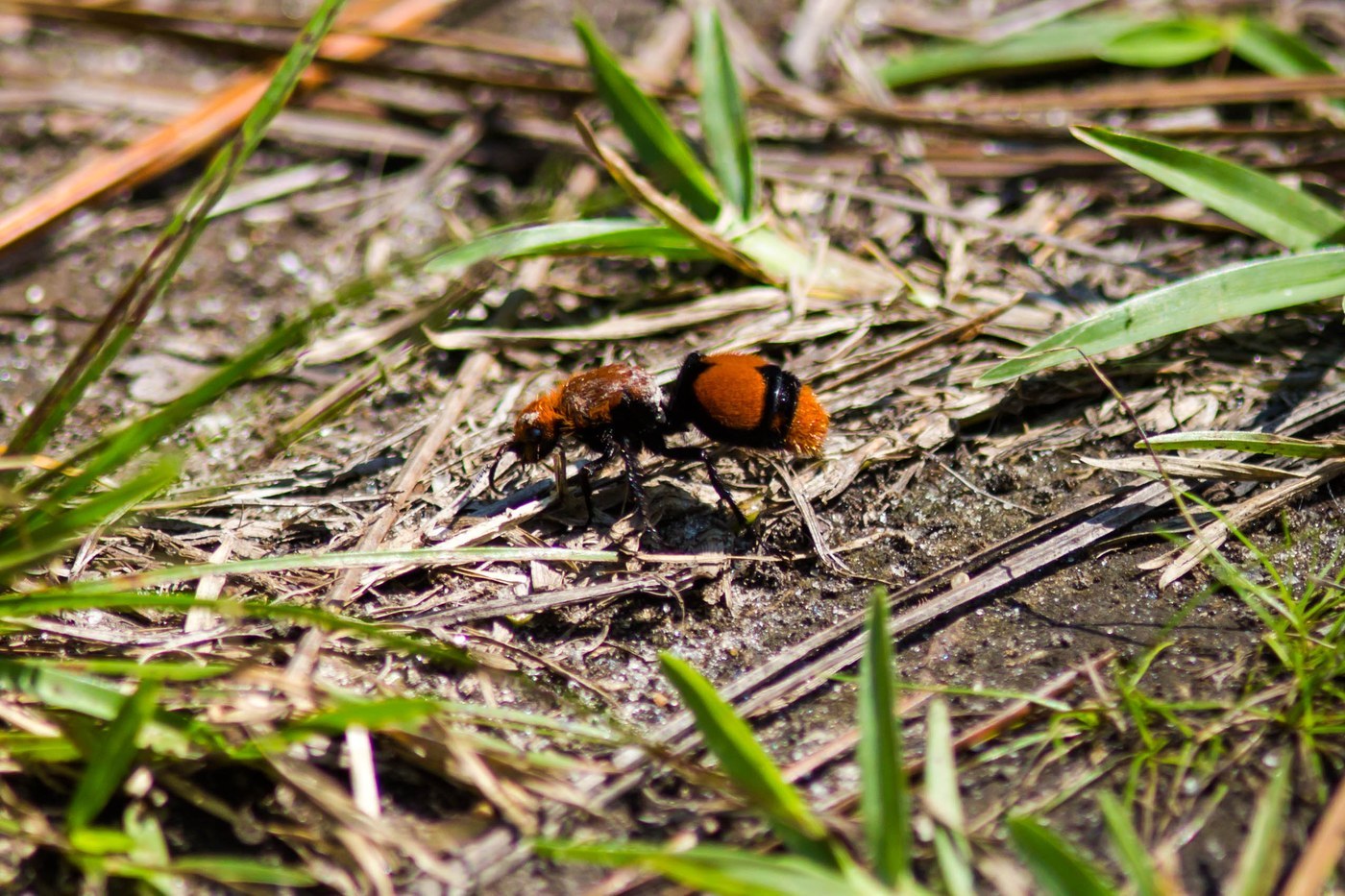
Key Visual Features
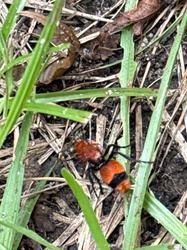
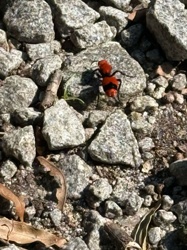
Despite the name, velvet ants (family Mutillidae, genus Dasymutilla and relatives) are wasps, not ants. Females are wingless and are the ones typically seen on the ground:
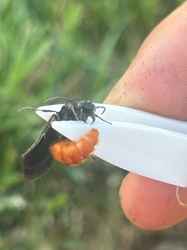
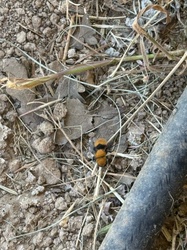
- Dense, velvety hair covering the body in bold patterns of red, orange, white, black, or silver
- A hard, robust exoskeleton compared to the more delicate body of a true ant
- Size varies by species, from about 5mm up to 25mm in larger species
- No wings on females; males, which are rarely seen on the ground, have wings and duller coloring
- A distinct, ant-like body shape with a narrow waist, but noticeably fuzzier and more colorful than any true ant
Where and When You'll See Them
Velvet ants favor open, sunny, sandy or disturbed ground — dunes, fields, roadsides, and dry open lots. Females are solitary and spend much of their time walking rapidly across bare soil searching for the ground nests of other bees and wasps, where they lay their eggs; the exact host species varies by region and velvet ant species. They're most active during the day in warm months, especially mid-to-late summer, and are easiest to spot moving quickly across open patches of ground rather than on flowers, though males can occasionally be seen visiting blooms for nectar. Because females lack wings, they rely entirely on ground travel and their tough exoskeleton to move safely through open terrain.
Similar-Looking Bugs
- True ants share a general body outline but are far less hairy, less brightly colored, and lack the plush, velvet-like texture.
- Other fuzzy, ground-dwelling wasps can look superficially similar, but few match the vivid, high-contrast color patterns typical of velvet ants.
- If picked up, some velvet ant species produce an audible squeaking sound (stridulation) by rubbing body segments together — a trait not shared by true ants.
Quick ID Checklist
- Densely fuzzy body in bold red, orange, white, or black patterns
- Wingless female with a hard, robust exoskeleton
- Ant-like shape but noticeably larger and fuzzier than true ants
- Fast walker on open, sandy, sunny ground
- May produce a squeaking sound if handled
Frequently asked questions
Is a velvet ant really an ant?
No, despite the name, velvet ants are wasps. The wingless, fuzzy individuals commonly seen walking on the ground are females of a wasp family.
Why do velvet ants look so fuzzy and colorful?
Their bodies are covered in dense, velvet-textured hair arranged in bright, high-contrast patterns, which helps distinguish them at a glance from true ants.
Where do velvet ants live?
They favor open, sunny, sandy or disturbed ground such as dunes, fields, and roadsides, where females search for the ground nests of other bees and wasps.
Do velvet ants fly?
Females are wingless and stay on the ground; males have wings and can fly but are seen far less often than the wingless females.
Velvet Ant identified by the community
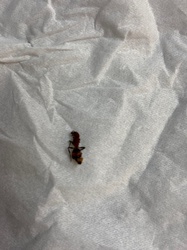
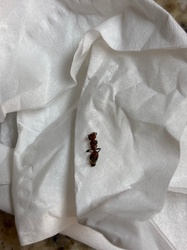
Recent Velvet Ant finds identified with Bug Identifier.