
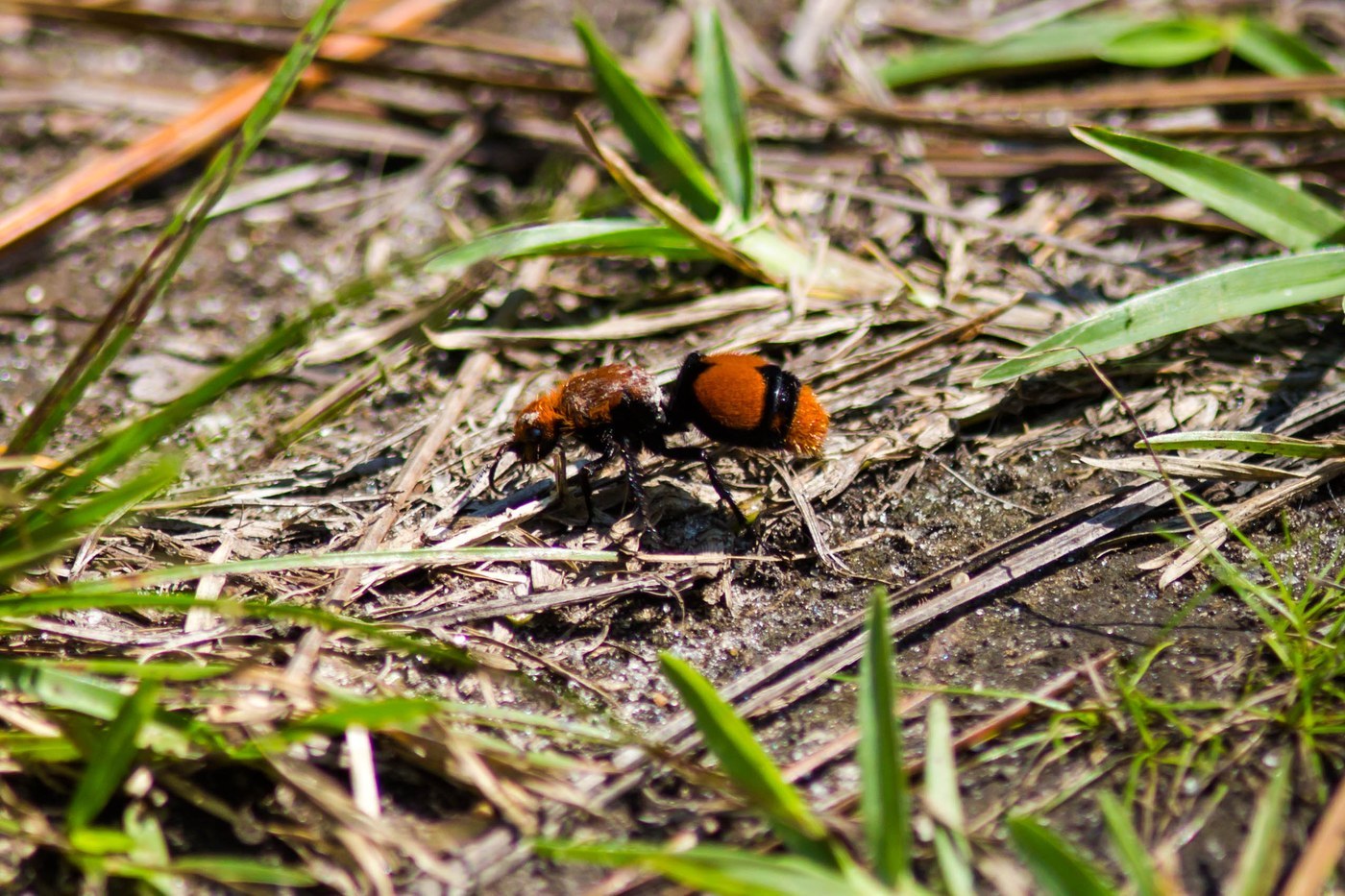
Velvet Ant
Dasymutilla occidentalis
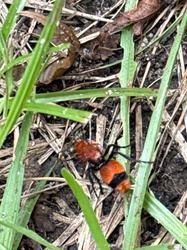
A densely fuzzy, brightly colored insect that looks like an oversized ant but is actually a wingless female wasp, instantly recognizable by its thick coat of red, orange, black, or white hair.
- Size
- 6–25 mm
- Habitat
- Sandy soils, open fields, dunes, roadsides in warm regions
- Danger
- Stings
Spotted a bug like this?
Identify any bug or insect from a photo, free.
Overview
Despite the common name, the velvet ant is not a true ant at all but a member of the wasp family Mutillidae. Females are wingless and covered in a dense pile of colorful hair, giving them an ant-like silhouette, while males have wings and often go unrecognized as the same species. Over 400 species occur in North America alone, ranging from black-and-white "panda ants" to vivid red-and-black "cow killers."
They are notable for their hard, heavily armored exoskeleton and their striking coloration, which functions as a warning signal; the folk name "cow killer" is applied to the largest eastern species and is an exaggeration rather than a literal description.
Ecologically, velvet ants are solitary parasitoids: females seek out the underground nests of ground-nesting bees and wasps to lay their eggs, making them a natural check on those host populations.
How to Identify
- Wingless females resemble large, fuzzy ants, 6–25 mm long, densely covered in short, velvety hair in bold color combinations such as red-and-black, orange-and-black, or black-and-white.
- Body is hard and heavily sclerotized (armored) compared to a typical ant's exoskeleton, an adaptation for surviving host wasp and bee defenses while invading nests.
- Winged males look more like typical wasps and are rarely identified without close inspection.
- Distinguished from true ants by the absence of a narrow, two-segmented waist node structure and by the dense fur-like pile covering the body.
Habitat & Range
Velvet ants are found across warm temperate and tropical regions worldwide, with the greatest diversity in the arid and sandy habitats of the southwestern and southeastern United States. They favor open, sunny ground such as sandy fields, dunes, prairies, and roadsides where their host insects nest underground. Adults are most active on the ground surface during the day in the warmer months, especially summer.
Behavior & Diet
Females walk conspicuously across open ground searching for the underground burrows of solitary bees and wasps, into which they lay an egg that develops as a parasitoid on the host's pupa. Their bright coloration is thought to serve as aposematic (warning) signaling to potential predators, and some species also produce an audible squeaking sound (stridulation) when disturbed. Males, which can fly, are typically found visiting flowers for nectar and are far less often noticed than the wingless, ground-walking females.
Life Cycle
Velvet ants undergo complete metamorphosis. A female lays a single egg inside the brood cell of a host bee or wasp nest; the hatched larva develops as an external or internal parasitoid, consuming the host pupa before spinning a cocoon and pupating within the host's cell. Adults emerge later to mate, with males seeking out flightless females on the ground. Most temperate species complete one generation per year, overwintering as a larva or pupa within the host cell.
Frequently asked questions
Is a velvet ant an ant or a wasp?
It is a wasp; only the wingless, ant-like females lack wings, while males fly and look more typically wasp-like.
Why is it called a cow killer?
The nickname is a folklore exaggeration referring to the large red-and-black eastern species, not a literal description.
What do velvet ant larvae eat?
They develop as parasitoids inside the underground nest cells of ground-nesting bees and wasps, feeding on the host's pupa.
Where would I see a velvet ant?
Walking across open, sandy or sunny ground in fields, dunes, or roadsides during the warmer months.
Velvet Ant guides
In-depth guides for identifying, understanding, and living alongside Velvet Ant.
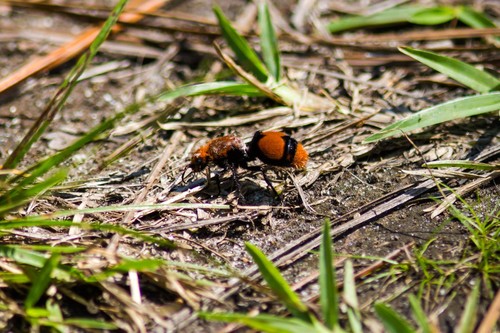
Velvet Ant identified by the community
Real finds identified with Bug Identifier.
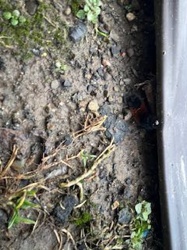
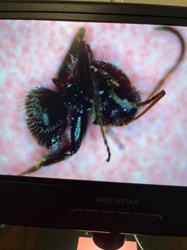
Other bugs you may enjoy
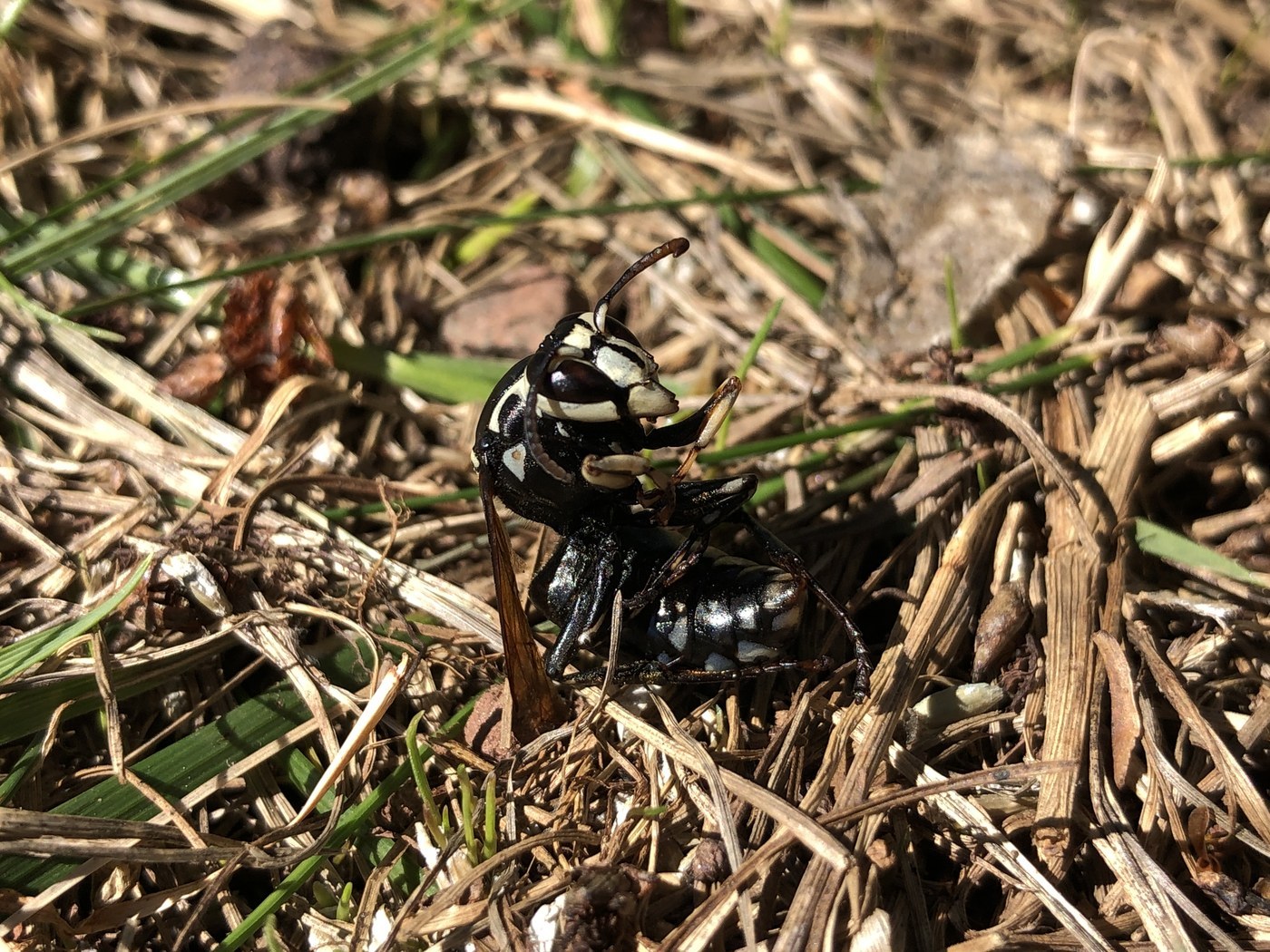
Bald-faced Hornet
Woodland edges, shrubs, and tree branches across North America
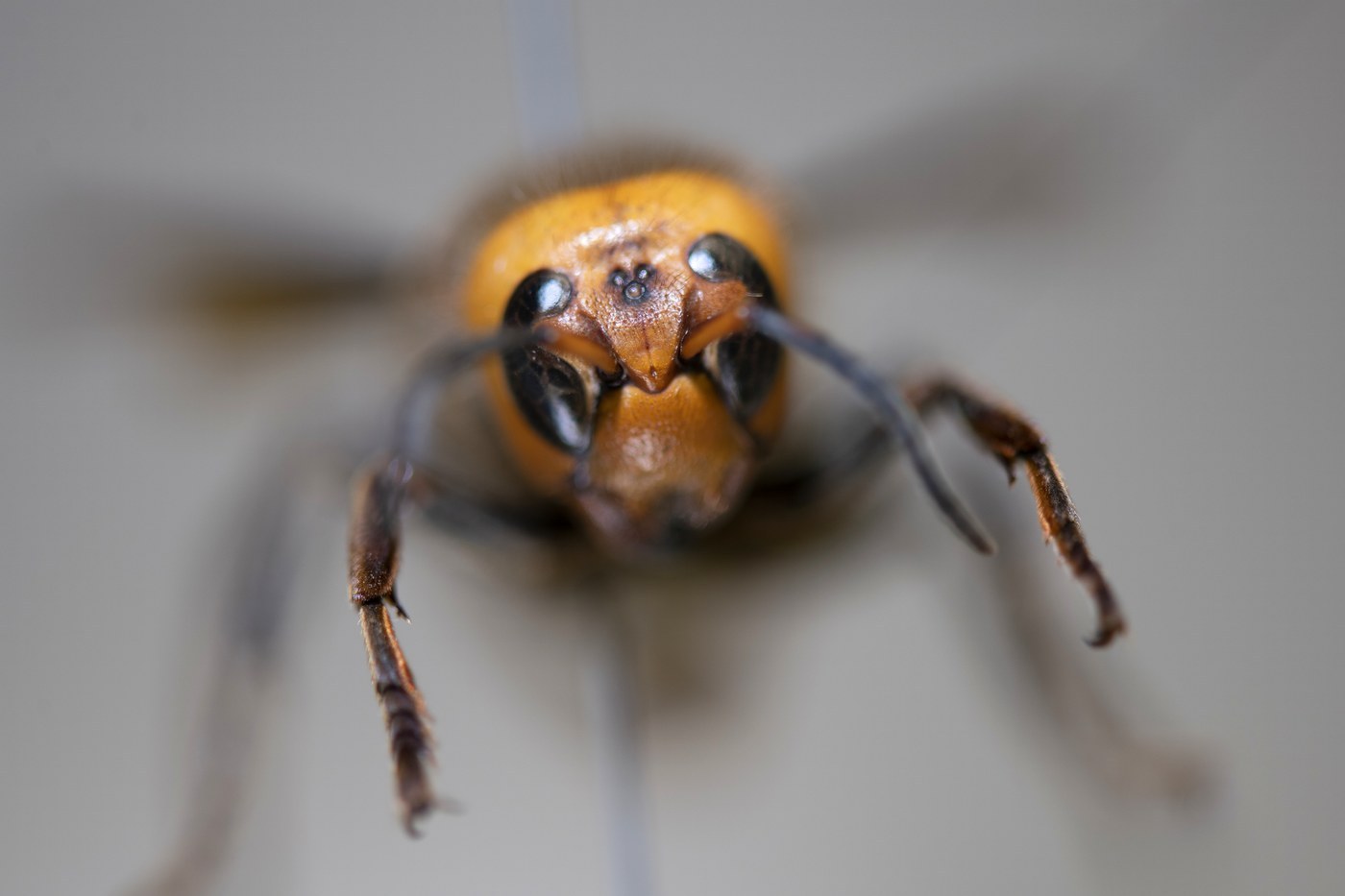
Asian Giant Hornet
Forested lowlands and mountains of East and South Asia; low tree hollows
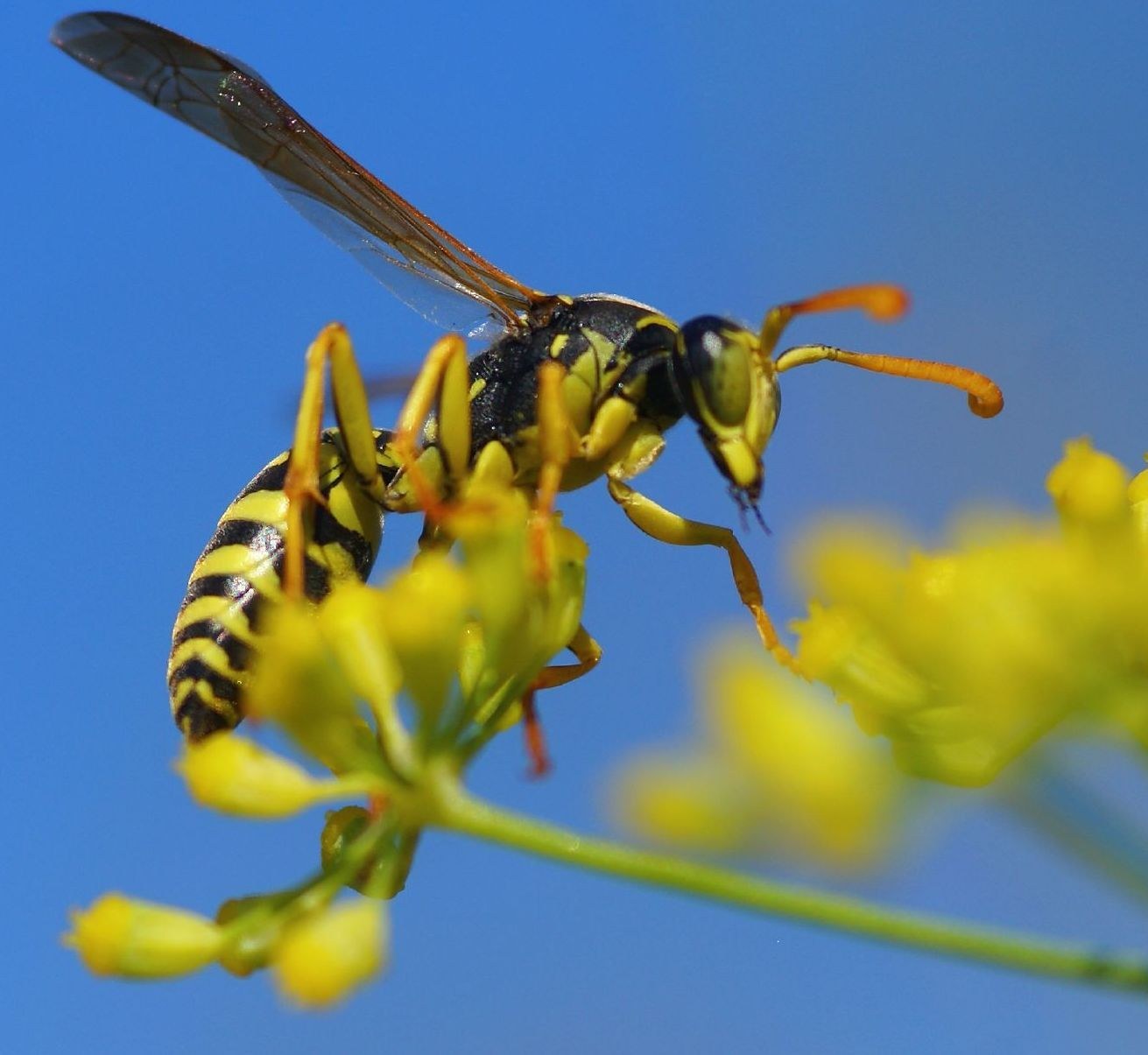
Yellowjacket
Underground nests, wall voids, gardens, picnic areas
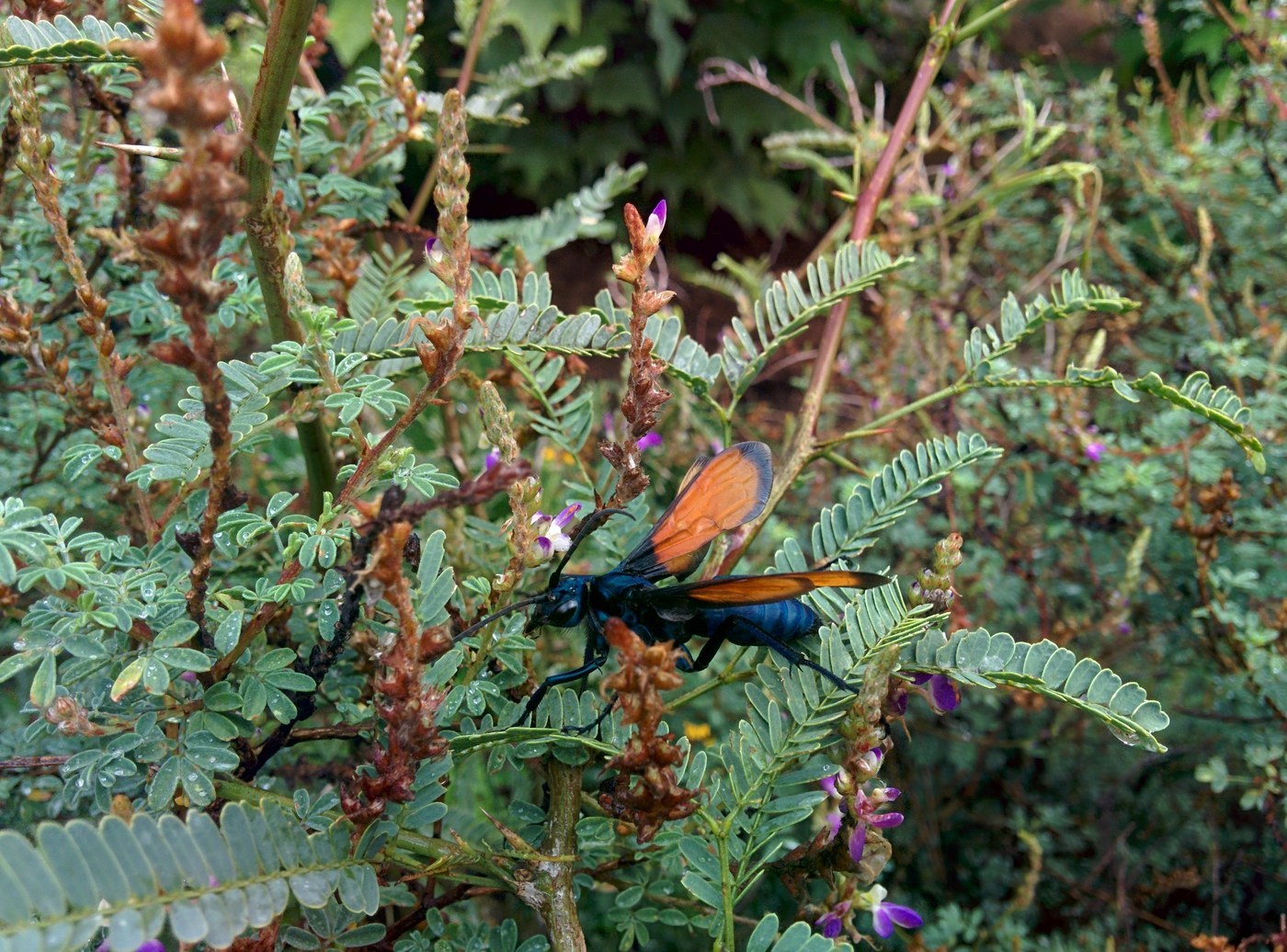
Tarantula Hawk
Deserts, arid scrublands, and dry grasslands
Tarantula Hawk Wasp
Deserts, grasslands, and scrub of the Americas
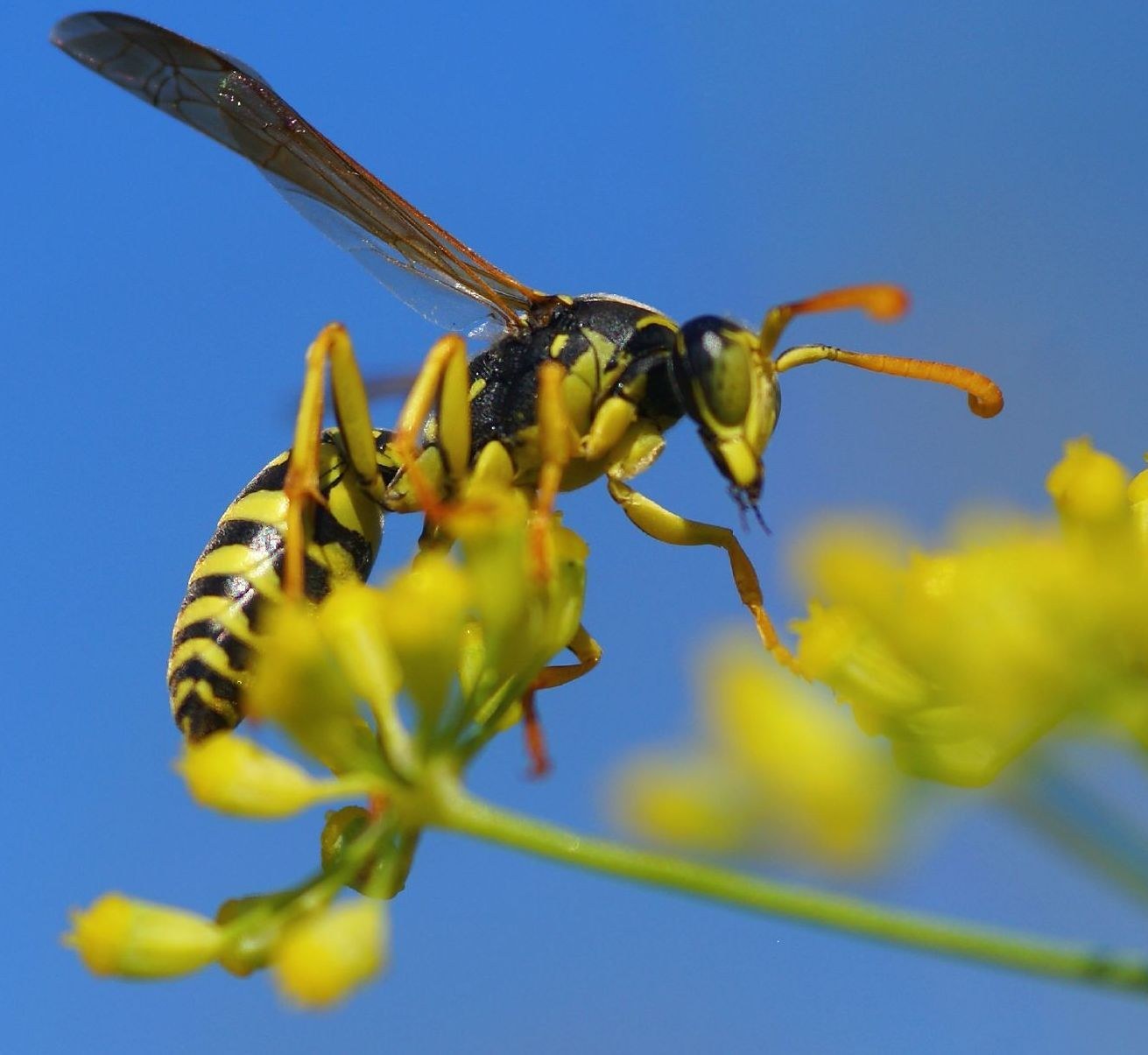
Wasp
Gardens, woodlands, eaves, and urban areas worldwide
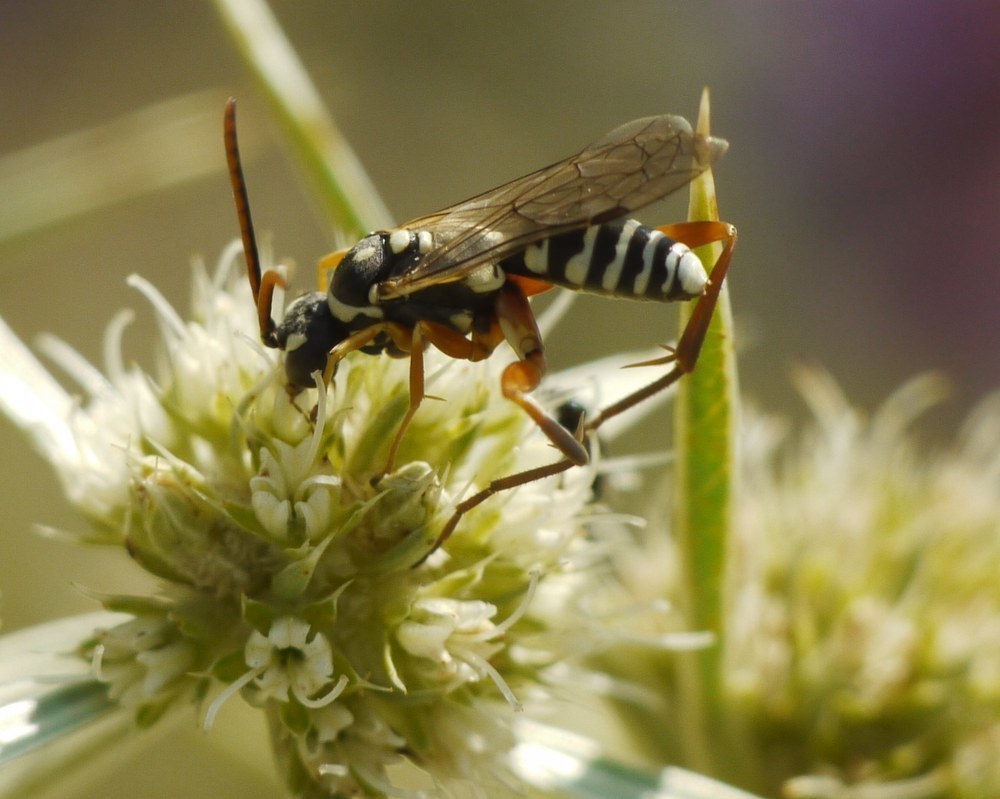
Spider Wasp
Gardens, grasslands, and sandy open areas worldwide
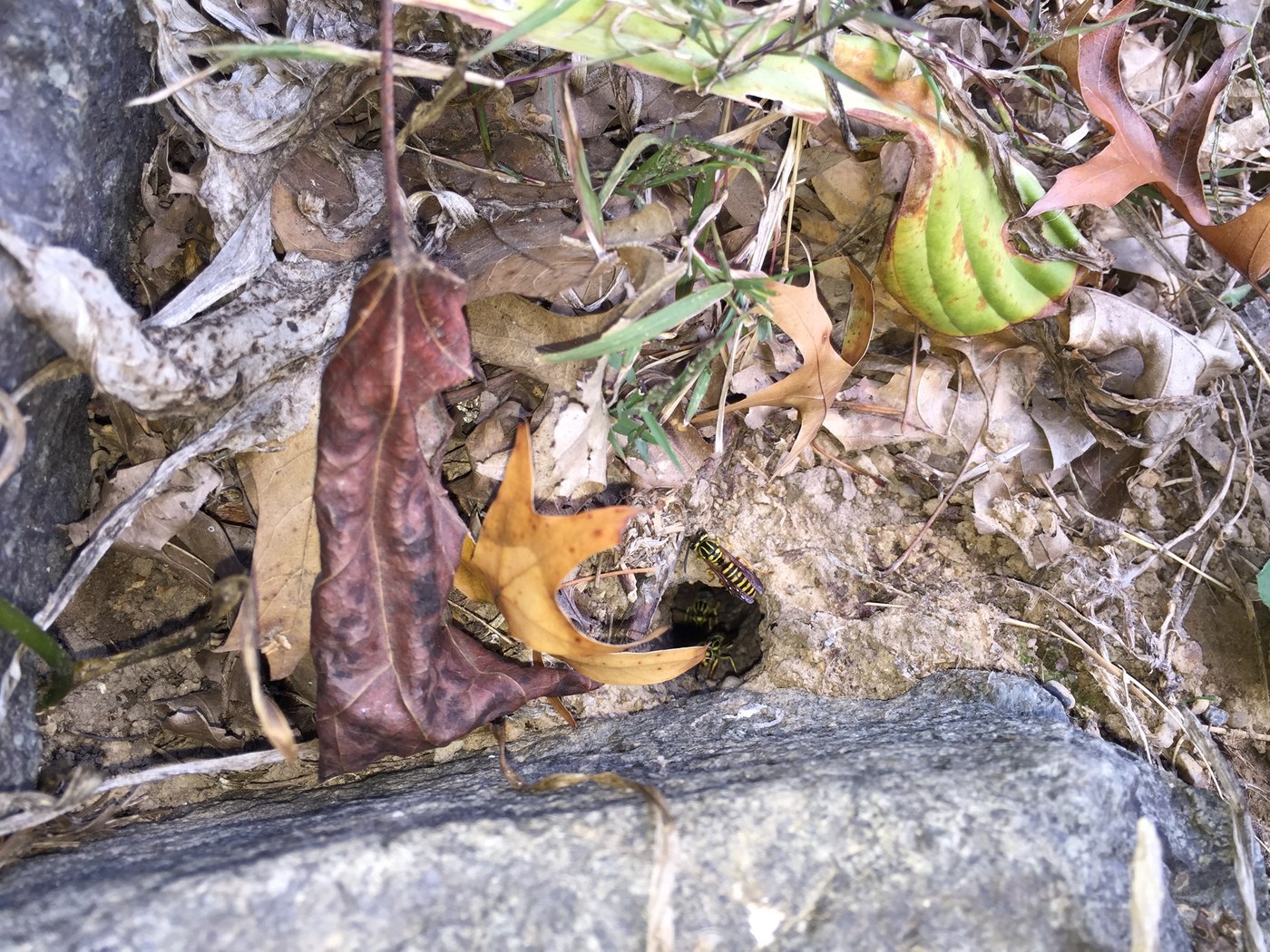
Yellow Jacket
Ground nests, wall voids, parks, and areas near food sources
Sawfly
Gardens, woodlands, and orchards on host foliage
Red Paper Wasp
Eaves, porch ceilings, sheds, open woodland edges, gardens
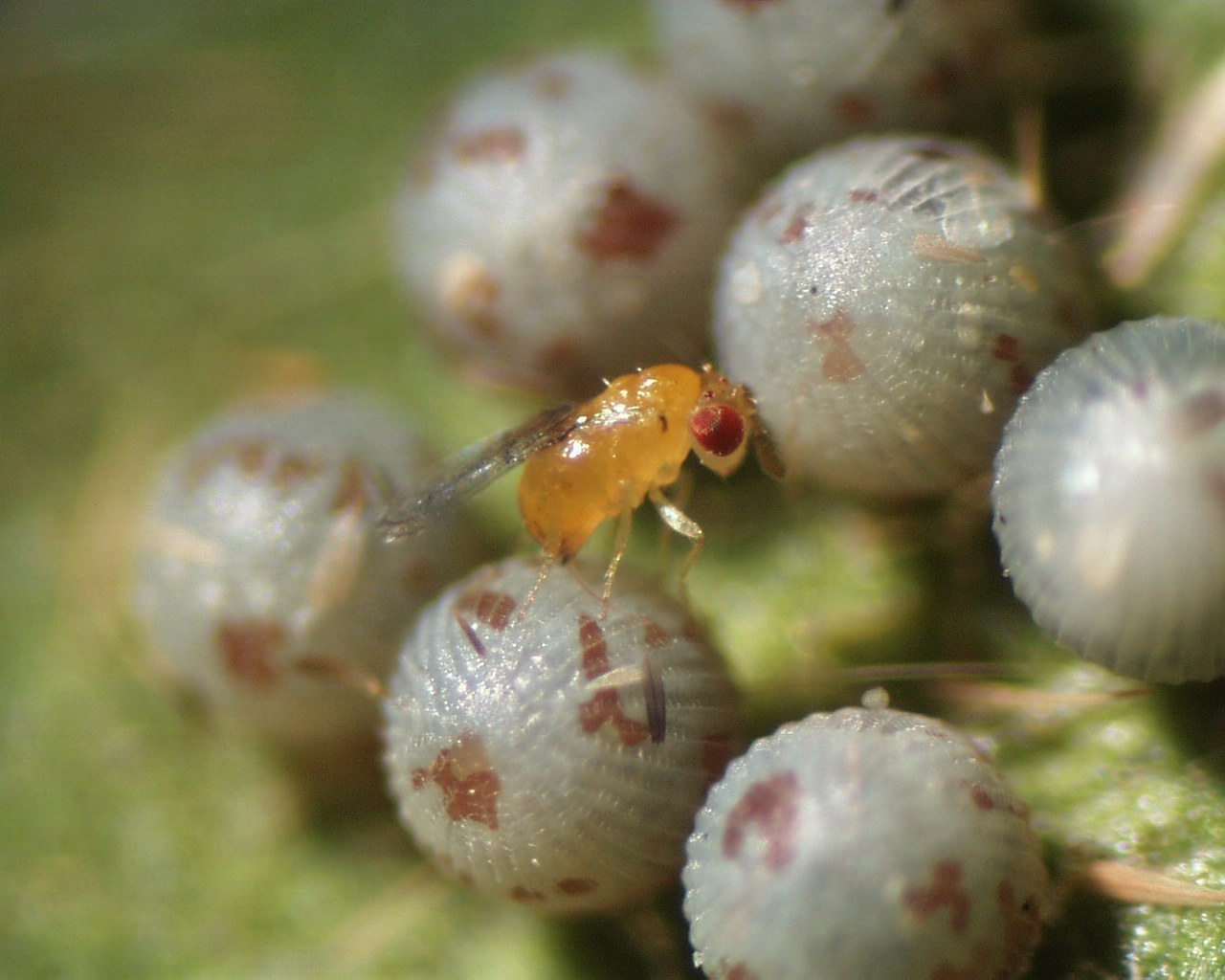
Trichogramma Wasp
Fields, gardens, and crops worldwide
Sand Wasp
Sandy soils, dunes, beaches, and bare open ground