
Viceroy Butterfly Identification Guide
Tell the viceroy apart from a monarch using its smaller size and the extra black line across its hindwing.
Read the full Viceroy Butterfly encyclopedia entry →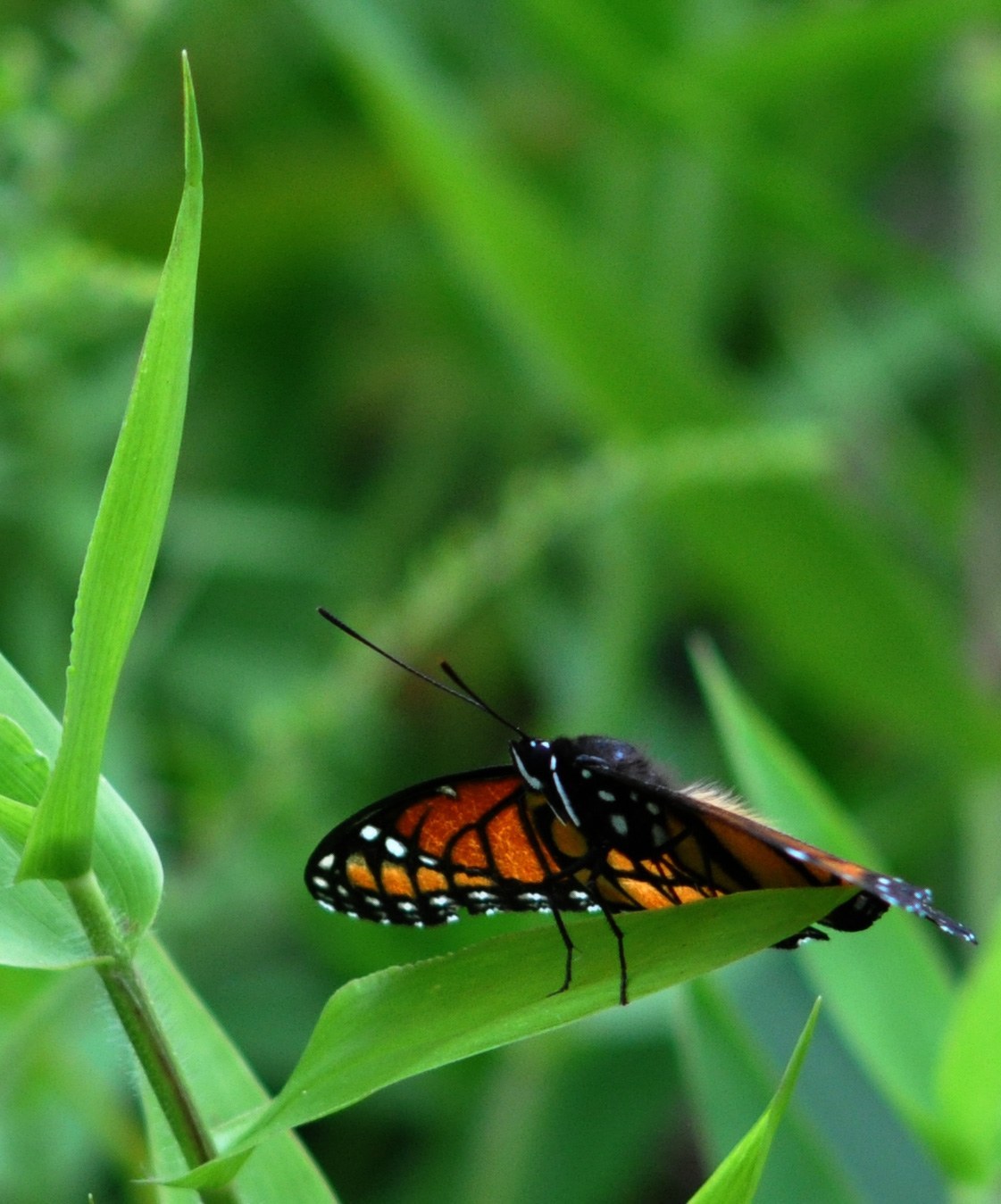
Key Visual Features
The viceroy (Limenitis archippus) closely resembles the monarch butterfly but has key differences once you know what to look for.
- Size: Wingspan of about 2 3/4 to 3 1/4 inches (7–8 cm), noticeably smaller than a monarch.
- Color: Bright orange wings crossed by bold black veins, with a black-bordered wing margin dotted with white spots — very monarch-like at a glance.
- Key distinguishing mark: A single black line curves across the hindwing, running roughly parallel to the outer margin and cutting through the veins — monarchs do not have this line.
- Body shape: Slender body typical of brush-footed butterflies, smaller and less robust than a monarch's.
- Wings: Wings are more rounded overall and slightly smaller in proportion than a monarch's elongated forewings.
- Antennae: Black clubbed antennae.
Where and When You'll See One
Viceroys are found across most of the United States and southern Canada, favoring wetlands, streamsides, meadows, and open areas near willow and poplar trees, which serve as caterpillar host plants. They fly with a distinctive pattern of a few quick wingbeats followed by a flat glide, which differs from the monarch's slower, more languid flight. Look for them from late spring through early fall, often perching on low vegetation near water.
Similar-Looking Bugs
- Monarch: Larger, with no extra black line crossing the hindwing veins, and a slower, more soaring flight style.
- Queen butterfly: Found more in southern regions, with a darker orange-brown color and white spots scattered across both wing surfaces rather than a clean black-veined pattern.
- Soldier (or tropic) butterfly: Similar orange coloring in southern ranges, but again lacking the viceroy's diagnostic curved black hindwing line.
Quick ID Checklist
- Bright orange wings with bold black veining, monarch-like
- Extra black line curving across the hindwing (missing in monarchs)
- Noticeably smaller than a monarch, more rounded wings
- Quick-flap-then-glide flight pattern
- Found near willows, poplars, wetlands, and streamsides
Frequently asked questions
What is the single best way to tell a viceroy from a monarch?
Check the hindwing for a black line that curves across the veins roughly parallel to the wing edge — viceroys have this line and monarchs do not, making it the most reliable identification feature.
Is the viceroy really smaller than the monarch?
Yes, viceroys have a noticeably smaller wingspan and a less robust body than monarchs, though the size difference can be subtle when the two aren't seen side by side.
Where is the best place to look for a viceroy?
Search near wetlands, streamsides, and areas with willow or poplar trees, since these plants serve as host plants for viceroy caterpillars and adults tend to stay close to them.
Does the viceroy's flight style differ from the monarch's?
Yes, viceroys tend to alternate a few rapid wingbeats with a flat glide, while monarchs typically show a slower, more sustained soaring flight, which can help with identification even at a distance.