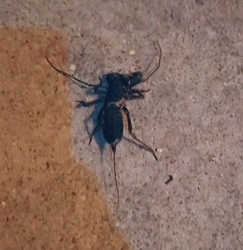
Vinegaroon Identification Guide
A large, dark, flattened arachnid best identified by its long whip-like tail and the sharp vinegar-like odor it can release.
Read the full Vinegaroon encyclopedia entry →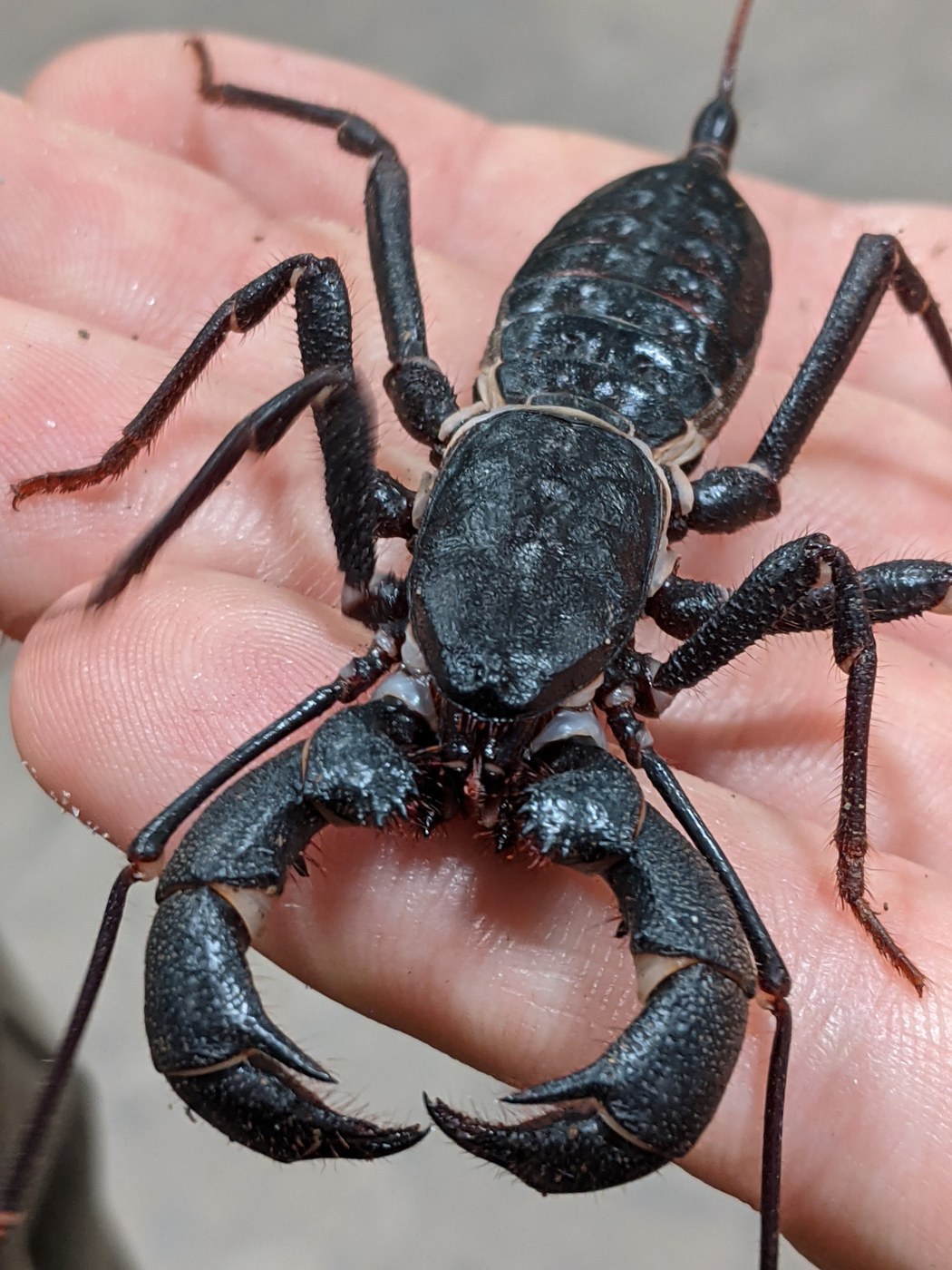
Key Visual Features
- Robust, flattened body reaching about 2-3 inches (5-7.5 cm) in length excluding the tail, with an overall dark brown to nearly black coloring and a somewhat glossy exoskeleton.
- A long, thin, whip-like tail filament extends from the rear of the body; it lacks any stinger and instead functions as a sensory structure the animal can wave and probe with.
- The name "vinegaroon" comes from its ability to release a strong, sharp, vinegar-smelling spray from glands near the base of the tail when it feels threatened — a distinctive identification clue distinct from appearance alone.
- Front legs are long, slender, and held out ahead of the body like antennae for sensing surroundings, while the back three pairs of legs are used for walking.
- Pedipalps (front appendages) are heavy, spiny, and pincer-like, used for grasping, and are noticeably thick and robust compared to the slender front legs.
- Body shape from above is broad and shield-like, tapering toward the rear where the whip tail attaches, allowing it to wedge into narrow spaces.
Where and When You'd See It
- Found in arid and semi-arid regions, typically sheltering by day in burrows it digs itself, or under rocks, logs, and debris.
- Emerges primarily at night to forage, often seen crossing open ground, trails, or pavement after dark during warm months.
- Favors slightly moist microhabitats within otherwise dry landscapes, such as burrows with stable humidity below the surface.
- Most commonly encountered during warm, humid nights, particularly after rain when it may be more active on the surface.
Similar-Looking Bugs
- True scorpions have a curved tail ending in a stinger rather than a thin whip filament, making the tail the clearest way to rule scorpions out.
- Whip scorpions in general share this same body plan closely, and the vinegar odor combined with the whip-like tail is one of the more distinctive confirming traits for this particular group.
- Camel spiders lack any tail filament and instead have oversized, forward-facing jaws dominating the front of the body.
Quick ID Checklist
- Dark brown to black, flattened body about 2-3 inches long, not counting the tail.
- Long, thin whip-like tail with no stinger.
- Releases a sharp vinegar-like odor from the base of the tail when disturbed.
- Long feeler-like front legs held forward; thick, spiny grasping pedipalps.
- Found in burrows or under debris in arid regions, active on the surface at night.
Frequently asked questions
What gives the vinegaroon its name?
It's named for the sharp, vinegar-like odor it can release from glands near the base of its tail when disturbed, a distinctive clue alongside its appearance.
How is the tail different from a scorpion's tail?
A vinegaroon's tail is a long, thin, whip-like filament with no stinger, used as a sensory organ, while a true scorpion's tail curves upward and ends in a stinger.
Where does a vinegaroon typically shelter during the day?
It usually stays in a self-dug burrow or under rocks, logs, and debris during daylight hours, emerging to forage on the surface after dark.
What are the long front legs for if not walking?
They act as sensory feelers, held out ahead of the body and swept along the ground to detect surroundings, while the remaining three pairs of legs handle actual walking.
Vinegaroon identified by the community
Recent Vinegaroon finds identified with Bug Identifier.