
Vivid Dancer Identification Guide
Learn how to recognize the Vivid Dancer, a strikingly violet-blue damselfly common around western streams and ponds.
Read the full Vivid Dancer encyclopedia entry →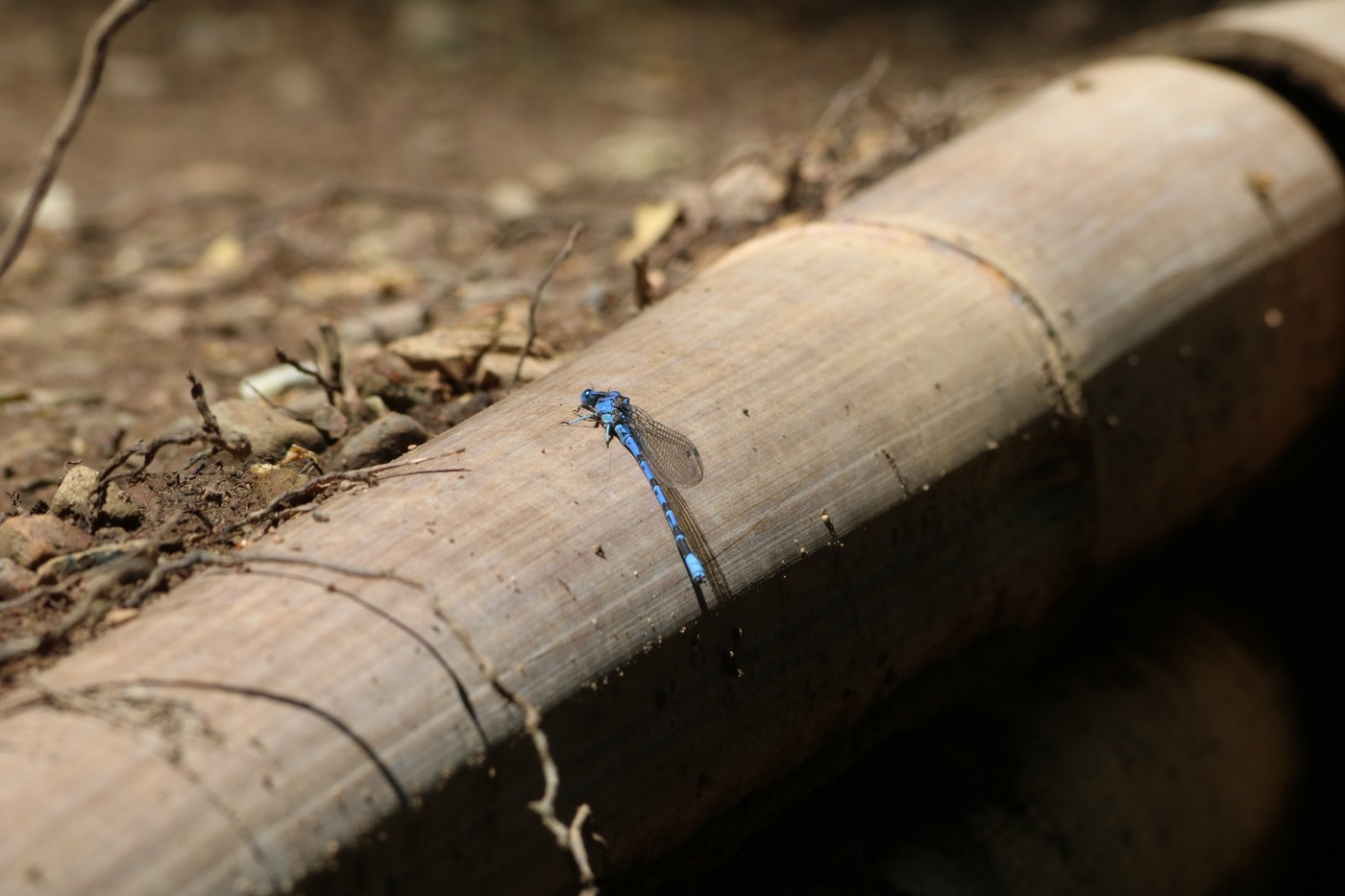
Key Visual Features
The Vivid Dancer is a slender damselfly, typically measuring around 1.1 to 1.4 inches (28 to 35 mm) in length. Like all dancers (genus Argia), it holds its wings folded together over its back at rest, distinguishing it from dragonflies, which rest with wings spread flat.
- Color: Mature males are a vivid, almost electric violet-blue across the thorax and abdomen, giving the species its name. Females and immature individuals tend to be duller, showing tan, brown, or pale blue-gray tones.
- Thorax markings: The thorax shows dark stripes bordered by the bright ground color, creating a bold striped pattern when viewed from the side.
- Abdomen: The abdomen is long and thin, with dark segment markings that can appear as rings or wedge-shaped marks near the tip.
- Eyes: Large, well-separated compound eyes sit on either side of the head, a hallmark of damselflies generally.
- Legs and wings: Legs are long and spindly, useful for perching on rocks and vegetation. Wings are clear and narrow, with a small pigmented spot (pterostigma) near the tip of each wing.
Where and When You'd See It
Vivid Dancers favor rocky streams, rivers, and occasionally ponds across the western and south-central United States. Look for them perched on exposed rocks, gravel bars, or low streamside vegetation, often in full sun. They are active fliers during the warmer months, generally from late spring through early fall, and are most visible during the heat of midday when they bask and forage near the water's edge.
Similar-Looking Species
Several other Argia dancers overlap in range and can be confused with the Vivid Dancer:
- Blue-ringed Dancer: Shows more distinct pale rings around each abdominal segment rather than a uniform violet wash.
- Springwater Dancer: Tends to have a more turquoise or teal cast rather than violet-blue.
- Aztec Dancer: Similar size but often shows a slightly different thoracic stripe pattern; close inspection of the abdomen tip markings helps separate the two.
Because dancer species are notoriously similar, close-up photos of the thorax pattern and the tip of the abdomen are often needed for a confident identification.
Quick ID Checklist
- Wings held closed over the back at rest (damselfly, not dragonfly)
- Mature males show a vivid violet-blue body color
- Bold dark stripes on a bright-colored thorax
- Found perched on rocks or low plants along streams and rivers
- Slender build with widely separated eyes
Frequently asked questions
How can I tell a Vivid Dancer from a dragonfly?
Damselflies like the Vivid Dancer fold their wings together over their back when perched, while dragonflies hold their wings out flat to the sides. Damselflies also have a thinner, more delicate body and eyes that are clearly separated rather than touching.
Why do male and female Vivid Dancers look so different?
Like many damselflies, Vivid Dancers show sexual dimorphism. Mature males develop the bright violet-blue coloring used in display and recognition, while females and young males stay in more muted brown or tan tones for camouflage.
What time of day is best for spotting Vivid Dancers?
They are most active and easiest to observe during warm, sunny midday hours when they perch on rocks and vegetation along streams to bask and hunt for small flying insects.
Do Vivid Dancers stay near water year-round?
Adults are only present during the warmer flight season, generally spring through early fall. Outside that window they are in earlier life stages, developing in the water itself rather than flying near it.