
Water Beetle Identification Guide
Learn how to spot a water beetle by its smooth, streamlined body and paddle-like swimming legs.
Read the full Water Beetle encyclopedia entry →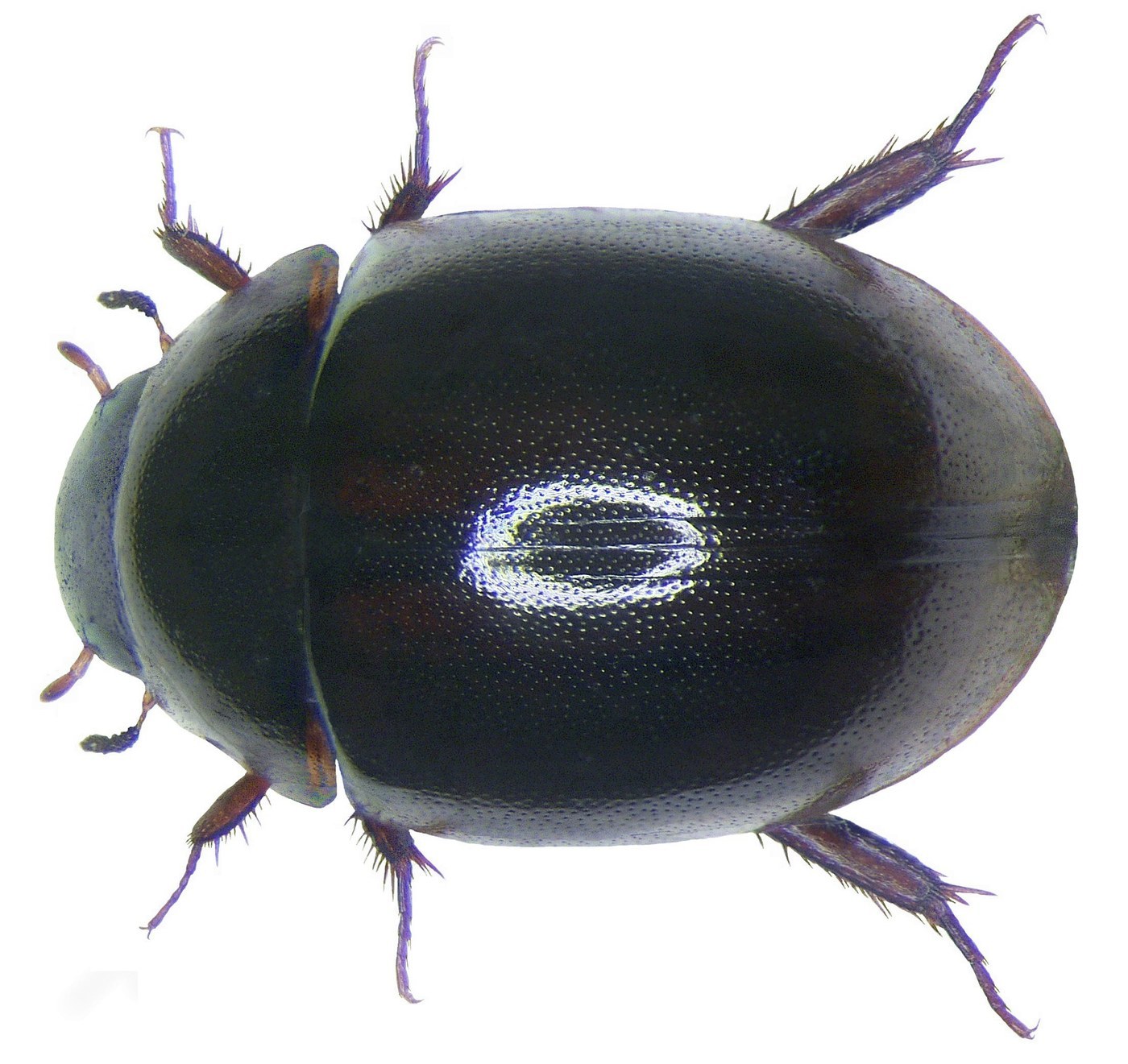
Key Visual Features
- Body shape: Smooth, oval, and streamlined, flattened enough to reduce drag while swimming, typically ranging from about 1/4 inch to over 1.5 inches depending on species.
- Color: Commonly dark brown, black, or olive, sometimes with a subtly glossy sheen; some species show faint yellowish or amber edging along the body margins.
- Legs: The hind pair of legs is notably flattened and fringed with fine hairs, forming paddle-like structures used for swimming, while the front legs are shorter and used for gripping.
- Wings: Hardened wing covers (elytra) seal tightly over the abdomen, helping trap a small air bubble that many species use while submerged.
- Antennae: Short and thread-like, often held close to the head, less noticeable than the beetle's prominent eyes.
- Underside: Smooth, rounded belly that aids in gliding through water.
Where and When You'd See One
Water beetles live in ponds, slow-moving streams, marshes, and other freshwater habitats with plenty of vegetation. They are most active in warmer months, swimming near the surface or among submerged plants, and often periodically rise to the water's surface to renew their air supply. Some species are also drawn to lights at night and may be found near porch lights or windows after leaving the water to disperse.
Similar-Looking Creatures
- Diving beetles: Very closely related and similar in shape, but often larger and more streamlined, with powerful synchronized swimming strokes.
- Whirligig beetles: Smaller, more oval, and known for rapid, erratic spinning movement on the water's surface rather than swimming beneath it.
- Water scavenger beetles: Similar rounded, dark body but typically swim with alternating (rather than synchronized) leg strokes and have shorter, clubbed antennae.
- True bugs found in water (e.g., water boatmen): Lack hardened wing covers and have a more triangular, flattened body compared to the oval beetle shape.
Quick ID Checklist
- Smooth, oval, streamlined body, usually dark brown, black, or olive.
- Flattened, hair-fringed hind legs built for swimming.
- Hardened wing covers sealing over the abdomen.
- Found in ponds, streams, and marshes with vegetation.
- Rises periodically to the surface for air, most active in warm months.
Frequently asked questions
What feature best identifies a water beetle as adapted for swimming?
Look at the hind legs: true water beetles have flattened, hair-fringed hind legs that work like paddles, clearly different from the thin walking legs of land-dwelling beetles.
How do water beetles breathe while submerged?
Many species trap a small air bubble beneath their hardened wing covers and periodically return to the surface to replenish it, which is a helpful behavioral clue when observing them in ponds.
How can I tell a water beetle apart from a whirligig beetle?
Whirligig beetles are typically smaller and known for rapid, circular spinning on the water's surface, while other water beetles more often swim steadily beneath the surface using their paddle-like hind legs.
What habitats are best for finding water beetles?
Ponds, slow streams, and marshes with abundant submerged or floating vegetation are ideal places to look, especially during warmer months when the beetles are most active.