
Water Cricket Identification Guide
A compact, velvety-bodied surface bug that scurries over fast-flowing streams and rocky pond edges.
Read the full Water Cricket encyclopedia entry →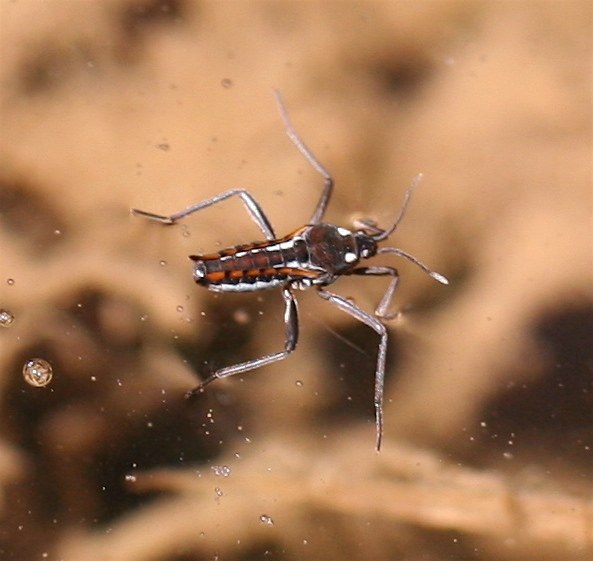
Key Visual Features
- Small, compact body typically 0.2-0.3 inches (5-8 mm) long, shorter and stockier than a typical water strider
- Dark brown to blackish body, often with a fine velvety texture from dense short hairs
- Reddish or orange tinges sometimes visible on the underside or legs
- Legs proportionally shorter and thicker than the common water strider's, suited to gripping in moving water
- Short antennae and a relatively broad head compared to its slender relatives
- Wingless or short-winged in most individuals, giving a compact silhouette
- Body held close to the water surface while moving in quick, short darts
Where and When You'll See It
Water crickets are most often found on fast-flowing streams, rocky brooks, and the edges of rivers, though they also occur along sheltered stream margins with slower current. They cling to the surface film near rocks, overhanging banks, and debris, using their grip to avoid being swept away. They are active from spring through fall and tend to move in short, quick bursts rather than long, gliding skates, often darting for cover when disturbed by shadows or vibrations. They frequently rest in small groups on quiet eddies just behind rocks or fallen branches, where the current slows enough for them to hold position without being carried downstream. Their compact body and strong grip allow them to persist in habitats too turbulent for most other surface-dwelling bugs.
Similar-Looking Bugs
- Common water strider: larger and more slender, with much longer legs, typically found on calmer water rather than fast streams.
- Water measurer: has a distinctly elongated, stick-like head and body, and moves slowly rather than darting.
- Broad-shouldered water strider: similar compact build but usually found on calmer backwaters and lacks the reddish underside tinge often seen on water crickets.
- Springtails (on water): much tinier, often clustered in groups, and lack the distinct leg structure of true bugs.
Quick ID Checklist
- Small, compact, velvety dark body under a third of an inch long
- Shorter, thicker legs than a water strider
- Reddish tinge sometimes visible on legs or underside
- Quick, short darting movements rather than long glides
- Found gripping the surface film of fast-flowing streams or rocky stream edges
Frequently asked questions
How do I tell a water cricket from a water strider?
Water crickets are smaller and stockier with shorter, thicker legs and a velvety texture, and they favor fast-flowing streams, while water striders are larger and more slender with long legs suited to gliding across calmer water.
Why is it called a water cricket?
The common name references its compact body and quick, hopping-like darting movements across the water surface, reminiscent of a cricket's quick motions, though it is a true bug, not a cricket.
What type of water does the water cricket prefer?
It is most commonly found on fast-flowing streams and rocky brook edges, though it can also occur along sheltered margins of slower water.
Does the water cricket have wings?
Most individuals are wingless or have only short, reduced wings, resulting in a compact, low-profile body.