
Water Measurer Identification Guide
A slow-moving, stick-thin insect that tiptoes across the water surface hunting tiny prey near pond edges.
Read the full Water Measurer encyclopedia entry →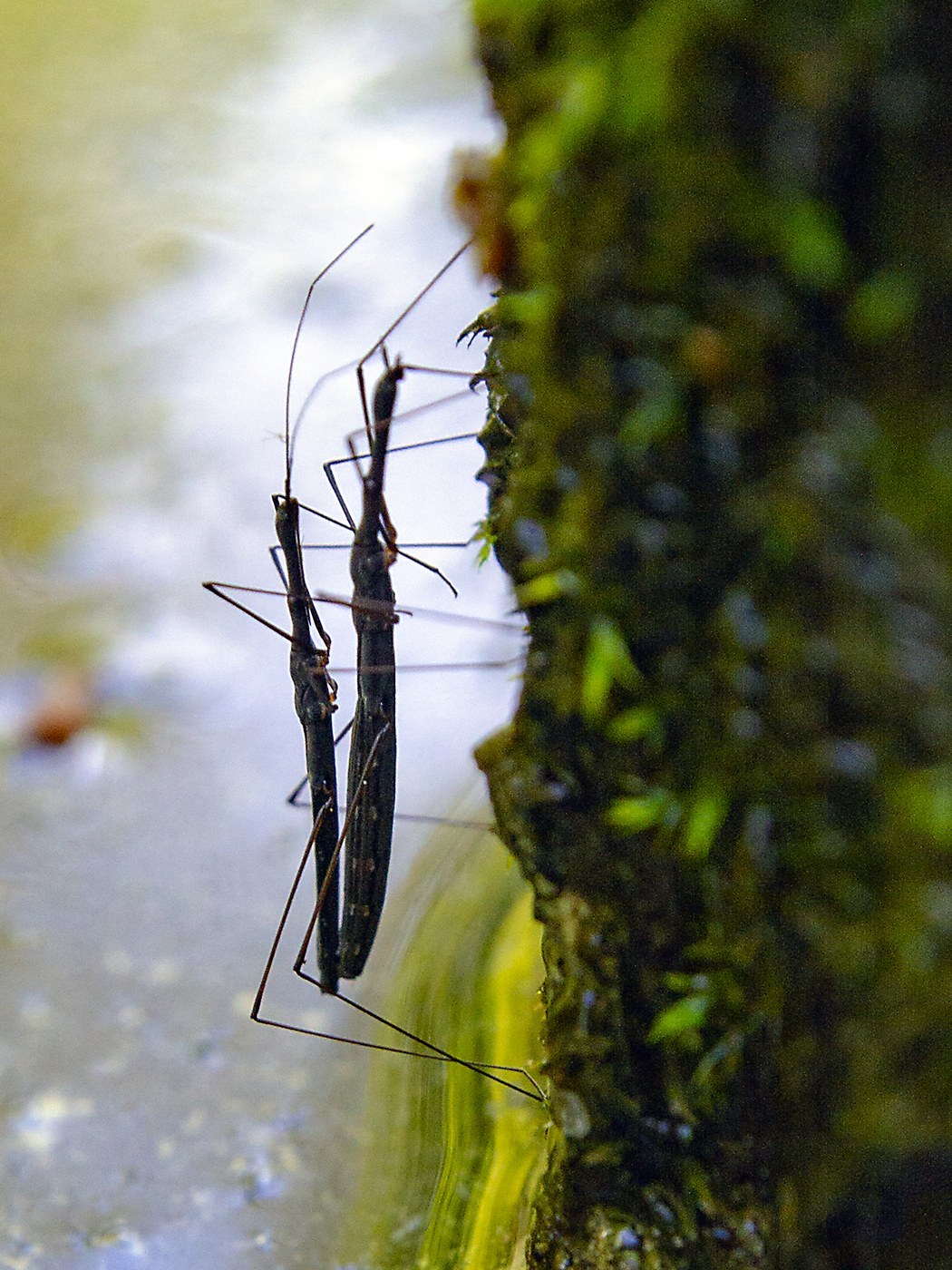
Key Visual Features
- Very slender, elongated body around 0.35-0.5 inches (9-13 mm) long, giving it a stick-like appearance
- Grayish-brown to dark olive coloring, often with faint pale markings along the body
- Distinctively long, narrow head compared to the rest of the body, longer than in most other surface-dwelling bugs
- Long, thin legs positioned for slow, careful walking rather than rapid skating
- Slim, straight abdomen without the compact, oval shape seen in many other water bugs
- Short antennae relative to the head length
- Usually wingless or short-winged, adding to its delicate, twig-like look
Where and When You'll See It
Water measurers are found walking deliberately across still or slow-moving water at the edges of ponds, marshes, ditches, and quiet backwaters, often close to emergent vegetation, algae mats, or floating debris. Unlike the fast-skating water strider, they move in a slow, careful, almost stalking gait as they hunt tiny prey trapped in the surface film. They are most active in warmer months, from spring through fall, and tend to stay near sheltered, calm water rather than open, wind-exposed surfaces. They often pause completely still for several seconds at a time, using their long head and short antennae to detect the vibrations of small prey nearby before striking. This patient hunting style, combined with their thin profile, can make them surprisingly easy to miss against a background of floating plant stems.
Similar-Looking Bugs
- Common water strider: has a stockier body and much longer legs relative to its body, and moves in quick skating bursts rather than a slow walk.
- Water cricket: more compact and robust, with a shorter head, typically found on faster-flowing water.
- Broad-shouldered water strider: shorter, stockier body without the elongated stick-like head and thorax of the water measurer.
- Stick insect (on land): shares a similar elongated silhouette but is a terrestrial plant-feeder, not found walking on water.
Quick ID Checklist
- Extremely slender, stick-like body and long narrow head
- Slow, deliberate walking motion across the water surface
- Grayish-brown coloring
- Usually found near sheltered pond or marsh edges with floating vegetation
- Lacks the rapid skating movement typical of water striders
Frequently asked questions
How is a water measurer different from a water strider?
Water measurers have a much thinner, stick-like body with an elongated head, and they walk slowly and carefully across the water, while water striders have a stockier body and skate rapidly using their long legs.
Why does the water measurer move so slowly?
It relies on a slow, stalking approach to detect and capture small prey trapped in the surface film, rather than actively chasing prey the way faster surface bugs do.
Where should I look for a water measurer?
Check calm, sheltered edges of ponds, marshes, or ditches with floating vegetation or debris, since they avoid open, wind-disturbed water.
Do water measurers have wings?
Many individuals are wingless or have only short, reduced wings, which contributes to their thin, twig-like appearance.