
Water Springtail Identification Guide
Learn to spot the tiny, dark, surface-dwelling water springtail that clusters in rafts on still ponds and jumps when disturbed.
Read the full Water Springtail encyclopedia entry →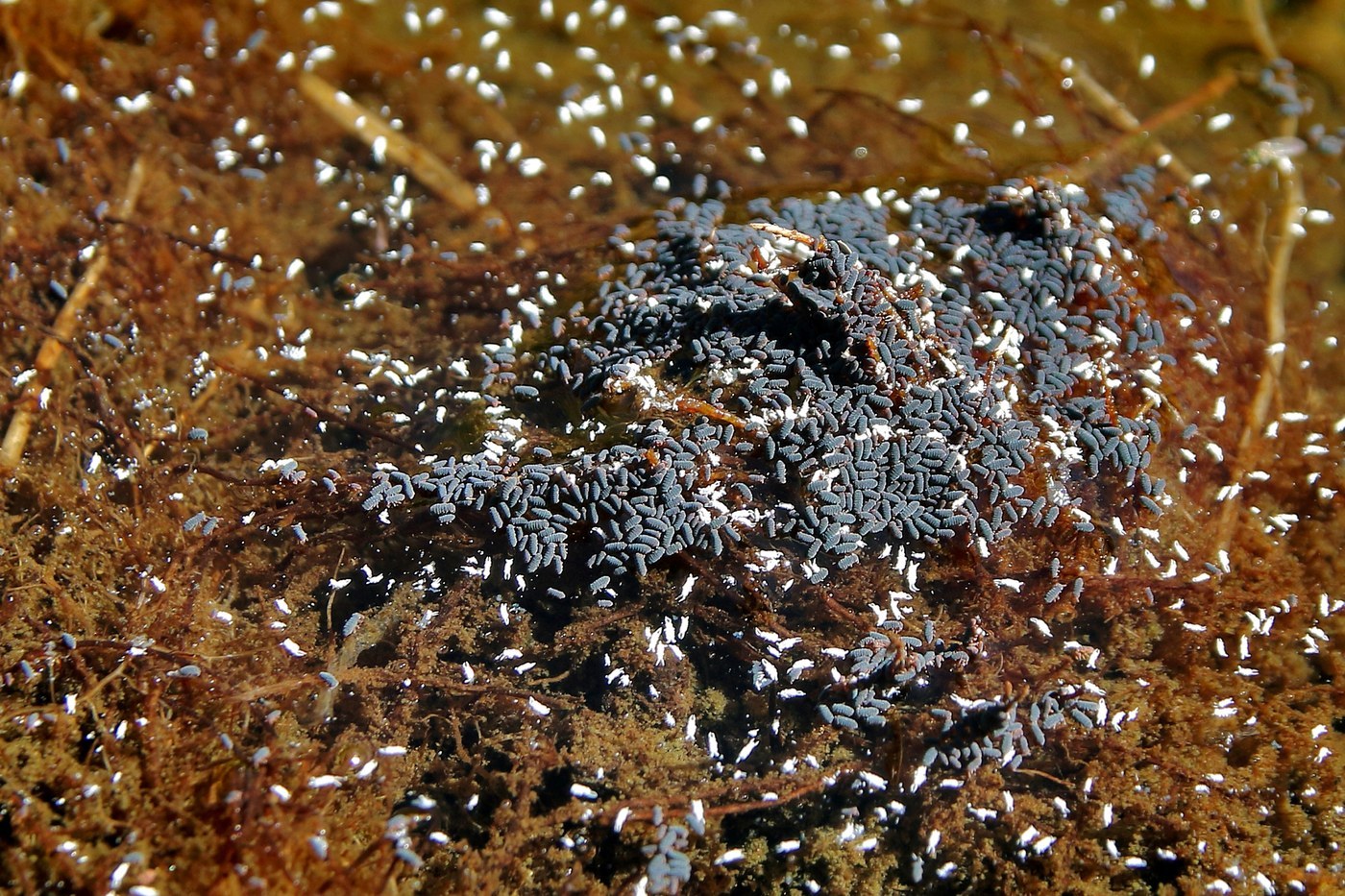
Key Visual Features
Water springtails are minute, wingless hexapods that live on the surface film of still water rather than truly swimming.
- Size: Extremely small, typically 1-3 mm long, often visible only as tiny dark specks until viewed closely or in large groups.
- Color: Dark blue-grey to black or slate, sometimes with a faint velvety or matte sheen that helps repel water.
- Body shape: Elongated and soft-bodied, tapering slightly toward the rear, without any hard wing covers since springtails are wingless.
- Furcula (jumping organ): A forked, tail-like structure folded under the abdomen, called the furcula, can be released suddenly to catapult the springtail into the air — the source of the "spring" in its name.
- Legs: Six short legs used for walking across the water surface film, distributing weight to avoid breaking the surface tension.
- Antennae: Short, segmented antennae are visible on close inspection, projecting forward from the head.
Where and When You'd See It
Water springtails are found clustered in large numbers on the still surface of ponds, puddles, slow ditches, and the edges of lakes, especially where fallen leaves, scum, or debris collect against the shoreline. They can appear as a dark, dusty-looking film or raft covering patches of water. Active year-round in mild climates, they are most conspicuous in spring and autumn when populations peak, and can also be found on damp soil and leaf litter near water margins.
Similar-Looking Bugs
- Water fleas: Live and swim within the water column rather than resting on the surface film, and have a rounded, translucent shell rather than an elongated soft body.
- Aphids or small flies fallen on water: Lack the jumping furcula and do not move in the characteristic sudden hop of a springtail when disturbed.
- Whirligig beetles (young or small individuals): Much shinier, harder-bodied, and swim in circles rather than resting still in dense clusters.
Quick ID Checklist
- Tiny (1-3 mm), dark, wingless insect resting on the water surface
- Often seen in dense clusters or rafts, looking like a dark film or dust
- Jumps suddenly using a folded tail-like furcula when disturbed
- Soft, elongated body without hard wing covers
- Found on still water, puddles, and debris-lined pond edges
Frequently asked questions
How can you confirm a tiny dark speck on water is a springtail and not debris?
Gently disturb the water surface; true water springtails will suddenly jump or hop using their tail-like furcula, a reaction that floating debris or dead insects will not show.
Why do water springtails gather in large clusters?
They congregate where organic debris, scum, or decaying leaf matter collects on still water, often forming dense dark rafts that can cover noticeable patches of the surface film.
Do water springtails swim underwater?
No, they stay on top of the surface film using their light weight and water-repellent body surface rather than swimming through the water column.
What time of year are water springtails most noticeable?
Populations tend to peak in spring and autumn in temperate climates, though they can be found on still water surfaces throughout mild weather.