
Water Stick Insect Identification Guide
Spot this twig-mimicking aquatic bug by its long, thin brown body, stick-like camouflage, and long breathing tube at the tail end.
Read the full Water Stick Insect encyclopedia entry →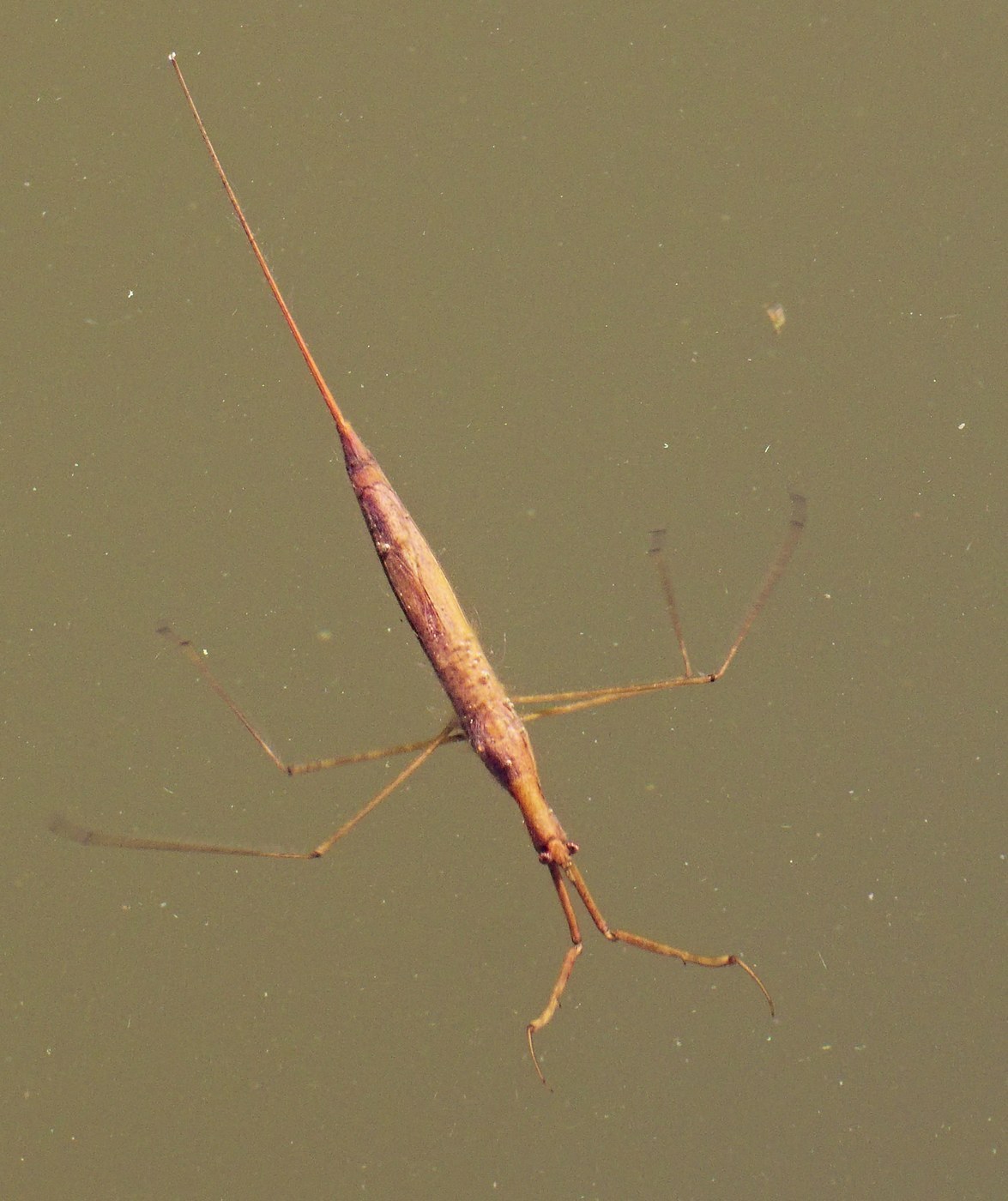
Key Visual Features
The water stick insect is an elongated, twig-mimicking true bug that ambushes prey while hidden among submerged vegetation.
- Size: Body length around 30-50 mm, appearing even longer due to the thin front legs and tail-like breathing tube extending from the rear.
- Color: Brown to dull olive-brown, closely matching the color of dead plant stems and twigs for camouflage.
- Body shape: Extremely elongated, narrow, and stick-like, with a slender thorax and abdomen that closely resembles a submerged twig or plant stem.
- Legs: The front legs are long, thin, and modified for grasping prey in a raptorial fashion (folding like a mantis), while the middle and hind legs are thin and used mainly for clinging to vegetation rather than swimming.
- Breathing tube: A long, thin, non-retractable tail-like structure extends from the rear of the abdomen up to the surface, used as a breathing tube (unlike the retractable "rat tail" of some fly larvae, this structure is fixed and always visible).
- Wings: Wings are present but the insect rarely flies, relying instead on stillness and camouflage.
Where and When You'd See It
Water stick insects are found among dense submerged or emergent vegetation in still or slow-moving water such as ponds, lake margins, and marshy ditches, where they remain motionless, resembling a stick or plant stem while waiting to ambush passing prey. They breathe by extending the tail-like tube to the surface while the body stays hidden below. Active from spring through autumn, they are easiest to find by carefully searching through weedy pond margins rather than watching for movement in open water.
Similar-Looking Bugs
- Giant water bugs: Broader, flatter, and more oval-bodied, without the extremely thin, stick-like proportions or the long tail breathing tube.
- Actual submerged twigs or plant stems: The insect's near-perfect camouflage means it can be mistaken for debris; looking for the paired grasping front legs and a faint tail tube helps confirm a live insect.
- Rat-tailed maggots: Have a soft, plump, legless body and a telescoping tail, very different from the hard-bodied, long-legged, stick-shaped water stick insect.
Quick ID Checklist
- Very long, thin, stick-like brown body, 30-50 mm
- Long grasping front legs held mantis-like for ambush
- Fixed, non-retractable tail-like breathing tube at the rear
- Remains motionless among submerged vegetation, resembling a twig
- Found in still, weedy pond and ditch margins
Frequently asked questions
What is the easiest way to spot a water stick insect among pond plants?
Look for a thin, straight, brown, twig-like shape holding a pair of grasping front legs folded close to the body, along with a fine tail-like tube trailing behind — features that give away the insect despite its strong camouflage.
How does the water stick insect breathe underwater?
It extends a long, fixed, tail-like breathing tube from the tip of its abdomen up to the water surface while the rest of its body remains hidden among submerged vegetation.
How is a water stick insect different from a rat-tailed maggot?
A water stick insect has a hard-bodied, long-legged, twig-shaped body with a fixed tail tube, while a rat-tailed maggot is a soft, plump, legless larva with a telescoping breathing tail.
Does the water stick insect actively swim after prey?
No, it typically remains motionless among vegetation, relying on camouflage and its grasping front legs to ambush prey that comes within reach rather than actively swimming to hunt.