
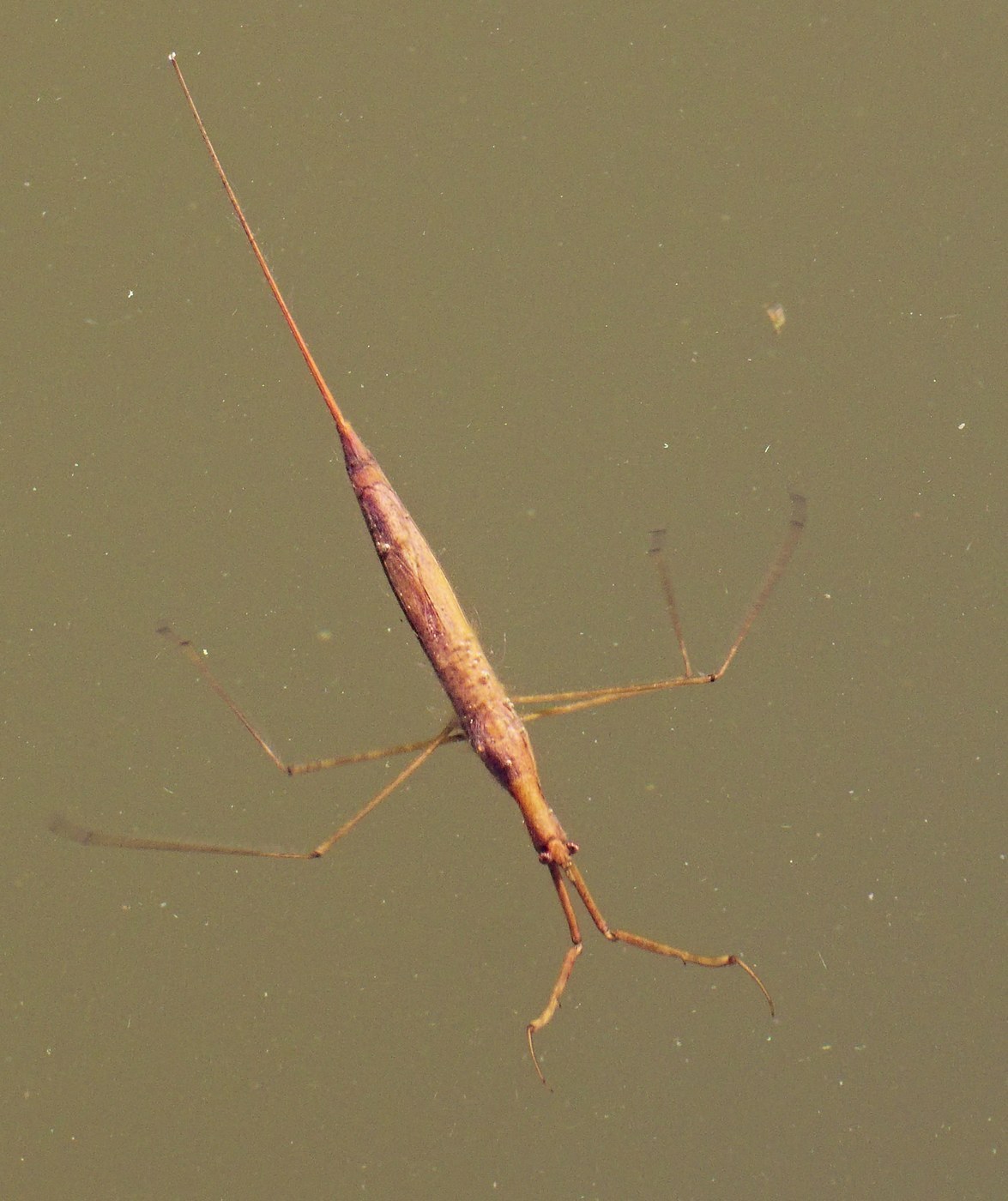
Water Stick Insect
Ranatra linearis
An extraordinarily twig-like aquatic predator that lies motionless among pond weed, grasping passing prey with spiny raptorial forelegs while breathing through a long tail-like snorkel.
- Size
- Body about 30-45 mm, plus a long, slender tail-like breathing tube of similar length
- Habitat
- Still and slow-moving water with dense submerged vegetation
- Danger
- Bites
Spotted a bug like this?
Identify any bug or insect from a photo, free.
Overview
The water stick insect is a true bug, not a true stick insect, and its resemblance to a floating twig is a remarkable case of convergent camouflage rather than close relationship to the walking sticks (Phasmatodea). It belongs to the family Nepidae, the water scorpions, and shares that family's ambush hunting style and needle-like breathing tube, but has a slimmer, more elongated body than its stouter relative the water scorpion.
It is an entirely aquatic predator throughout its nymph and adult life, spending most of its time clinging motionless to submerged plant stems with only the tip of its breathing tube reaching the surface film. This sit-and-wait strategy, combined with its stick-like shape, makes it almost invisible among pondweed until prey blunders within reach.
As a mid-level predator, the water stick insect helps regulate populations of small invertebrates in ponds and ditches, and it is in turn eaten by fish, larger aquatic insects, and wading birds.
How to Identify
- Extremely slender, elongated body resembling a floating twig, grey-brown to olive in colour
- Long, thin front legs modified into raptorial grasping tools, held folded like a praying mantis
- Thinner, thread-like middle and hind legs used for clinging to plants
- Long, thin paired breathing tube (siphon) at the tip of the abdomen, used like a snorkel
- Wings present but rarely used for flight; body shape is the main identification clue
- Distinguished from the water scorpion (Nepa cinerea) by its much narrower, more elongated body and proportionally longer legs
Habitat & Range
Water stick insects favour still or gently flowing water with abundant submerged and emergent vegetation, including ponds, canals, ditches, and the quieter margins of lakes. They are found across much of Europe and temperate Asia, usually in shallow water close to plant stems where they can anchor themselves and extend their breathing tube to the surface. They are most easily encountered from spring through autumn, becoming less active and often burrowing into bottom debris during colder months.
Behavior & Diet
This is a patient ambush predator that remains almost perfectly still, gripping a submerged stem while extending its breathing tube to the surface for air. When a small invertebrate such as a mosquito larva, water flea, or other aquatic insect comes within range, the water stick insect strikes with its spined raptorial front legs and pierces the prey with its short, sturdy rostrum to feed on body fluids. It is a poor swimmer and instead crawls slowly among vegetation, relying on camouflage and stillness rather than speed to both catch prey and avoid predators. Adults can fly and occasionally do so to disperse to new water bodies, particularly at night.
Life Cycle
Females insert eggs into plant tissue or floating debris just below the waterline, each egg bearing two thread-like filaments that project into the water and are thought to aid gas exchange. Nymphs hatch resembling miniature, wingless adults and pass through several instars underwater, developing incomplete (simple) metamorphosis with no pupal stage. Growth continues through the warmer months, with adults typically present from spring to autumn in temperate regions; in many populations there is one generation per year, with adults or late-stage nymphs overwintering in sheltered mud or debris at the bottom of the water body.
Frequently asked questions
Is the water stick insect a true stick insect?
No, it is a true bug in the water scorpion family (Nepidae); its stick-like shape is a case of camouflage evolved independently from the unrelated stick insects (Phasmatodea).
How does it breathe underwater?
It extends a long, thin tail-like tube from the tip of its abdomen up to the water's surface to draw in air, functioning like a snorkel.
What does it eat?
Small aquatic invertebrates such as mosquito larvae, water fleas, and other small insects, which it seizes with its spiny front legs.
Can it bite if picked up?
It can give a sharp defensive jab with its short rostrum if handled, though it is not aggressive and normally reserves this piercing mouthpart for prey.
Water Stick Insect guides
In-depth guides for identifying, understanding, and living alongside Water Stick Insect.
Other bugs you may enjoy
Bagrada Bug
Arid gardens, crucifer fields, desert-adjacent croplands
Assassin Bug
Gardens, meadows, and vegetation worldwide
Water Boatman Bug
Ponds, lakes, and slow-moving freshwater
Rough Stink Bug
Tree bark, woodlands, orchards, and shrubby vegetation
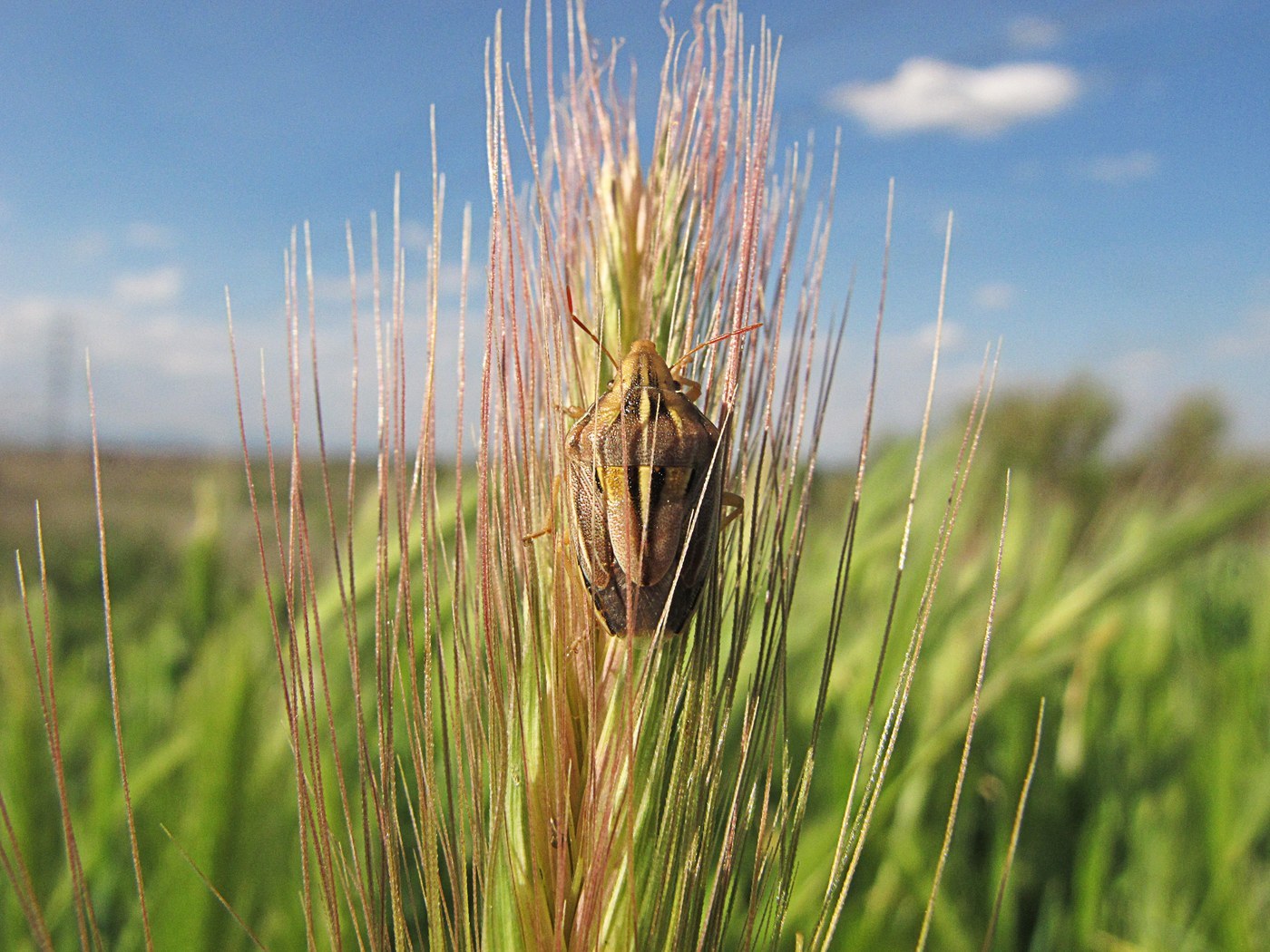
Stink Bug
Gardens, crop fields, and woodlands across temperate and subtropical regions
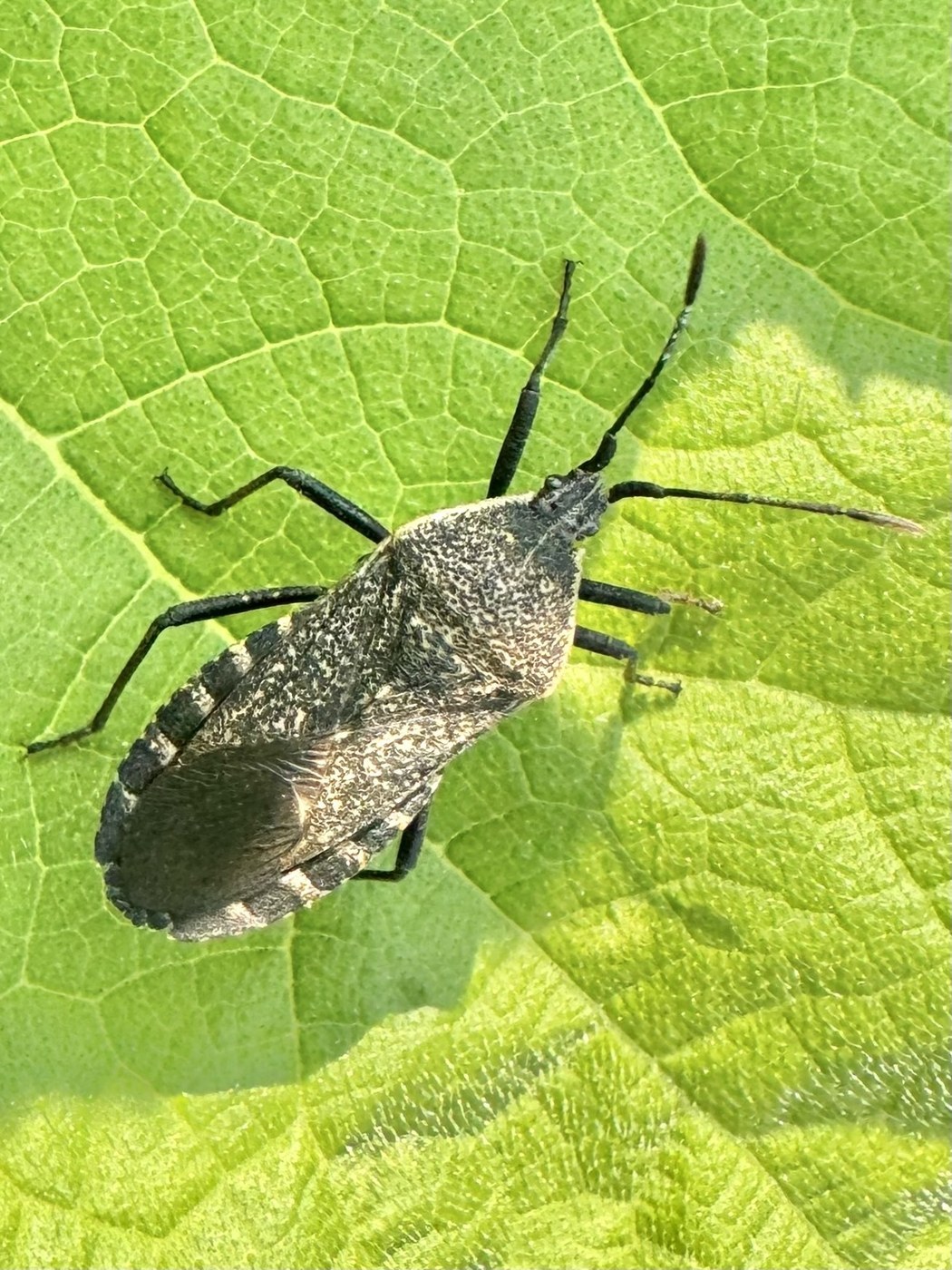
Squash Bug
Vegetable gardens and farm fields growing squash, pumpkin, and other cucurbits
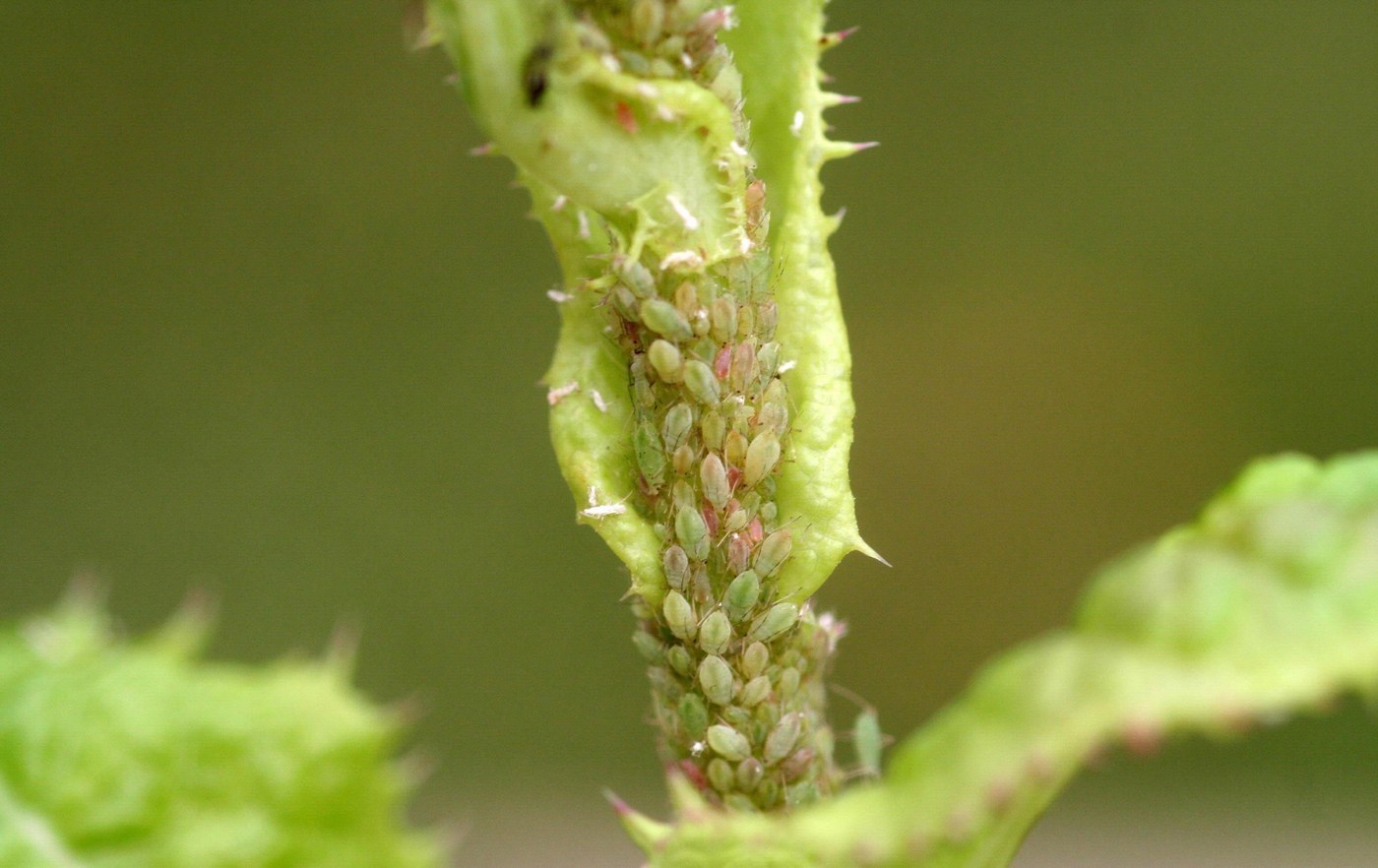
Aphid
On stems, leaves, and buds of a very wide range of host plants
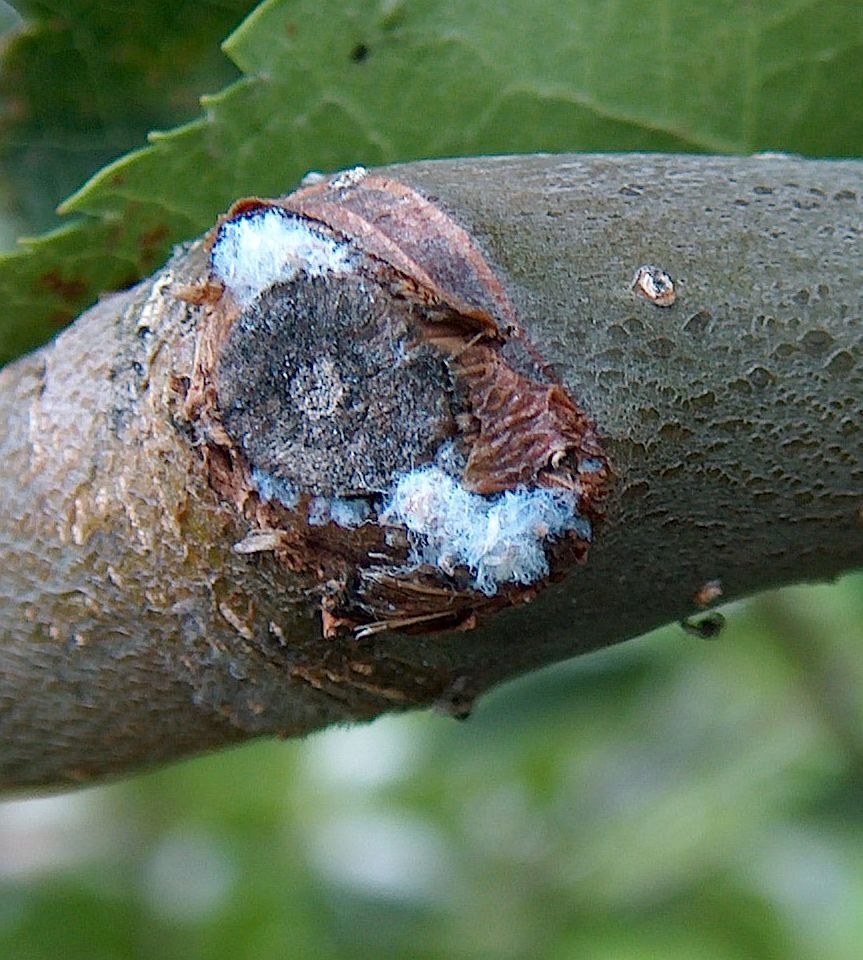
Woolly Aphid
Bark crevices, root collars, and twigs of apple, elm, and alder trees
Whitefly
Greenhouses, gardens, and undersides of leaves on host plants
Water Measurer
Quiet edges of ponds, marshes, and slow streams
Two-Spotted Stink Bug
Gardens and fields with potato and nightshade-family plants
Water Cricket
Fast-flowing streams and stream-fed pond margins