Water Strider Identification Guide
Recognize this long-legged insect that skates across the surface of ponds and slow streams.
Read the full Water Strider encyclopedia entry →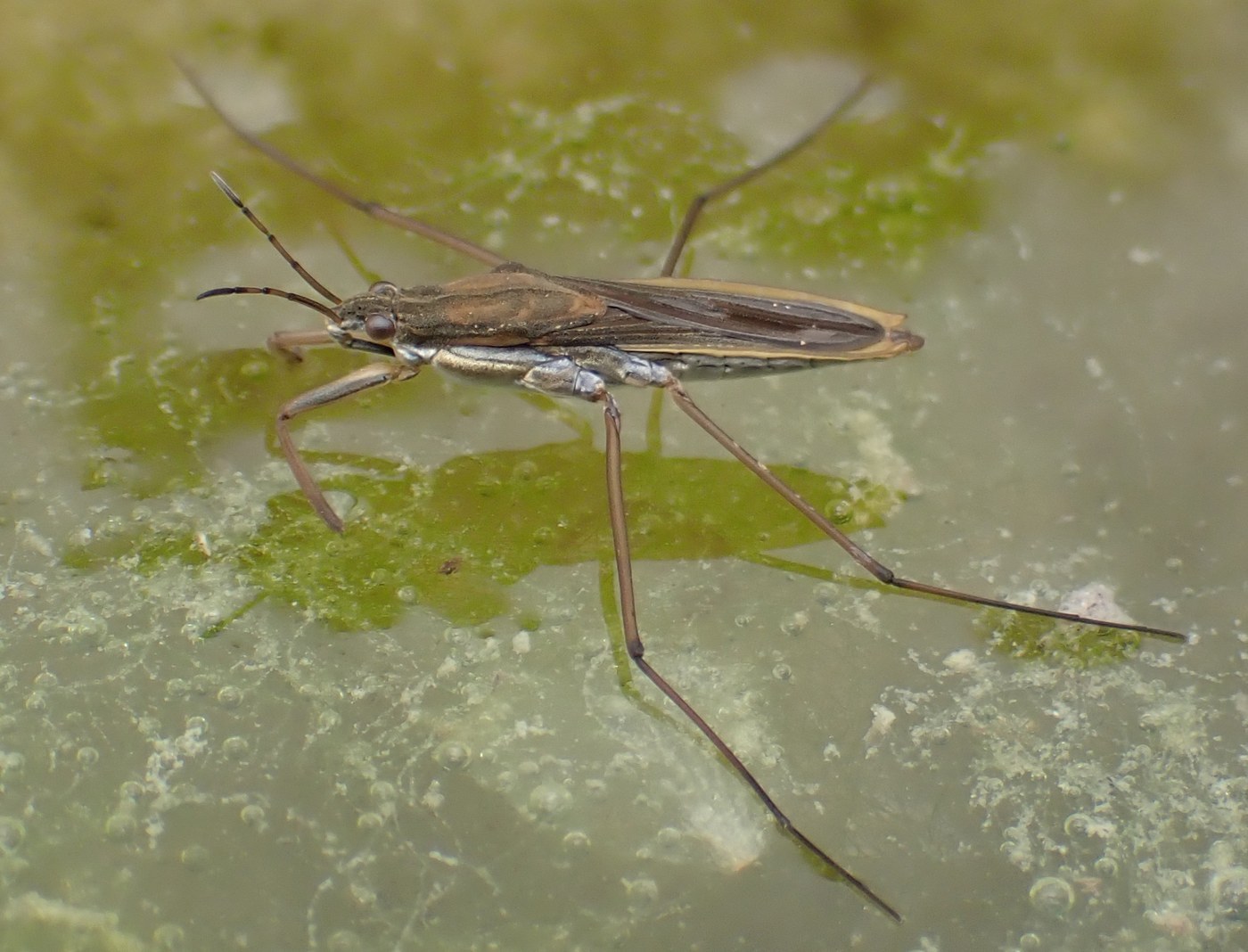
Key Visual Features
Water striders are among the most recognizable pond insects thanks to their unmistakable habit of gliding across the water's surface without breaking through it.
- Size: Body length typically ranges from about 1 to 2.5 centimeters, though the sprawling legs make them look larger.
- Body shape: Slender, elongated, and boat-like, built for balance on the water's surface film.
- Legs: Three pairs of very long, thin legs — the middle and hind pairs are especially elongated and used for rowing and steering, while the shorter front pair is used to grasp prey. Fine water-repellent hairs cover the legs, allowing the insect to rest on top of the water without sinking.
- Color: Dark brown, gray, or black on top, often with a slight sheen, which helps camouflage them against the water when viewed from above.
- Wings: Some individuals are fully winged and capable of flight, while others have short or absent wings; wing form can vary within the same species depending on conditions.
- Antennae: Relatively short and thread-like.
Where and When You'd See Them
Water striders are found on the surface of calm or slow-moving fresh water — ponds, lake edges, slow streams, and puddles — from spring through fall in temperate climates, and year-round in warmer regions. They are most active during daylight hours, often seen in loose groups skating and darting across the surface in short bursts, especially near shaded banks or areas with floating debris where prey collects.
Similar-Looking Bugs
- Whirligig beetles: Also found on water surfaces, but are oval, compact, and shiny black, swimming in fast circles rather than striding on long legs.
- Fishing spiders: Can also walk on water, but have eight legs (not six) and a more robust, spider-like body rather than the elongated, insect body plan of a strider.
- Backswimmers: Live in the same ponds but swim upside-down underwater rather than resting on the surface, and have a more rounded, boat-shaped body with paddle-like hind legs.
- Water boatmen: Similarly found in ponds, but have a flatter, oval body and swim actively underwater rather than skating on the surface film.
Quick ID Checklist
- Slender, elongated body about 1–2.5 cm long
- Three pairs of long, thin legs, with the middle/hind pairs used for rowing
- Fine water-repellent hairs allow surface gliding without sinking
- Dark brown, gray, or black coloring
- Found skating on the surface of calm ponds, lake edges, and slow streams
Frequently asked questions
How does a water strider stay on top of the water?
Fine, water-repellent hairs on its legs spread its weight across the surface tension of the water, allowing it to rest and glide on top without breaking through.
How can I tell a water strider from a fishing spider?
Count the legs and note the body shape: a water strider has six legs and an insect body plan, while a fishing spider has eight legs and a stockier, spider-like body.
Do water striders swim underwater?
No, they stay on the surface film; insects like backswimmers and water boatmen are the ones that swim underwater in the same ponds.
What time of year are water striders active?
They are typically active from spring through fall in temperate climates, and can be seen year-round in warmer regions.
Water Strider identified by the community
Recent Water Strider finds identified with Bug Identifier.