
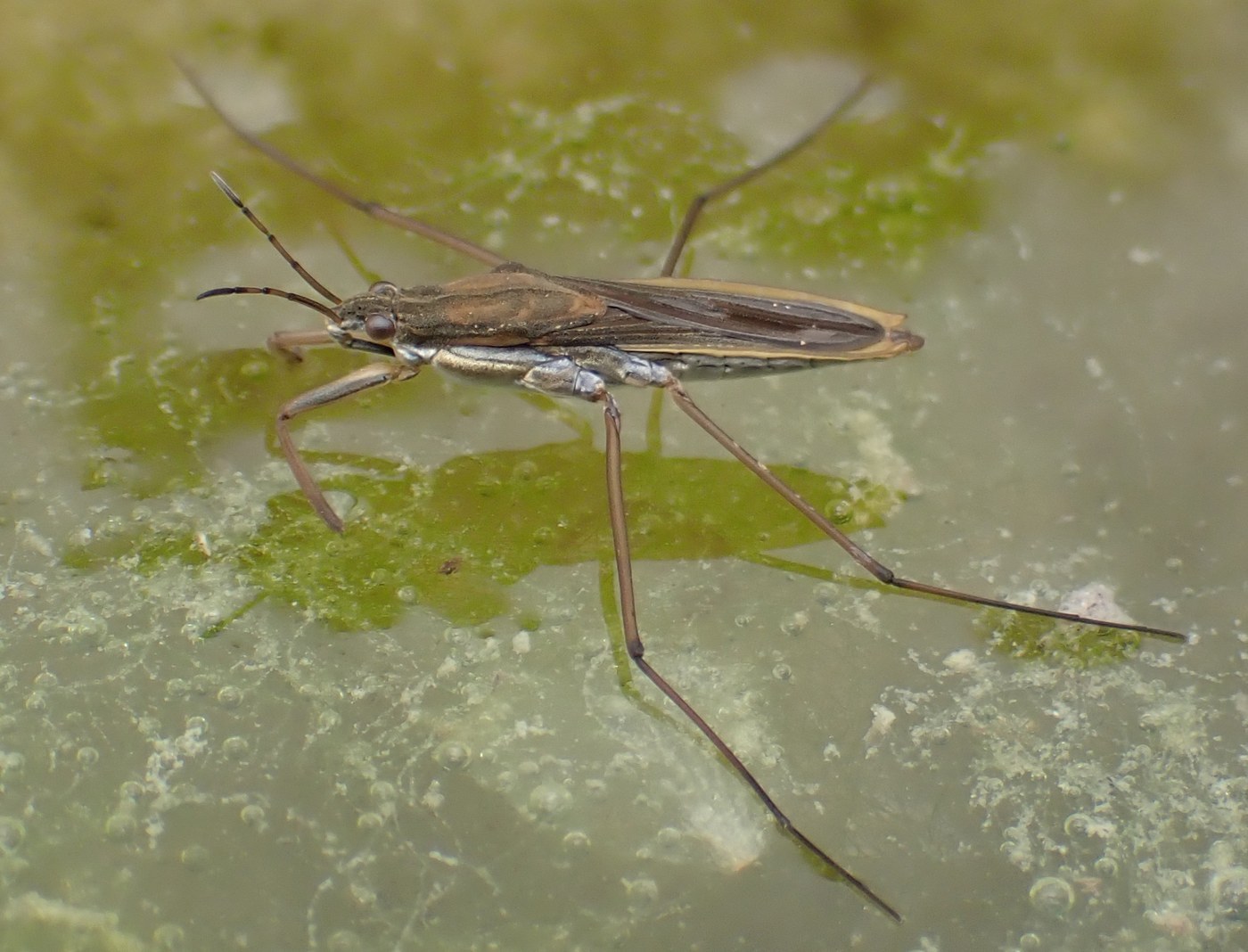
Water Strider
Gerris spp.
A slender, long-legged true bug famous for skating effortlessly across the surface of ponds and streams using water's surface tension.
- Size
- 10–20 mm
- Habitat
- Still or slow-moving fresh water: ponds, lake edges, slow streams, puddles
- Danger
- Harmless
Spotted a bug like this?
Identify any bug or insect from a photo, free.
Overview
The water strider is a true bug in the family Gerridae, a group specialized for life on top of the water rather than in it. Widely distributed across freshwater habitats worldwide, water striders are among the most familiar aquatic insects thanks to their gravity-defying habit of walking on the water's surface.
Their body is slender and dark, typically brown, gray, or black, with extremely long, thin legs held out to the sides. The middle and hind legs are especially elongated and tipped with fine water-repellent hairs that spread the insect's weight and trap air, allowing it to rest and glide on the surface film without breaking through.
As both predator and prey, water striders occupy an important niche at the water-air interface, helping regulate populations of small insects that fall onto or emerge at the water's surface while themselves serving as food for fish, birds, and larger aquatic predators.
How to Identify
- Body is slender, elongated, and dark brown to black or gray, typically 10–20 mm long depending on species.
- Legs are dramatically long relative to body size; the short front pair is used for grasping prey while the long middle and hind pairs are used for rowing across the water.
- Fine, water-repellent hairs cover the leg tips and underside of the body, enabling it to stand on the water's surface tension without sinking.
- Some individuals have wings and can fly to colonize new habitats, while others remain wingless; wing presence can vary within a population.
- Distinguished from other surface-dwelling insects by its characteristic rowing, skating locomotion and habit of resting motionless on the water film.
Habitat & Range
Water striders are found on calm or slow-moving freshwater surfaces nearly worldwide, including ponds, lake margins, slow streams, marshes, and even temporary puddles. They favor sheltered water with minimal current, often congregating near shorelines, floating debris, or emergent vegetation where prey tends to accumulate.
They are active from spring through fall in temperate regions, with activity peaking in warm weather. In colder climates, adults overwinter on land in leaf litter or other sheltered spots near water, returning to the water's surface once temperatures rise in spring.
Behavior & Diet
Water striders are predatory and scavenging insects that detect prey by sensing ripples and vibrations on the water surface through sensory hairs on their legs. They feed on small insects that fall onto the water, as well as other small invertebrates trapped at the surface, piercing them with their needle-like mouthparts to feed on internal fluids.
They move by rowing with their long middle legs in a distinctive skating or gliding motion, while the hind legs act as rudders for steering. When threatened, water striders can quickly dart across the surface or leap short distances to escape predators. Some populations produce winged individuals capable of dispersing by flight to new bodies of water when conditions change.
Life Cycle
Water striders undergo incomplete metamorphosis, developing through egg, nymph, and adult stages. Females lay eggs on submerged or floating vegetation, debris, or directly on the water surface film, and these hatch into small nymphs resembling miniature wingless adults.
Nymphs molt through several instars over the course of a few weeks, gradually increasing in size and, in winged forms, developing functional wings at the final molt. Multiple generations can occur during a single warm season in many regions. Adults typically overwinter on land away from the water before returning to aquatic surfaces in spring to breed.
Frequently asked questions
How does a water strider walk on water?
It relies on water's surface tension combined with water-repellent hairs on its legs that distribute its weight and trap tiny air pockets, preventing it from breaking through the surface film.
What do water striders eat?
They are predators and scavengers that feed on small insects and other invertebrates that become trapped on the water's surface.
Do all water striders have wings?
No, wing development varies; some populations or individuals are winged and can fly to new habitats, while others remain wingless and stay on the same body of water.
Is a water strider the same as a whirligig beetle?
No, whirligig beetles are true beetles that swim in spinning circles on the surface, while water striders are true bugs that skate on long legs and do not spin.
Water Strider guides
In-depth guides for identifying, understanding, and living alongside Water Strider.
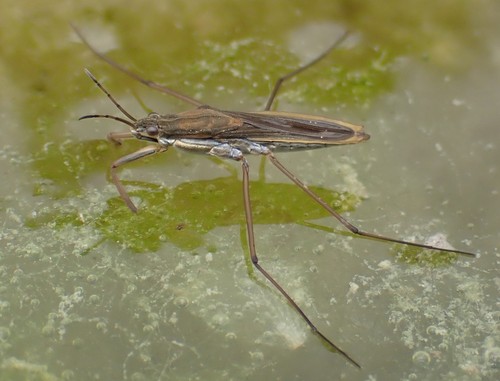
Water Strider identified by the community
Real finds identified with Bug Identifier.
Other bugs you may enjoy
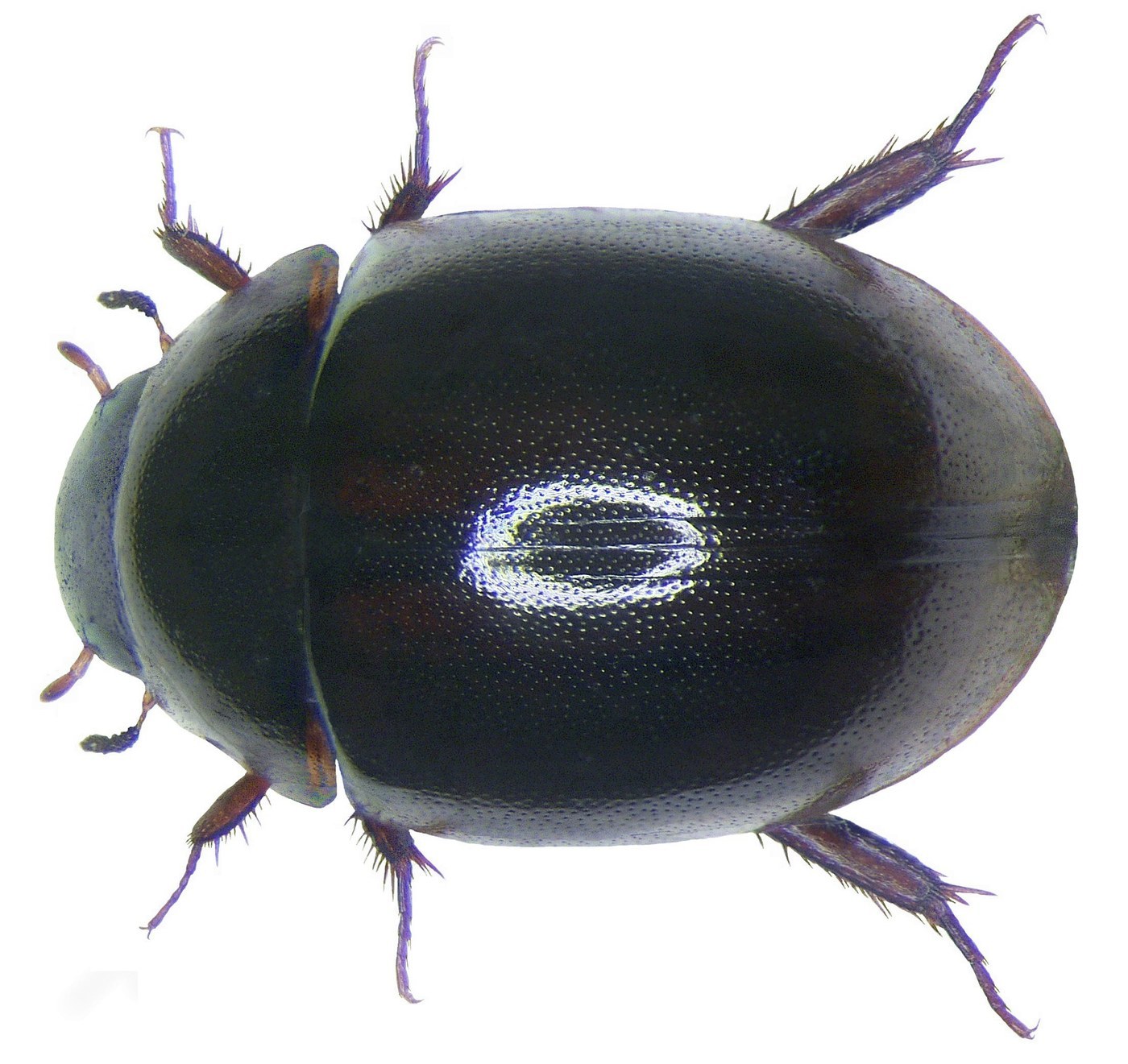
Water Beetle
Ponds, slow streams, marshes, still fresh water
Water Penny Beetle
Fast, rocky, well-oxygenated streams
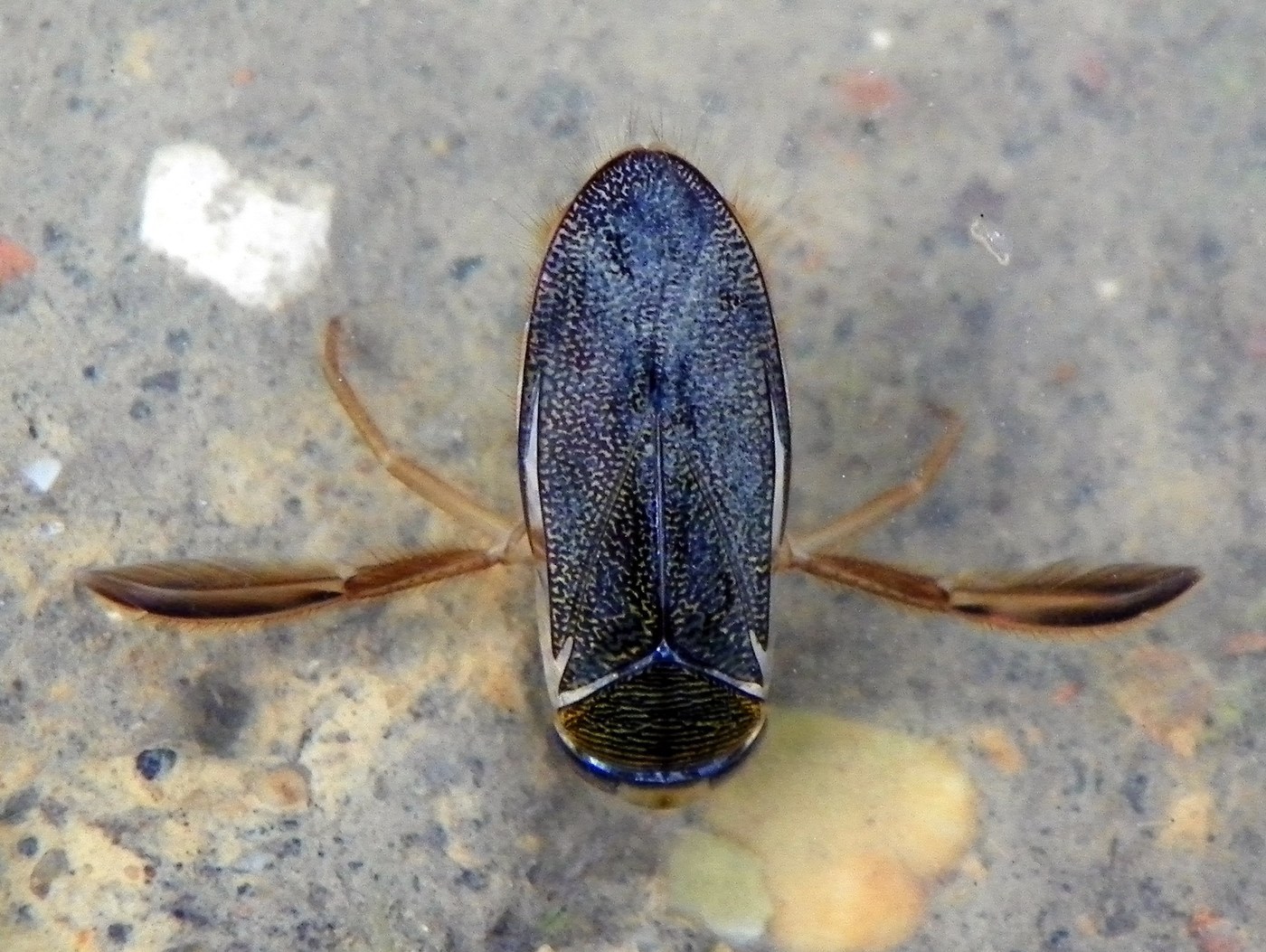
Water Boatman
Ponds, lakes, slow streams, freshwater with vegetation
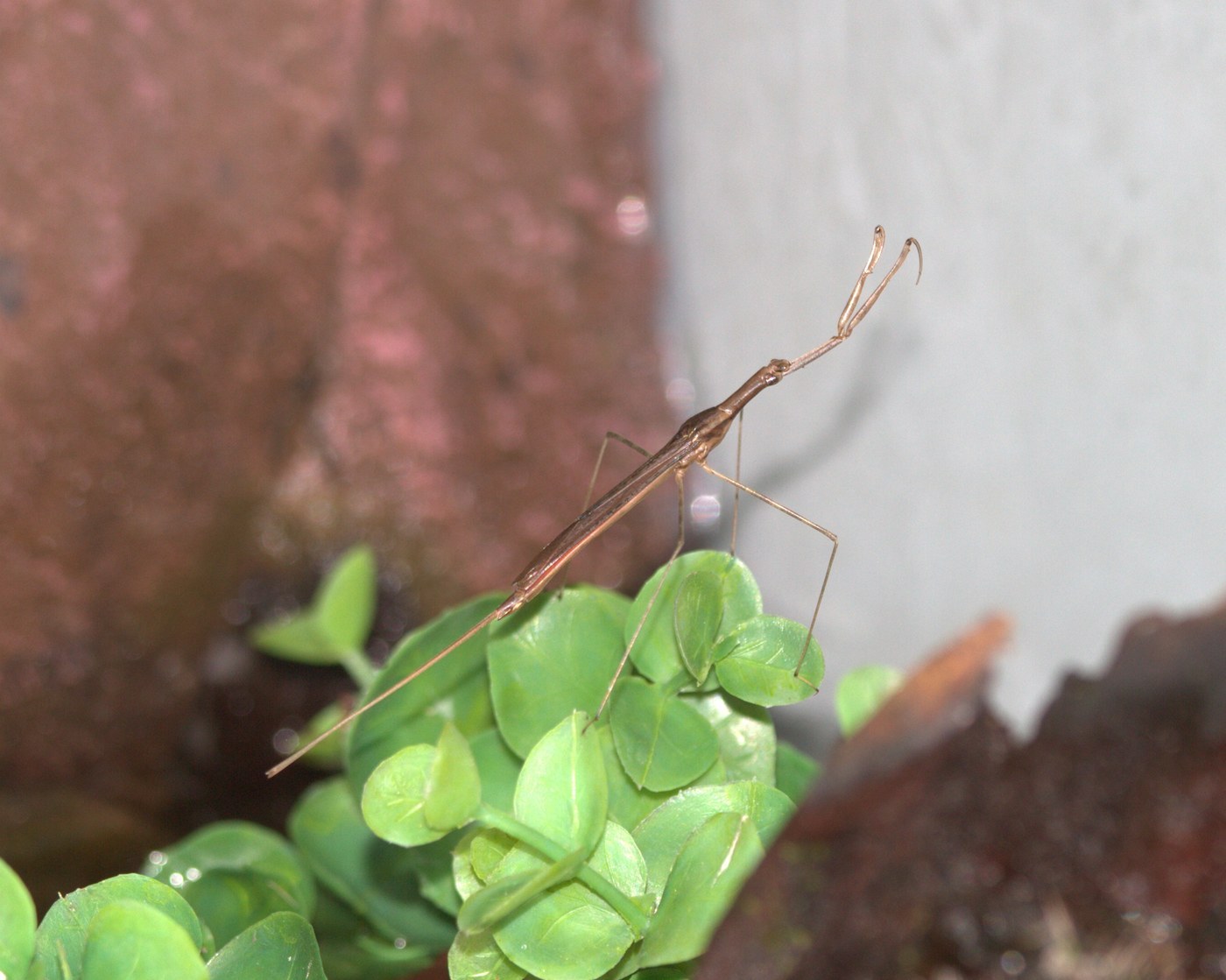
Water Scorpion
Still or slow-moving water with submerged vegetation
Stonefly
Cold, clean, well-oxygenated streams and rivers
Stonefly Nymph
Cold, fast-flowing, well-oxygenated streams
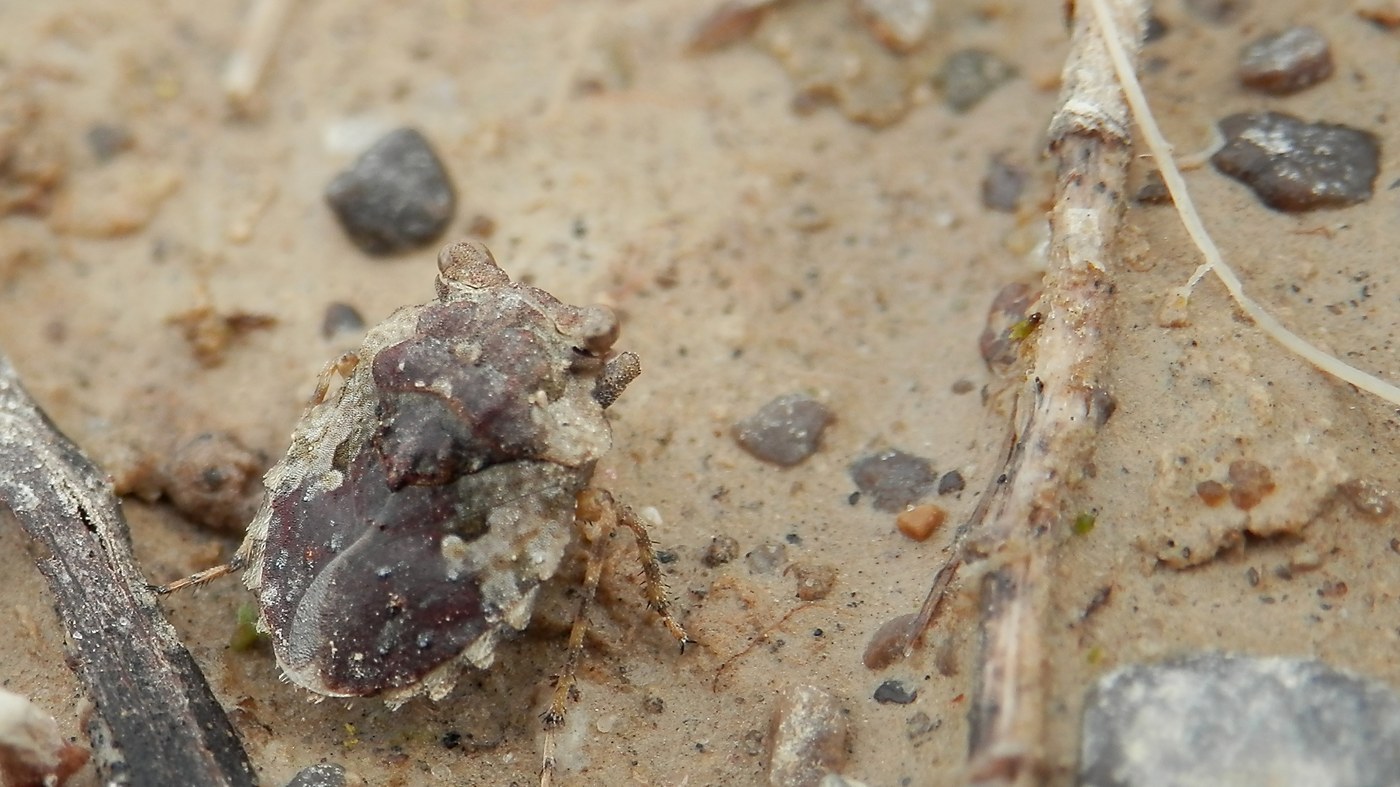
Toad Bug
Muddy or sandy shorelines of ponds, streams, and rivers
Soldier Fly Larva
Ponds, marshes, and slow streams with organic sediment
Mosquito Larva
Standing water in ponds, ditches, containers, and puddles
Whirligig Beetle
Surface of ponds, lakes, and slow streams
Rat-Tailed Maggot
Stagnant, oxygen-poor water such as manure pools, drains, and compost
Predaceous Diving Beetle
Ponds, lakes, and slow-moving freshwater