
Waved Sphinx Moth Identification Guide
A large grey hawk moth with fine wavy wing lines, often found resting motionless on tree bark near ash or lilac.
Read the full Waved Sphinx Moth encyclopedia entry →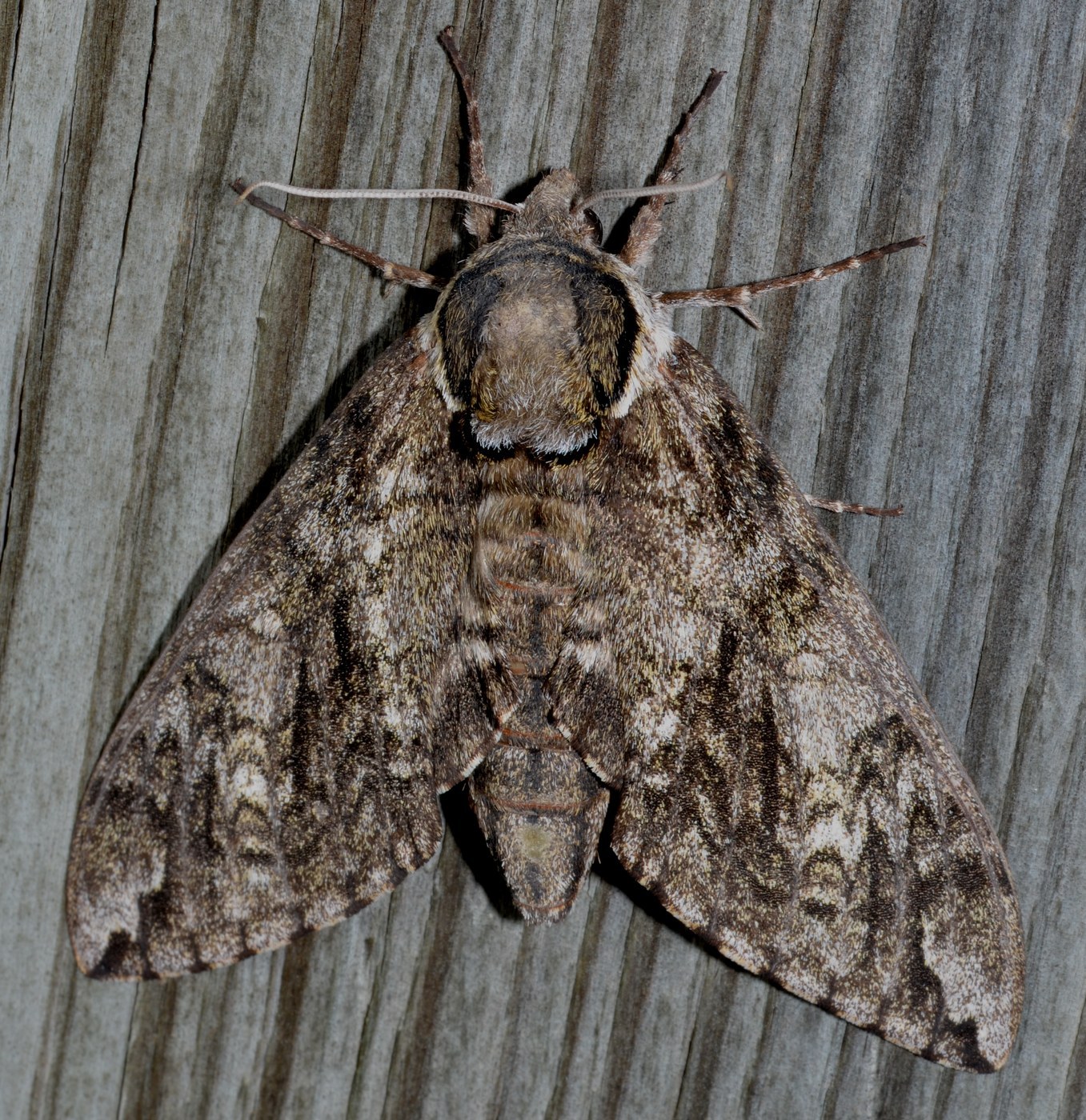
Key Visual Features
The Waved Sphinx Moth is a large, robust hawk moth with a wingspan of roughly 75-100mm.
- Forewings: Mottled grey, crossed by fine, wavy dark lines that give the species its name, along with a small pale spot near the center of the wing.
- Hindwings: Paler grey-brown, generally plain or only faintly banded, mostly concealed at rest.
- Body: Robust and streamlined, grey-brown overall, with a tapered abdomen typical of sphinx moths.
- Antennae: Thick and tapered, not feathery, as in all hawk moths.
- Resting posture: Wings held flat and swept back, blending closely with tree bark for camouflage.
Where and When You'll See It
This moth is found in woodlands, orchards, parks, and suburban areas that support ash, lilac, or privet, its larval host plants. Adults are nocturnal, strong fliers, and are commonly drawn to porch and street lights at night. The main flight period runs from late spring through summer. By day, they rest motionless on tree trunks or fences, where their grey, bark-like coloring provides excellent camouflage.
Similar-Looking Species
- Achemon Sphinx Moth - shows browner and pinker tones rather than grey, and lacks the fine wavy line pattern of the Waved Sphinx.
- Modest Sphinx and other Ceratomia species - very similar grey, mottled wing pattern; distinguishing between them relies on subtle differences in wing markings and the shape of the thoracic collar.
- Carolina Sphinx - generally browner overall, with orange spots visible along the sides of the abdomen, unlike the plainer grey Waved Sphinx.
Life Cycle & Behavior
Caterpillars are green with pale diagonal side stripes and a curved posterior horn typical of sphinx moth larvae, feeding on the foliage of ash, lilac, and related trees through summer. Mature larvae drop to the ground and burrow into soil to pupate, overwintering underground before emerging as adults the following year. Most populations produce a single generation annually, with adults concentrated in the warmer months.
Quick ID Checklist
- Large hawk moth, wingspan up to about 10cm
- Grey, mottled forewings crossed by fine wavy dark lines
- Small pale spot near the center of the forewing
- Robust, streamlined grey-brown body with thick, tapered antennae
- Rests flat on tree bark by day, active near ash, lilac, or privet at night
Frequently asked questions
What gives the Waved Sphinx Moth its name?
The fine, wavy dark lines crossing its grey, mottled forewings are the source of its common name.
How is it different from the Achemon Sphinx Moth?
The Waved Sphinx is grey with fine wavy lines, while the Achemon Sphinx shows browner, pinker mottled tones and pink hindwings.
Where should I look to find this moth?
Woodlands, orchards, and suburban areas with ash, lilac, or privet trees are the best places to search, since these are the larval host plants.
Why is this moth hard to spot during the day?
Its grey, mottled coloring closely resembles tree bark, and it rests motionless flat against trunks or fences, providing effective camouflage from predators.