
West Virginia White Identification Guide
A delicate, translucent white forest butterfly that appears briefly each spring before the tree canopy closes.
Read the full West Virginia White encyclopedia entry →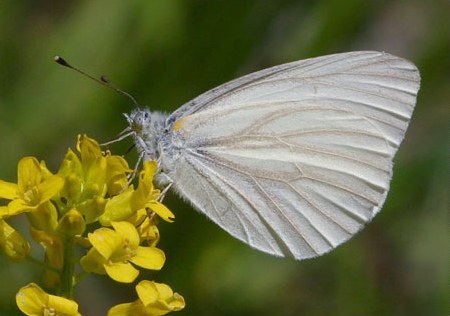
Key Features
The West Virginia white (Pieris virginiensis) is a small, dainty butterfly with a wingspan of about 1.375 to 1.75 inches. Key identification points:
- Wings are a soft, somewhat translucent white, lacking the bold black spots seen in more common garden whites.
- Faint gray shading along the wing veins, especially visible on the underside, gives the wings a subtly veined, almost delicate appearance.
- Wings are rounded and unmarked apart from this soft veining, giving the whole butterfly a clean, minimal look.
- Flight is slow, low, and fluttery, close to the forest floor.
- Body is small and slender, matching the overall delicate impression of this species.
Where and When to Spot It
This species is a specialist of rich, undisturbed deciduous forests, particularly in the Appalachian region and parts of the northeastern United States. It is an early spring flier, typically on the wing for only a few weeks in April and May, timed to coincide with the blooming of toothwort and other spring wildflowers before the forest canopy fully leafs out. Look for it fluttering low along shaded woodland trails and stream corridors in mature forest, rather than open fields or gardens.
Similar Species
- Cabbage white: Brighter white with one or two bold black spots and a preference for open, weedy, disturbed habitats rather than deep forest.
- Mustard white: Very similar in appearance and habitat, sometimes distinguished mainly by subtle vein shading, flight timing, and regional range.
- Falcate orangetip female: Has a slightly hooked forewing tip and marbled underside pattern, differing from the plain veined look of the West Virginia white.
Quick ID Checklist
- Small, soft translucent white butterfly with no bold spots
- Faint gray veining visible on the wings, especially underneath
- Slow, low, fluttery flight in shaded forest
- Flies only briefly in early spring (April-May)
- Found in mature, undisturbed deciduous woodland, not open fields
FAQs
Frequently asked questions
Why is the West Virginia white only seen for a short time each year?
It has a single short spring flight period timed to bloom with toothwort and other early wildflowers, before the forest canopy closes overhead.
How is this species different from the common cabbage white?
The West Virginia white lacks the bold black spots of the cabbage white and has a softer, more translucent look, and it prefers deep forest rather than open, weedy areas.
What kind of forest should I search to find this butterfly?
Mature, rich deciduous forest with an intact understory of spring wildflowers, especially in Appalachian and northeastern woodlands, offers the best chance.
What visual feature helps confirm this is a West Virginia white and not a similar species?
Faint gray shading along the wing veins combined with the total absence of bold black spots is the most useful confirming feature.