Western Honey Bee Identification Guide
Identify the familiar western honey bee by its golden-brown, black-banded body, fuzzy thorax, and organized hive-based colonies.
Read the full Western Honey Bee encyclopedia entry →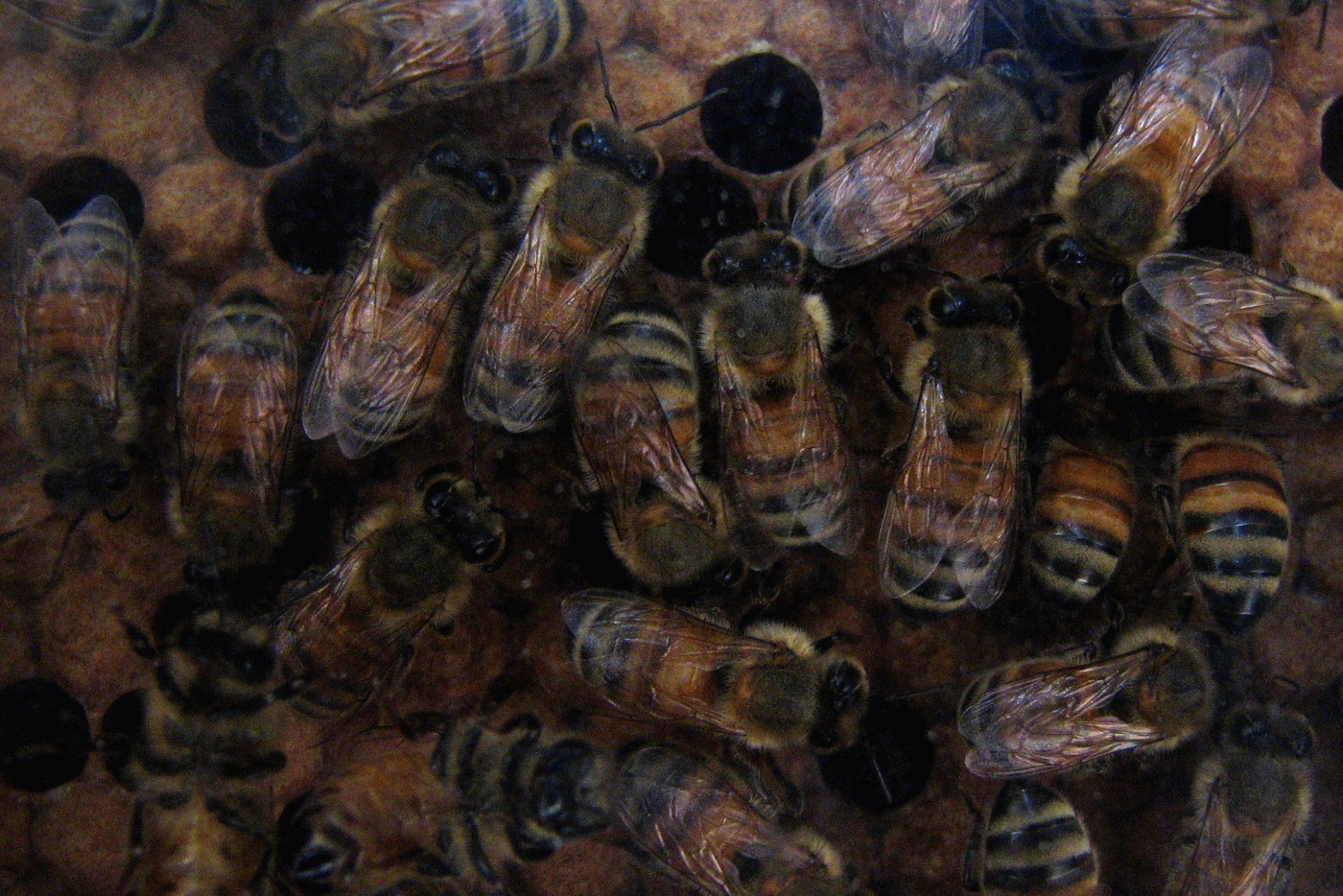
Key Visual Features
The western honey bee (Apis mellifera) is the classic, widely recognized bee of gardens and managed hives:
- Workers measure 12-15mm, with a golden-brown to amber body marked by black banding across the abdomen
- Dense, fuzzy hair, especially concentrated on the thorax
- Clear to lightly tinted wings that fold flat over the back when at rest
- Queens are larger overall with a notably elongated abdomen extending past the wingtips
- Drones are stockier than workers, with unusually large eyes that meet at the top of the head
Where and When You'll See Them
Western honey bees live in organized colonies, either in managed wooden hive boxes or in feral nests built inside tree cavities, wall voids, or rock crevices. They're found wherever flowering plants are available — gardens, orchards, meadows, and farmland. In mild climates, colonies remain active nearly year-round; in cooler regions, activity is concentrated from spring through fall during the main bloom season, with bees clustering inside the hive through winter.
Similar-Looking Bugs
- Africanized honey bees are a hybrid strain of the same species and look nearly identical, making visual identification between the two unreliable without close measurement.
- Bumble bees are much larger, rounder, and more uniformly fuzzy over the entire body compared to the sleeker honey bee.
- Yellowjacket wasps have a smooth, shiny, mostly hairless body with a narrow waist and brighter yellow-and-black contrast, unlike the fuzzy, softer-banded honey bee.
- Carpenter bees are larger with a bare, shiny black abdomen, in contrast to the fully fuzzy, banded abdomen of a honey bee.
Quick ID Checklist
- Golden-brown body with black abdominal banding, 12-15mm
- Fuzzy thorax, wings folded flat over the back at rest
- Queens larger with an elongated abdomen; drones have large, touching eyes
- Found in hive boxes or cavity nests near flowering plants
- Active spring through fall, year-round in mild climates
Frequently asked questions
How can I tell a worker honey bee from a queen or drone?
Workers are the smallest and most numerous; queens are larger with an elongated abdomen extending past the wingtips; drones are stockier with unusually large eyes that meet at the top of the head.
Where do western honey bees build their nests?
They live in organized colonies, either in managed hive boxes or feral nests inside tree cavities, wall voids, or rock crevices.
How is a western honey bee different from a bumble bee?
Honey bees are more slender with distinct black banding, while bumble bees are larger, rounder, and covered in dense fuzz over the entire body.
Can I visually tell a western honey bee from an Africanized honey bee?
Not reliably by eye alone — the two look nearly identical, and distinguishing them typically requires close measurement or genetic testing.
Western Honey Bee identified by the community
Recent Western Honey Bee finds identified with Bug Identifier.