Whirligig Beetle Identification Guide
Spot whirligig beetles by their shiny oval bodies spinning rapidly in tight circles on the water's surface.
Read the full Whirligig Beetle encyclopedia entry →Key Visual Features
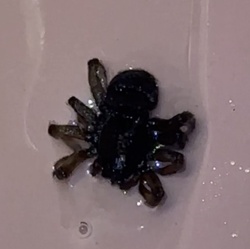
- Body shape: Small, oval, and noticeably flattened, typically 1/4 to 1/2 inch long, with a smooth, streamlined outline built for gliding on water.
- Color: Glossy black or dark metallic bluish-black, often with a shiny, almost polished appearance under sunlight.
- Eyes: A standout feature—each eye is divided into two separate parts, one positioned to see above the water's surface and one below, allowing simultaneous vision in both zones.
- Legs: Short, paddle-like middle and hind legs adapted for rapid swimming, while the front legs are longer and used for grasping prey or surfaces.
- Antennae: Short and club-like, often tucked close to the head and less conspicuous than the eyes.
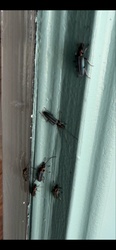
- Behavior as an ID clue: Frequently seen swimming in tight, fast, erratic circles or spinning patterns on the surface of calm water, often in groups.
Where and When You'd See One
Whirligig beetles are found on the surface of calm ponds, slow streams, and sheltered lake edges, typically clustering in groups called "rafts" or "schools." They are most active during warm daylight hours from spring through fall, gliding and spinning across open water, and tend to dive underwater or scatter quickly when disturbed. At night or when resting, they may cling to submerged vegetation near the shoreline.
Similar-Looking Creatures
- Diving beetles: Larger and swim steadily below the surface rather than spinning rapidly on top of the water.
- Water scavenger beetles: Similar glossy dark body but move with a steady swimming pattern rather than the whirligig's characteristic fast spinning.
- Water striders: True bugs, not beetles, with long thin legs that let them stand on the water's surface tension rather than swim or spin.
- Predaceous diving beetle larvae or other aquatic insects: Generally lack the smooth oval adult beetle shape and divided eyes distinctive to whirligigs.
Quick ID Checklist
- Small, oval, glossy black to bluish-black body.
- Divided eyes allowing simultaneous above- and below-water vision.
- Paddle-like middle and hind legs for rapid swimming.
- Seen spinning in tight, erratic circles on calm water, often in groups.
- Found on ponds and slow streams, most active during warm daylight hours.
Frequently asked questions
What behavior makes whirligig beetles easy to identify at a glance?
Their habit of spinning rapidly in tight, erratic circles on the surface of calm water, often in groups, is a very distinctive behavior that sets them apart from other aquatic beetles.
What is unique about a whirligig beetle's eyes?
Each eye is split into two separate sections, one that looks upward above the waterline and one that looks downward into the water, letting the beetle watch for threats and prey in both zones at once.
How do whirligig beetles differ from diving beetles?
Whirligig beetles are generally smaller and stay on the water's surface, spinning in fast circles, while diving beetles are larger and swim steadily below the surface.
Where and when are whirligig beetles most commonly seen?
They are typically found gliding in groups on the calm surface of ponds and slow-moving streams during warm daylight hours in spring through fall.
Whirligig Beetle identified by the community
Recent Whirligig Beetle finds identified with Bug Identifier.