White Ermine Moth Identification Guide
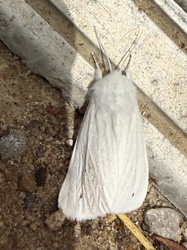
A fluffy white moth peppered with small black dots, resembling the ermine fur pattern its name is drawn from.
Read the full White Ermine Moth encyclopedia entry →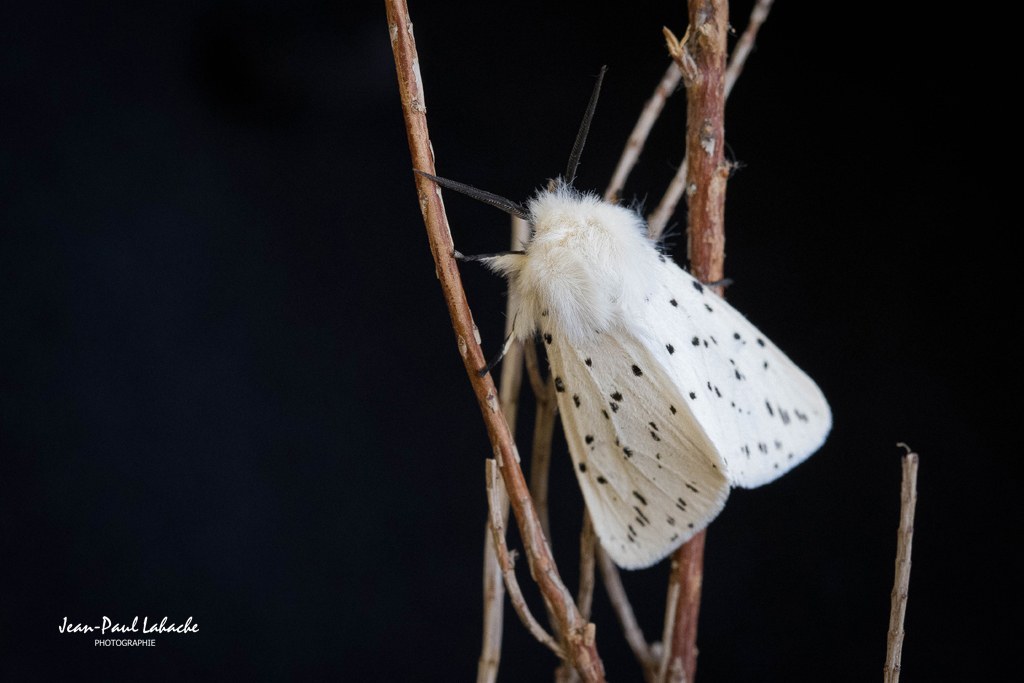
Key Visual Features
The white ermine moth has a clean, spotted look that makes it fairly easy to recognize:
- Size: Medium moth with a wingspan of roughly 3.5-4.5 cm (1.4-1.8 in).
- Color: Predominantly white to creamy-white forewings scattered with small, irregular black spots, resembling ermine fur.
- Hindwings: Paler white, usually with fewer or fainter spots than the forewings.
- Body: Furry white thorax, with an orange-yellow abdomen marked by a row of black spots along its length, visible when the wings are spread or the moth is in flight.
- Antennae: Thread-like in females, more feathery (bipectinate) in males.
- Resting posture: Wings held in a shallow tent or roof shape over the body, mostly concealing the colorful abdomen.
Where and When You're Likely to See It
This moth is found in gardens, meadows, hedgerows, and waste ground, wherever low-growing herbaceous plants are common. Adults fly at night in late spring through midsummer and are readily attracted to outdoor lighting and moth traps. They are commonly recorded resting on fences, walls, and vegetation near light sources during the day, where the white and black spotted pattern stands out clearly against darker backgrounds, unlike many camouflaged moths.
Similar-Looking Moths
- Muslin moth: Similar fuzzy white appearance but generally has fewer, less distinct spots and a grayer overall tone in females.
- Water ermine moth: Nearly identical in pattern but tends to have fewer black spots and prefers damper habitats near wetlands.
- Brown-tail moth: Also white-bodied, but lacks the scattered black spotting and instead shows a solid brown tuft at the tail tip.
Quick ID Checklist
- Creamy white wings with scattered small black spots
- Orange-yellow abdomen with a row of black dots
- Furry white thorax
- Feathery antennae in males, thread-like in females
- Nocturnal, common at lights in late spring/summer
Frequently asked questions
Why is it called the 'ermine' moth?
Its white wings dotted with small black spots resemble the winter coat of the ermine, a weasel prized historically for its spotted white fur.
How can I see the orange abdomen if the wings cover it?
The orange-yellow abdomen with black spots is most visible when the moth is in flight or if it briefly lifts its wings while resting.
What time of year are white ermine moths most common?
They are most frequently seen from late spring into midsummer, corresponding with their main adult flight period.
How do I tell males and females apart?
Males have more feathery, comb-like antennae used for detecting pheromones, while females have simpler, thread-like antennae.
White Ermine Moth identified by the community
Recent White Ermine Moth finds identified with Bug Identifier.