
Whitefringed Beetle Identification Guide
Identify this gray-brown, flightless weevil named for the pale fringe along the edges of its wing covers.
Read the full Whitefringed Beetle encyclopedia entry →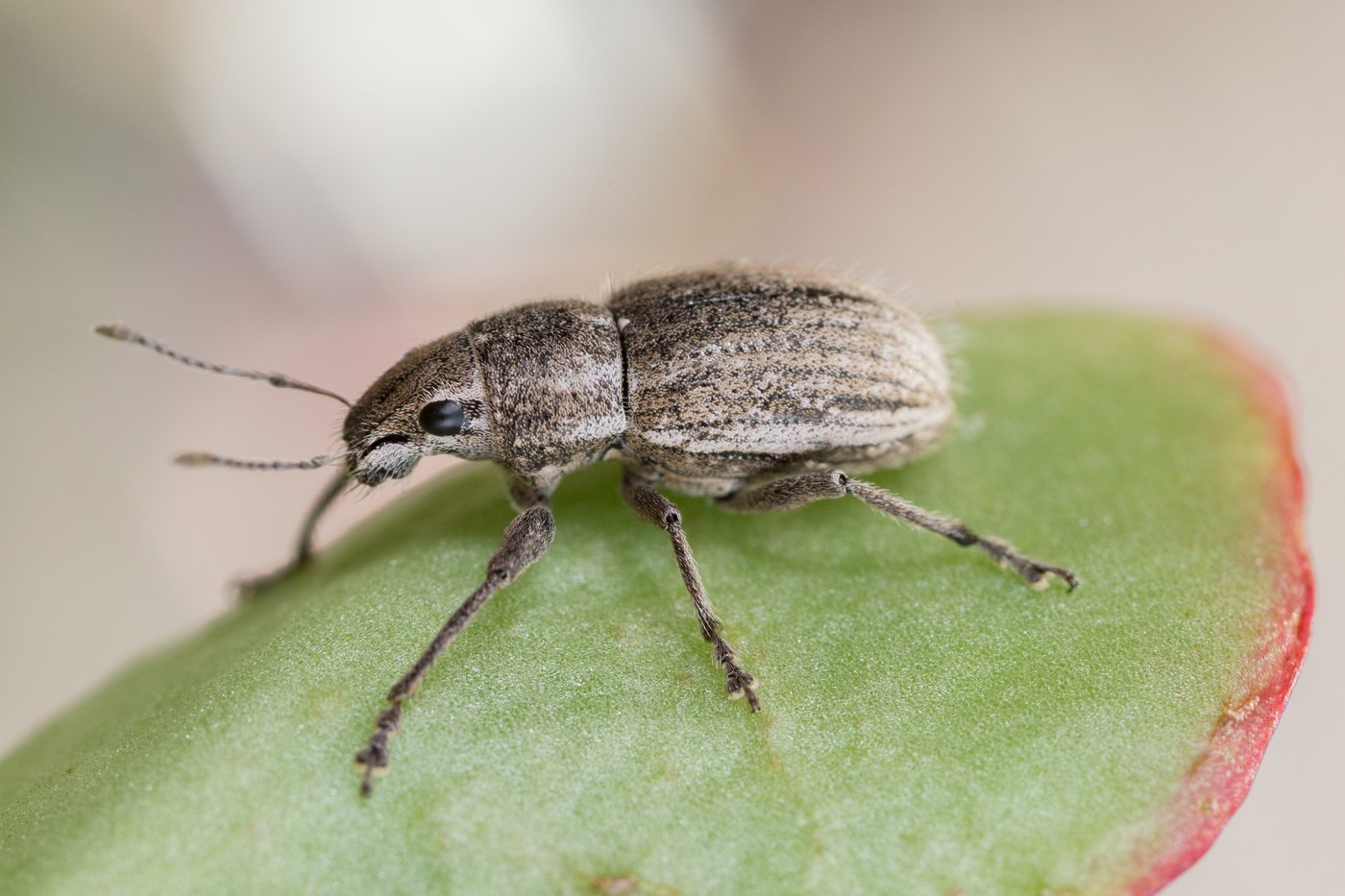
Key Visual Features
The whitefringed beetle is a medium-sized weevil, roughly 8-12 mm long, with a gray-brown to grayish-black body covered in fine, dense scales. Its most distinctive feature is a narrow band of lighter, whitish or pale gray scales running along the outer edges of the wing covers, creating a subtle pale fringe or border that contrasts with the darker central portion of the elytra. The body is broadly oval and somewhat wedge-shaped, tapering slightly toward the rear, with a short, broad snout typical of weevils and elbowed antennae. The wing covers are fused, and this species lacks functional hind wings, so it is entirely flightless.
Where and When You're Likely to See Them
Whitefringed beetles are found in warm regions, particularly the southeastern United States, in agricultural fields, pastures, and gardens where they feed on a wide variety of low-growing plants and crops. Adults are most active during the warmer months, from late spring through summer, and are typically seen crawling slowly on the ground, on low foliage, or at the base of plants during the day, since their inability to fly keeps them close to the soil surface. Because all individuals of this species reproduce without mating, populations can build up steadily wherever suitable host plants are abundant.
Similar-Looking Bugs
The whitefringed beetle can resemble other grayish ground-dwelling weevils, but the pale, contrasting fringe along the wing cover margins is a distinguishing feature not always present in similar species. Its flightless nature and wedge-shaped, tapering body also help separate it from more rounded or glossy weevils. Compared to the black vine weevil, which is darker and shows only scattered speckling rather than a continuous pale edge, the whitefringed beetle's defined marginal fringe is the clearer identifying trait.
Quick ID Checklist
- Medium weevil, 8-12 mm long, gray-brown to grayish-black body
- Narrow band of pale whitish or gray scales along the wing cover edges
- Broad, wedge-shaped body tapering toward the rear
- Flightless, found crawling on the ground or low foliage
- Most active from late spring through summer in warm regions
Frequently asked questions
What does the 'whitefringed' name refer to?
It refers to the narrow band of pale whitish or light gray scales running along the outer edges of the wing covers, which contrasts with the darker central body color.
Can whitefringed beetles fly?
No, they are flightless because their wing covers are fused and they lack functional hind wings, so they move entirely by crawling.
Where are whitefringed beetles most commonly found?
They are most common in warm regions such as the southeastern United States, typically found crawling in agricultural fields, pastures, and gardens near low-growing host plants.
When during the year are whitefringed beetles most active?
Adults are most active from late spring through summer, when they can be seen on the ground or low foliage during the day.