
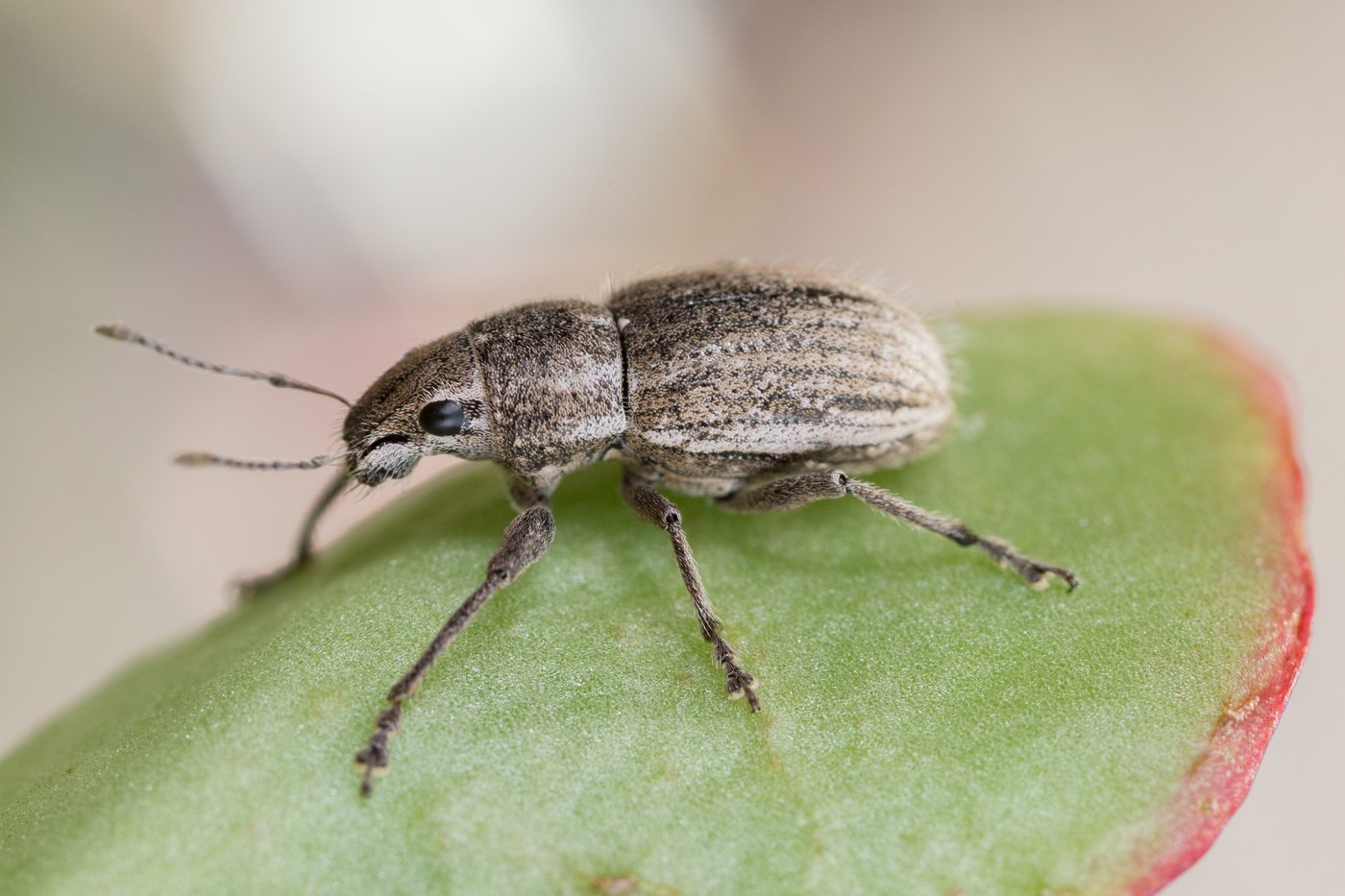
Whitefringed Beetle
Naupactus leucoloma
A stout gray-brown weevil named for the pale, fringe-like stripe along the outer edge of its wing covers, whose root-feeding larvae are a recognized issue in pastures and row crops.
- Size
- 8–12 mm
- Habitat
- Pastures, row crops, lawns, disturbed soils
- Danger
- Harmless
Spotted a bug like this?
Identify any bug or insect from a photo, free.
Overview
The whitefringed beetle is a broad-nosed weevil (subfamily Entiminae) native to South America that has become established as an introduced species in parts of North America, Australia, and other temperate agricultural regions. Like several of its weevil relatives, it is flightless, with fused wing covers that prevent true flight, so long-distance spread happens mostly through movement of soil, sod, hay, or produce rather than under its own power.
The group actually includes several very similar Naupactus/Graphognathus species collectively called "whitefringed weevils," which are difficult to separate without close examination, so the common name is often applied broadly to the complex rather than to one single, universally agreed species. All share the same pale marginal stripe and grub-like, soil-dwelling larvae.
Agriculturally it is notable chiefly as a root feeder of legumes, grasses, and vegetable crops, with the larval stage causing the most significant effects as it chews on roots and can influence stand establishment in pastures and field crops.
How to Identify
- Body 8–12 mm, uniformly gray to grayish-brown and densely covered in short scales that give it a dusty, matte appearance rather than a shiny one.
- The defining feature is a narrow, pale cream to white stripe running along the outer margin of each wing cover, forming a light "fringe" when viewed from above.
- Snout is short and broad, typical of broad-nosed weevils, with elbowed, clubbed antennae.
- Wing covers are fused (flightless), and the body outline is oval and somewhat wedge-shaped.
- Lookalikes: other broad-nosed weevils lack the pale marginal stripe; the black vine weevil is darker overall and lacks the light fringe.
Habitat & Range
Occurs in pastures, alfalfa and clover fields, lawns, and vegetable gardens, generally in open, disturbed, or agricultural ground rather than natural woodland. It has spread well beyond its native South American range into parts of the southeastern and southern United States, Australia, and other warm-temperate regions through agricultural trade. Adults are active on foliage in warm months, while larvae persist in the soil at various depths year-round.
Behavior & Diet
Adults are flightless and walk between plants, feeding on leaf margins at night or during humid conditions, leaving notched edges similar to other broad-nosed weevils. Larvae are the primary feeding stage of ecological and agricultural consequence, living in the soil and consuming roots and root hairs of grasses, legumes, and vegetables. Reproduction in many populations is parthenogenetic, meaning females can produce viable eggs without mating, which can allow rapid population buildup from just a few founding individuals.
Life Cycle
Complete metamorphosis. Adults emerge in late spring or summer, feed on foliage, and lay egg clusters in soil or plant debris near host roots. Larvae hatch and burrow into the soil, where they feed on roots through the growing season, overwintering as partially grown larvae in colder climates. Pupation occurs in an earthen cell in the soil, with new adults emerging the following season—generally one generation per year, though development can extend over more than a year in cooler climates.
Frequently asked questions
What is the easiest way to tell a whitefringed beetle from other gray weevils?
Look for the pale, cream-colored stripe running along the outer edge of each wing cover, which gives the insect its "whitefringed" name.
Can whitefringed beetles fly away if disturbed?
No, they are flightless with fused wing covers, so they can only crawl away when disturbed.
Where is this weevil originally from?
It is native to South America and has become established elsewhere through the movement of agricultural products and soil.
Which life stage feeds on plant roots?
The larvae, which live in the soil, are the stage that feeds on roots; adults feed on foliage above ground.
Whitefringed Beetle guides
In-depth guides for identifying, understanding, and living alongside Whitefringed Beetle.
Other bugs you may enjoy
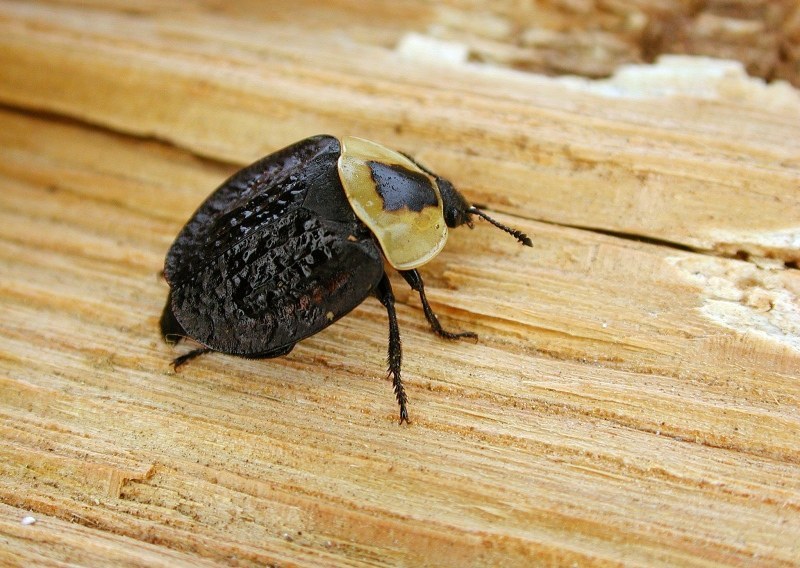
American Carrion Beetle
Forests, fields, and roadsides across North America, near decaying animal carcasses
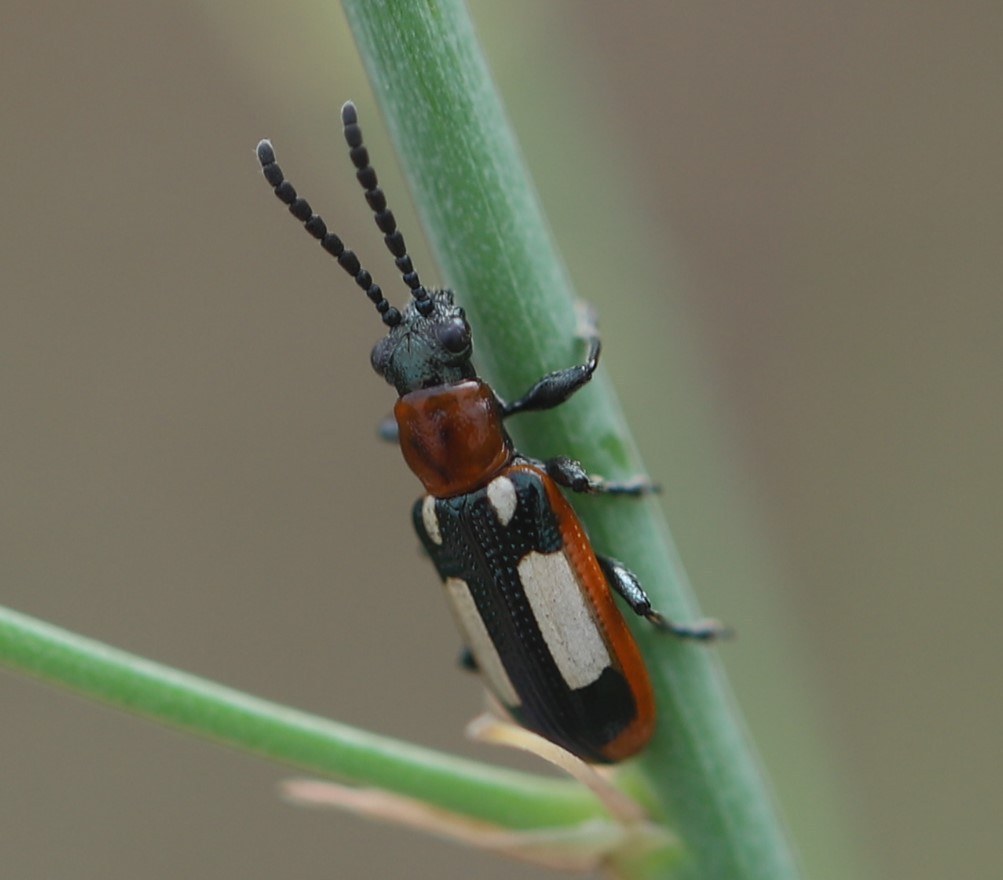
Asparagus Beetle
Asparagus patches, gardens, and farm fields
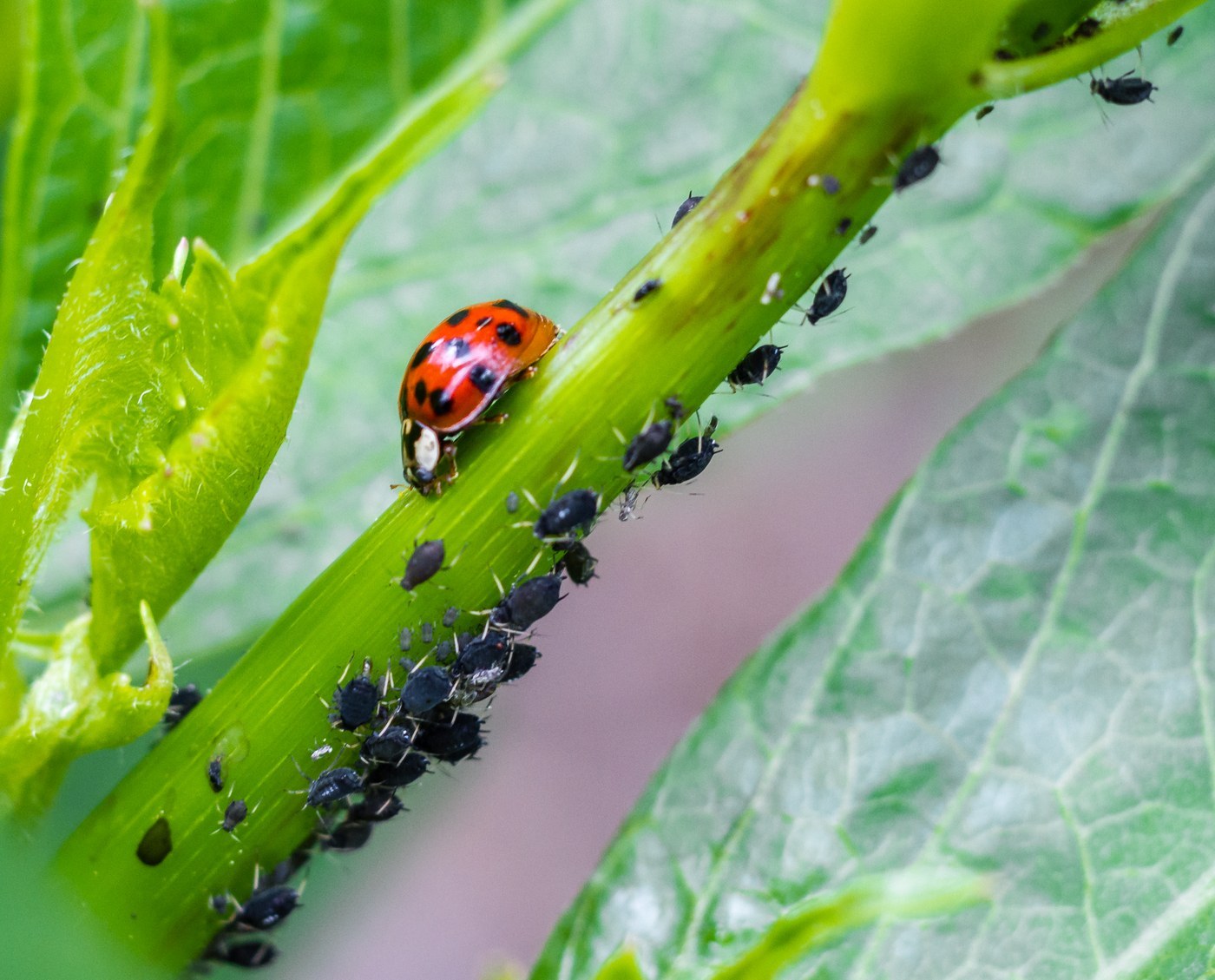
Asian Lady Beetle
Gardens, crop fields, woodlands, buildings
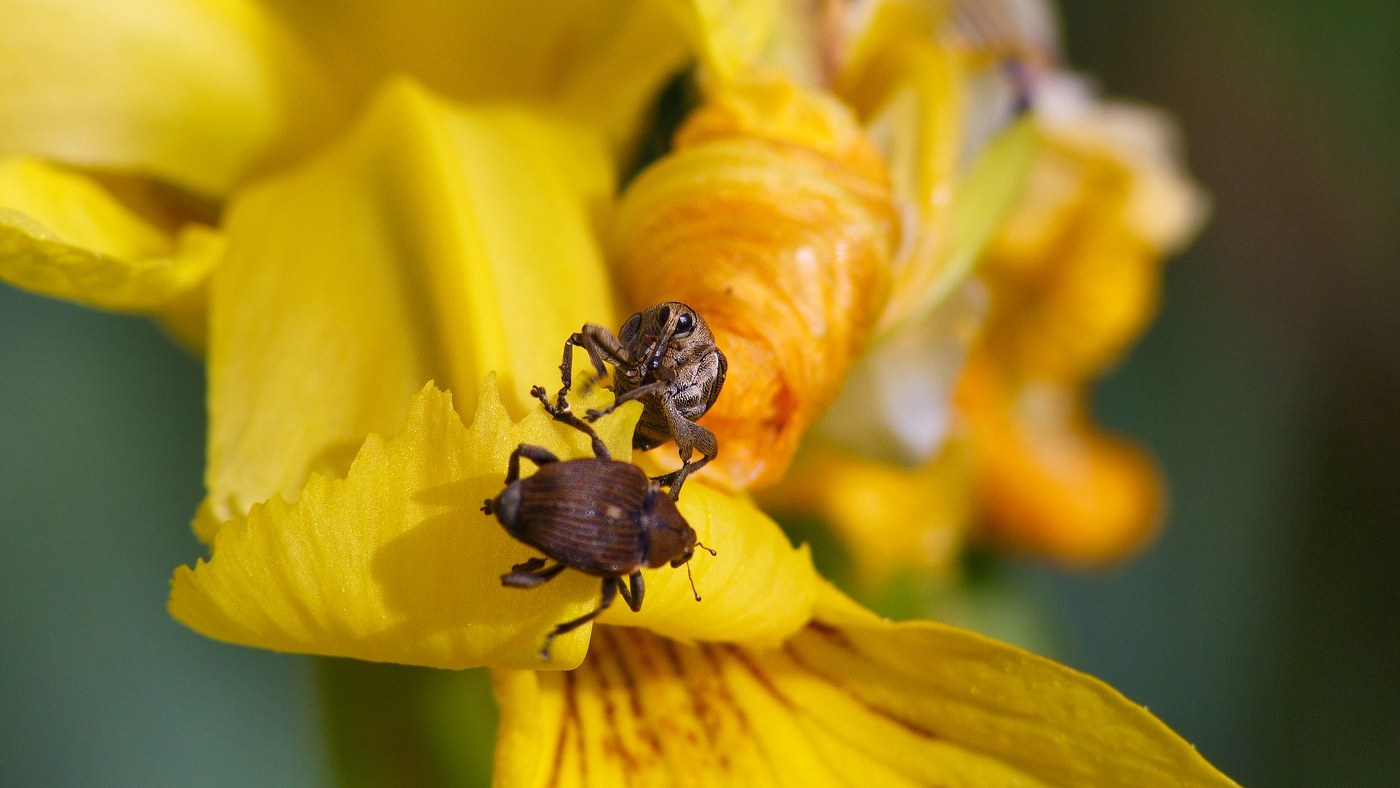
Acorn Weevil
Oak woodlands and forests, on and beneath oak trees
Wireworm
Soil of grasslands, gardens, and cultivated fields worldwide
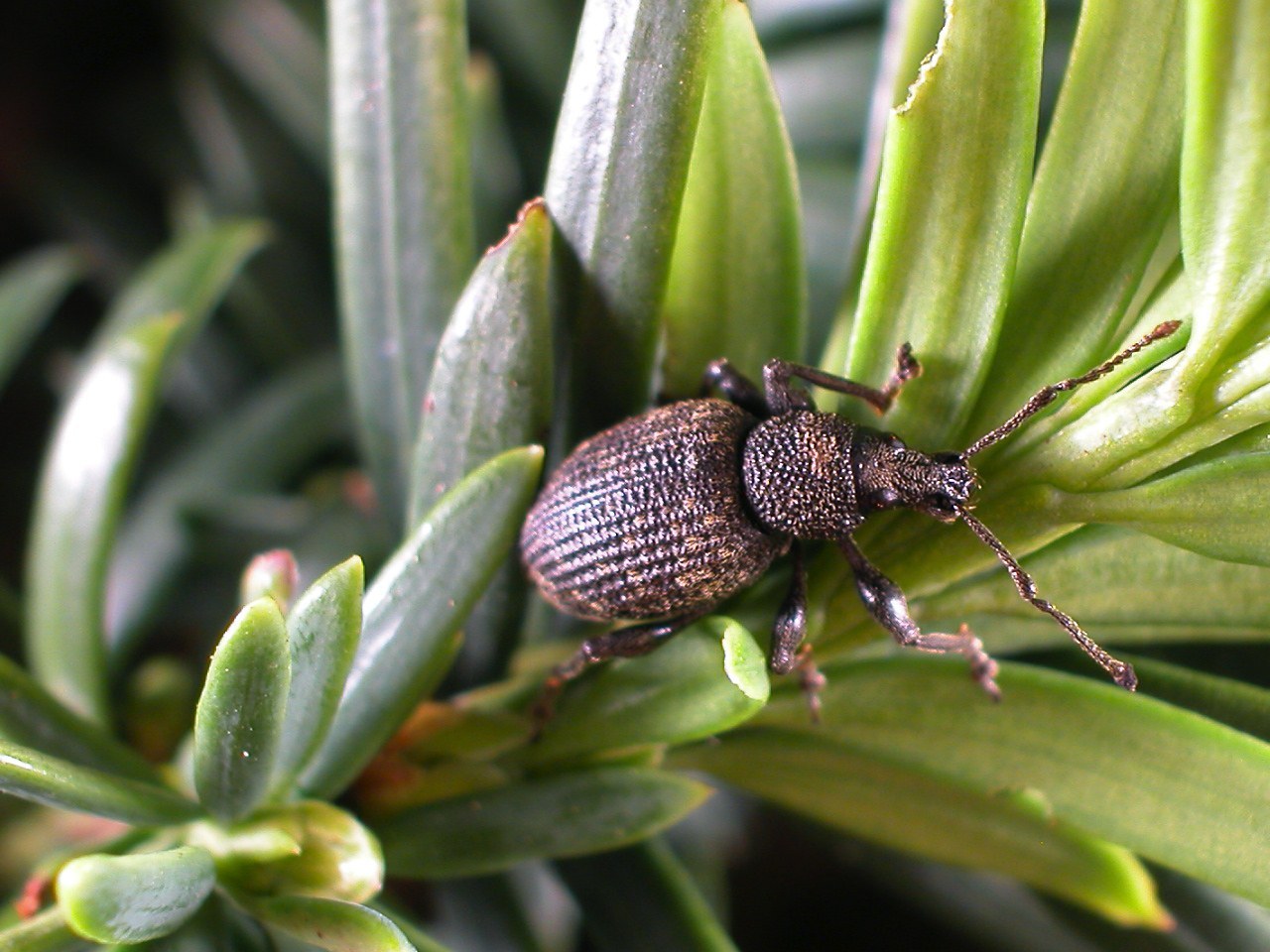
Vine Weevil
Gardens, nurseries, greenhouses, and container plantings
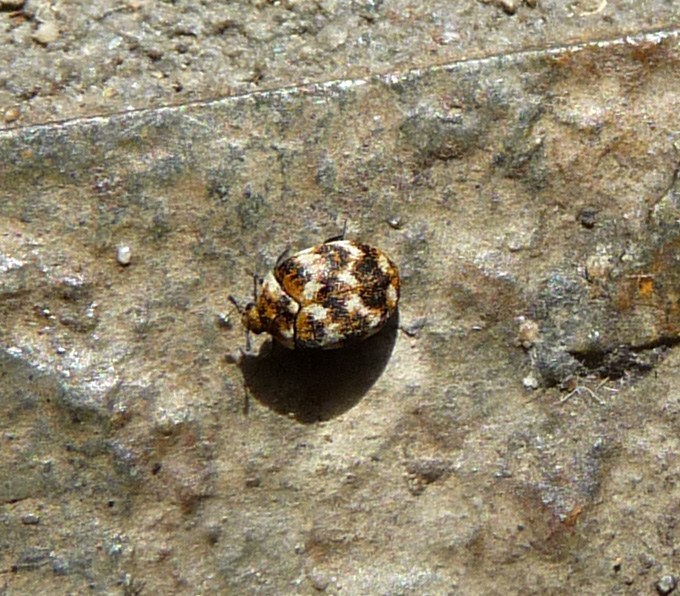
Varied Carpet Beetle
Homes, nests of birds and mammals, and flowers outdoors
Atlas Beetle
Tropical forests of Southeast Asia
Titan Beetle
Amazon rainforest of South America
Ten-lined June Beetle
Sandy soils, pine forests, and orchards of western North America
Squash Beetle
Vegetable gardens and fields growing squash, pumpkin, and other cucurbits
Red Flour Beetle
Stored grain, flour, and dry food products in mills, warehouses, and pantries worldwide