
Wood Tick Identification Guide
A common name applied to several hard-bodied tick species, identified by a flat, shield-marked body that swells dramatically after feeding.
Read the full Wood Tick encyclopedia entry →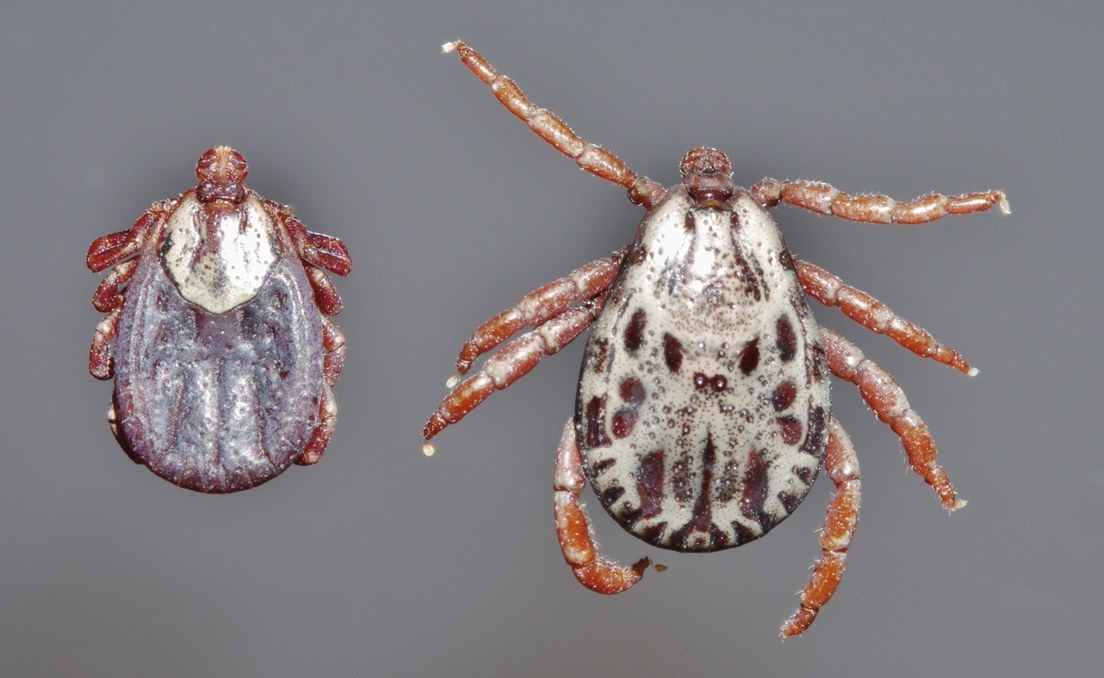
Key Visual Features
- Unfed adults are flat, oval, and roughly 1/8 to 3/16 inch (3-5 mm) long, with a hard, shield-like plate (scutum) covering part of the back.
- Body color is typically reddish-brown to dark brown, and many "wood tick" species show a mottled, marbled, or light-colored pattern on the scutum, especially in males, which have a scutum covering most of the back.
- Females have a smaller scutum limited to the area just behind the head, leaving most of the abdomen as soft, expandable, unmarked cuticle.
- Eight legs are present in nymph and adult stages (six-legged in the larval stage), attached near the front of the body, with the head/mouthparts (capitulum) visible from above as a small forward-projecting structure.
- After feeding, the body becomes dramatically swollen and grayish, sometimes ballooning to many times its unfed size, losing its original flat shape entirely.
Where and When You'd See It
- Found in wooded areas, brushy edges, tall grass, and leaf litter, especially along trails and the transition zones between forest and open habitat.
- Ticks wait on the tips of grass or low vegetation in a posture called "questing," with front legs outstretched, ready to grab onto a passing host.
- Most active in warmer months, typically spring through fall, with activity levels shifting by life stage and regional climate.
- Rarely seen indoors except when carried in on clothing, gear, or after outdoor activity.
Similar-Looking Bugs
- Soft ticks lack the hard shield-like scutum plate and have a more wrinkled, leathery, rounded body outline rather than the flat, plate-marked look of hard ticks like wood ticks.
- Bed bugs are a similar reddish-brown color and can look superficially tick-like when flattened, but bed bugs have a distinctly flattened oval shape without a hard shield plate and are found in bedding rather than outdoor vegetation.
- Mites are generally much smaller and lack the clearly segmented, shield-plated body structure of a tick.
Quick ID Checklist
- Flat, oval, hard-bodied shape with a shield-like plate on the back when unfed.
- Reddish-brown to dark brown coloring, sometimes mottled or marbled on the scutum.
- Eight legs (adults/nymphs) positioned toward the front of the body.
- Found questing on grass tips and low vegetation in wooded or brushy areas.
- Body becomes swollen and grayish after a blood meal, losing its flat shape.
Frequently asked questions
How can I tell an unfed wood tick from a fed one?
An unfed tick is flat and oval with a visible hard shield on its back, while a fed tick becomes swollen, rounded, and grayish, losing its original flat outline.
What is 'questing' behavior in ticks?
It's when a tick climbs to the tip of grass or vegetation and holds its front legs outstretched, waiting to latch onto a passing animal or person — a helpful behavioral clue for identification in the field.
How is a wood tick different from a soft tick?
Wood ticks are hard ticks with a rigid shield plate on the back and a flatter overall shape, while soft ticks lack this plate and have a more wrinkled, leathery, rounded body.
Why does the scutum size differ between male and female ticks?
In many hard tick species, males have a scutum covering nearly the whole back, while females have a smaller scutum near the head, leaving room for the abdomen to expand greatly during feeding.