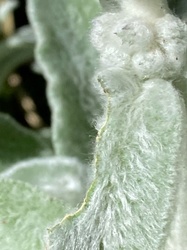
Wool Carder Bee Identification Guide
Recognize the wool carder bee by its yellow-spotted black abdomen and its habit of patrolling fuzzy-leaved garden flowers.
Read the full Wool Carder Bee encyclopedia entry →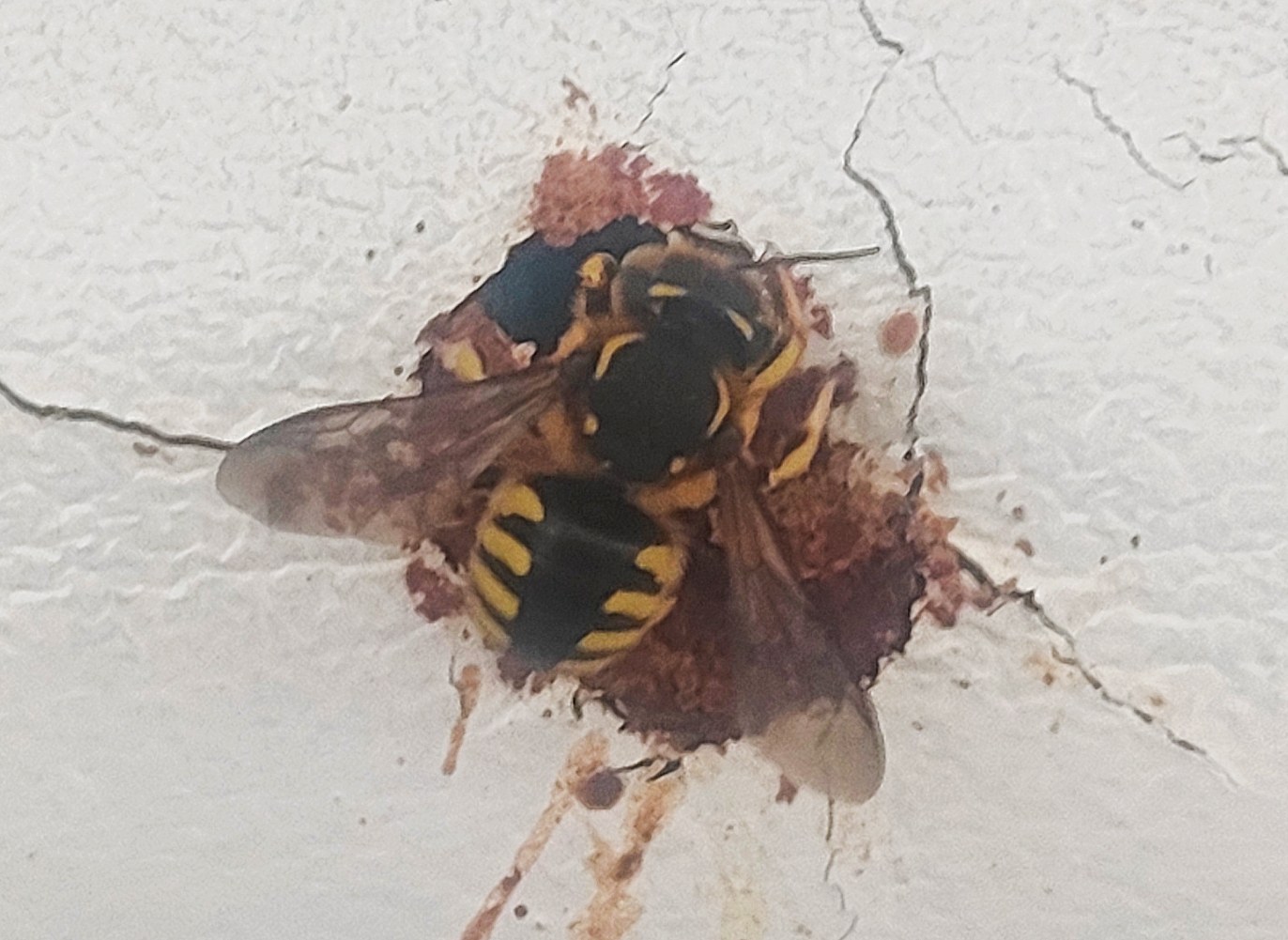
Key Visual Features
The wool carder bee (Anthidium manicatum) has a look and behavior that together make it easy to identify:
- Medium-sized, robust body, roughly 11-17mm
- Black abdomen marked with a row of distinct yellow to cream spots along each side, giving a pattern reminiscent of a small wasp
- Males are noticeably larger than females, somewhat unusual among bees, and have a spined or hooked tip at the end of the abdomen
- Females have hairs adapted for scraping fuzz from plant leaves rather than the typical pollen-carrying leg hairs of many other bees
Where and When You'll See Them
This species is closely tied to gardens containing fuzzy-leaved plants such as lamb's ear, as well as flowers in the mint family. Females gather ("card") the soft plant hairs into small balls, which they carry back to line their nest cells inside pre-existing cavities. Males are highly territorial and can be observed patrolling a patch of flowers, hovering and darting at other insects that enter their claimed area. Activity peaks in summer, coinciding with the bloom of their preferred host plants.
Similar-Looking Bugs
- Yellowjacket wasps can superficially resemble the wool carder bee's black-and-yellow pattern, but the bee has a fuzzier body and a more robust build with less angular yellow markings, plus no narrow wasp waist.
- Other Anthidium species look quite similar and are usually best separated by geographic range or close inspection.
Quick ID Checklist
- Black abdomen with rows of yellow to cream spots
- Males larger than females, with a spined abdomen tip
- Found around fuzzy-leaved plants like lamb's ear and mint-family flowers
- Females seen scraping plant fuzz into small balls
- Males patrol and hover territorially over flower patches in summer
Frequently asked questions
Why is it called a wool carder bee?
Females scrape, or "card," soft fuzz from plant leaves such as lamb's ear, rolling it into small balls to line their nest cells.
How can I tell a wool carder bee from a yellowjacket?
The wool carder bee has a fuzzier, more robust body without the narrow wasp waist, and its yellow markings appear as rounded spots rather than sharp wasp-like bands.
Why are male wool carder bees larger than females?
Unlike most bees, male wool carder bees are bigger than females, which suits their territorial behavior of patrolling and defending flower patches.
What plants attract wool carder bees?
They favor gardens with fuzzy-leaved plants like lamb's ear along with flowering plants in the mint family.
Wool Carder Bee identified by the community
Recent Wool Carder Bee finds identified with Bug Identifier.