
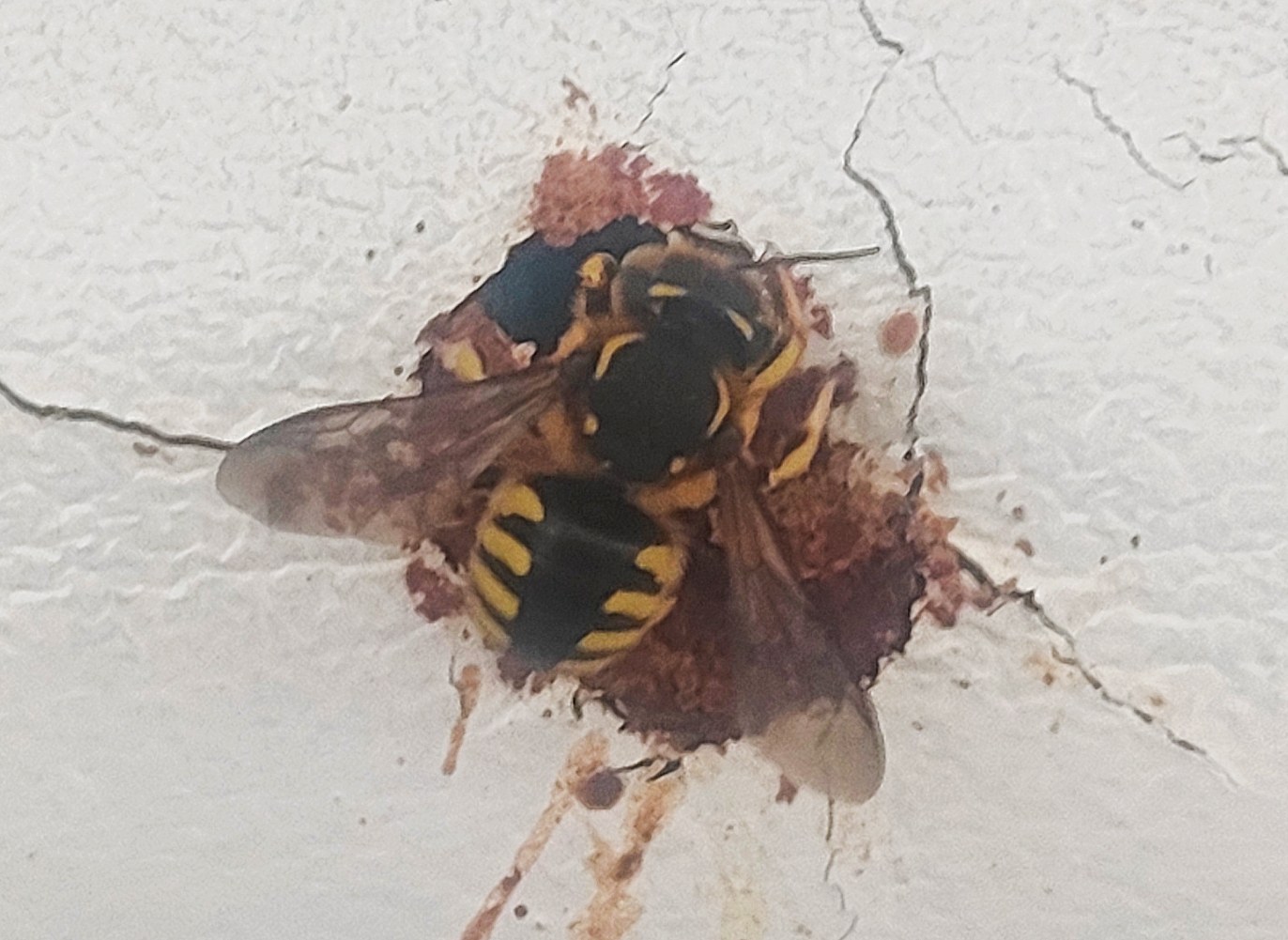
Wool Carder Bee
Anthidium manicatum
A stocky, yellow-and-black solitary bee named for its habit of scraping soft plant fibers from fuzzy leaves to line its nest, with territorial males that aggressively patrol and defend flower patches.
- Size
- 11–17 mm
- Habitat
- Gardens, meadows, urban green spaces with fuzzy-leaved plants
- Danger
- Stings
Spotted a bug like this?
Identify any bug or insect from a photo, free.
Overview
The wool carder bee, most notably the widespread species Anthidium manicatum, is a solitary bee in the family Megachilidae, originally native to Europe, Asia, and North Africa but now established in North America and other regions through introduction. It gets its common name from the female's behavior of "carding," or scraping, fine plant hairs from fuzzy-leaved plants such as lamb's ear to felt into soft nesting material.
It is notable for its striking yellow-spotted, wasp-like coloration and, more distinctively, for the aggressively territorial behavior of males, which patrol patches of flowers and physically confront other insects, including bees several times their size, that intrude on their claimed territory.
Ecologically, wool carder bees are effective pollinators of a range of garden and wild flowering plants, and their unusual plant-fiber nesting behavior places them among the cavity-nesting Megachilidae bees that use materials such as leaves, resin, mud, or plant hair to construct nest cells rather than excavating soil burrows.
How to Identify
- Stocky, robust bee, 11–17 mm long, black with bold yellow spots or bands along the sides of the abdomen, giving a wasp-like appearance.
- Males are notably larger than females and have small hooked spines at the tip of the abdomen used in territorial combat.
- Body is only lightly haired compared to bumble bees, with a somewhat angular, boxy abdomen shape.
- Distinguished from yellowjacket wasps by bee-like body proportions and body hair, and from other bees by males' territorial hovering behavior around flower patches.
Habitat & Range
Native to Europe, Asia, and North Africa, the wool carder bee has spread to North America, South America, and other regions, thriving in gardens, meadows, parks, and other green spaces that offer both flowering plants and nesting cavities. It nests in pre-existing cavities such as hollow stems, wood crevices, or man-made bee houses, and is active mainly in summer months when its preferred flowers, including mints, sages, and lamb's ear, are blooming.
Behavior & Diet
Female wool carder bees scrape soft trichomes (fine hairs) from fuzzy plant leaves, rolling the fibers into a ball to carry back and felt into soft padding for nest cells. Males are unusually aggressive for bees, establishing and patrolling flower territories and body-slamming intruding insects, including other bee species, wasps, and even much larger bumble bees, in order to monopolize mating access to females visiting those flowers. As pollinators, both sexes visit a range of flowering plants for nectar, with females also collecting pollen for provisioning nests.
Life Cycle
This species undergoes complete metamorphosis, generally with one to two generations per year depending on climate. Females provision a series of nest cells lined with carded plant fiber, each stocked with pollen and nectar and containing a single egg, within a cavity nest. Larvae consume their provisions and pupate within the cell, with adults emerging later in the season or the following year; in temperate climates the species typically overwinters as a mature larva or pupa within its nest cell.
Frequently asked questions
Why is it called a wool carder bee?
Females scrape soft fibers from fuzzy plant leaves and 'card' them into balls to line their nest cells, resembling the wool-carding process.
Are wool carder bee males territorial?
Males are territorial and will bump or chase other insects away from flower patches, but they lack a stinger, as is typical for male bees.
What plants attract wool carder bees?
They are especially drawn to fuzzy-leaved plants such as lamb's ear for nesting fiber, and to mints and sages for nectar.
Is the wool carder bee native to North America?
No, it originates from Europe, Asia, and North Africa but has become established in North America and other regions.
Wool Carder Bee guides
In-depth guides for identifying, understanding, and living alongside Wool Carder Bee.
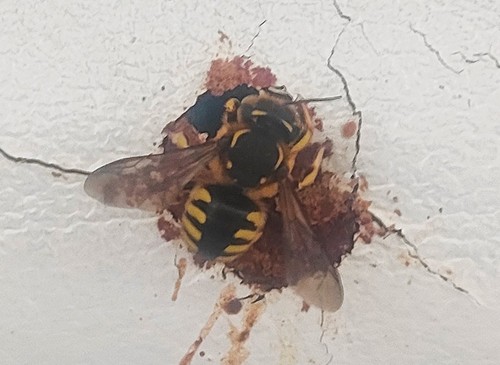
Wool Carder Bee identified by the community
Real finds identified with Bug Identifier.
Other bugs you may enjoy
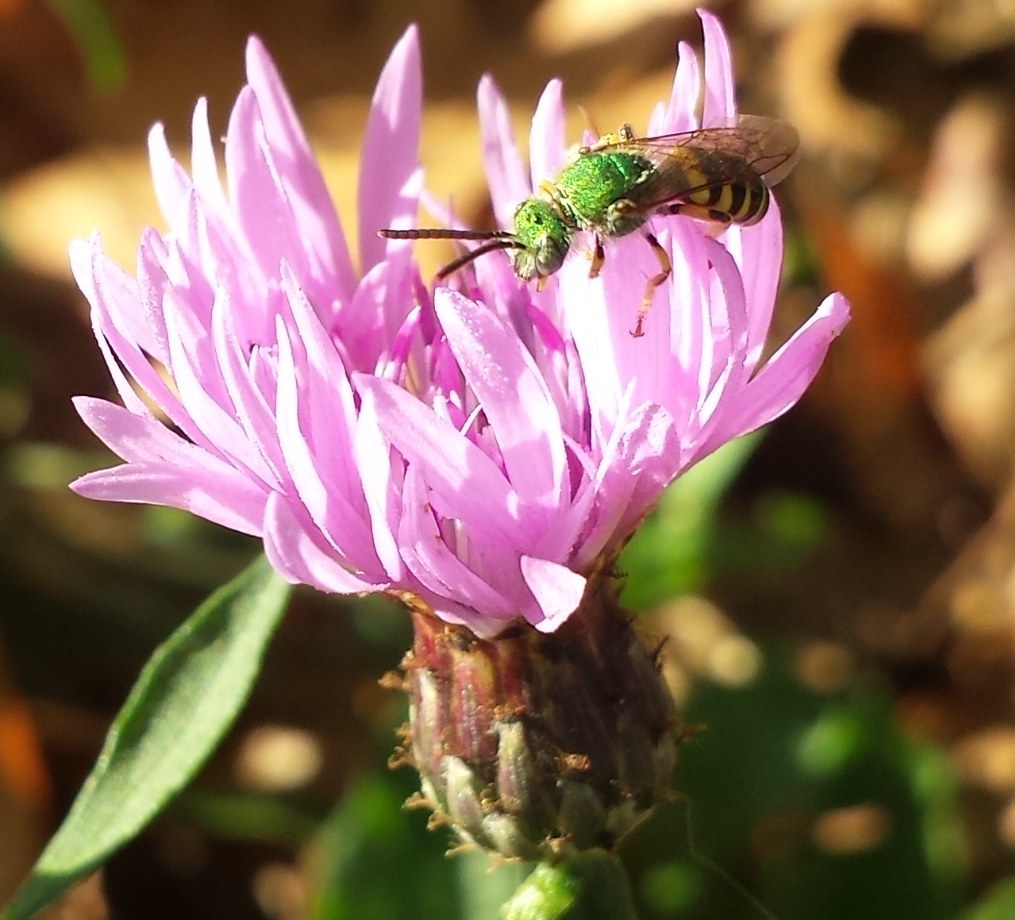
Sweat Bee
Gardens, meadows, and bare or sandy soil worldwide
Western Honey Bee
Managed hives and wild colonies in tree cavities, worldwide in temperate and tropical climates
Squash Bee
Vegetable gardens and farm fields growing squash, pumpkin, and gourd plants
Honey Bee
Flowering meadows, gardens, orchards, and managed hives
Mining Bee
Bare or sparsely vegetated soil, lawns, gardens, woodland edges
Mason Bee
Orchards, gardens, and wooded edges across temperate regions
Longhorn Bee
Prairies, meadows, gardens, sunflower and aster fields
Leafcutter Bee
Gardens, meadows, and agricultural fields across temperate and subtropical regions
Honeybee
Managed hives, tree cavities, gardens, farmland, meadows
Carpenter Bee
Wooden structures, dead trees, and gardens across temperate and tropical regions
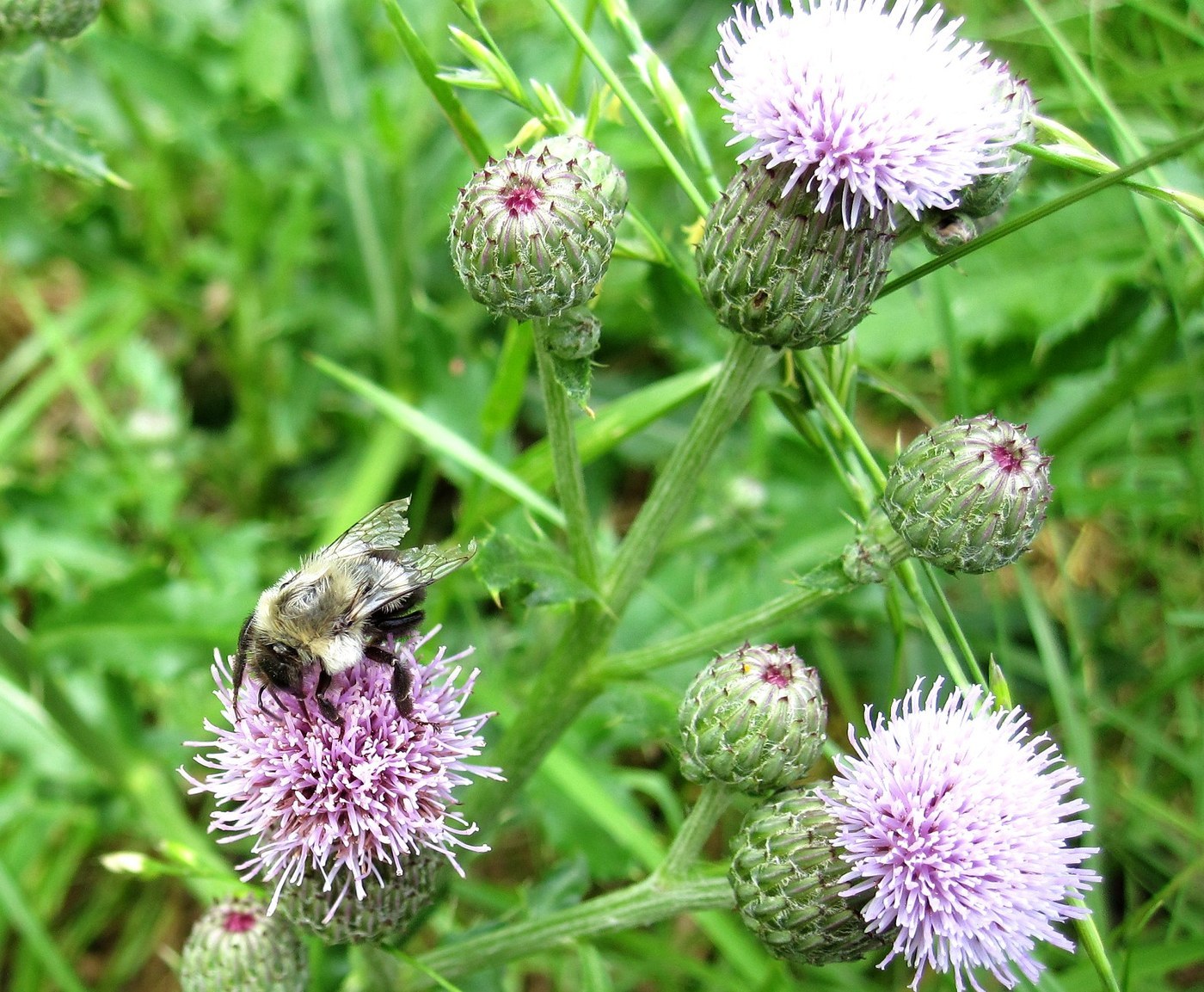
Bumblebee
Meadows, gardens, hedgerows, and open woodland edges
Bumble Bee Queen
Meadows, gardens, woodland edges; underground burrows or leaf litter for overwintering