Yellow-spotted Millipede Identification Guide
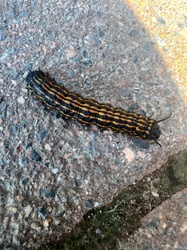
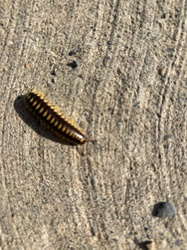
Identify the yellow-spotted millipede by its dark body marked with rows of bright yellow or orange spots.
Read the full Yellow-spotted Millipede encyclopedia entry →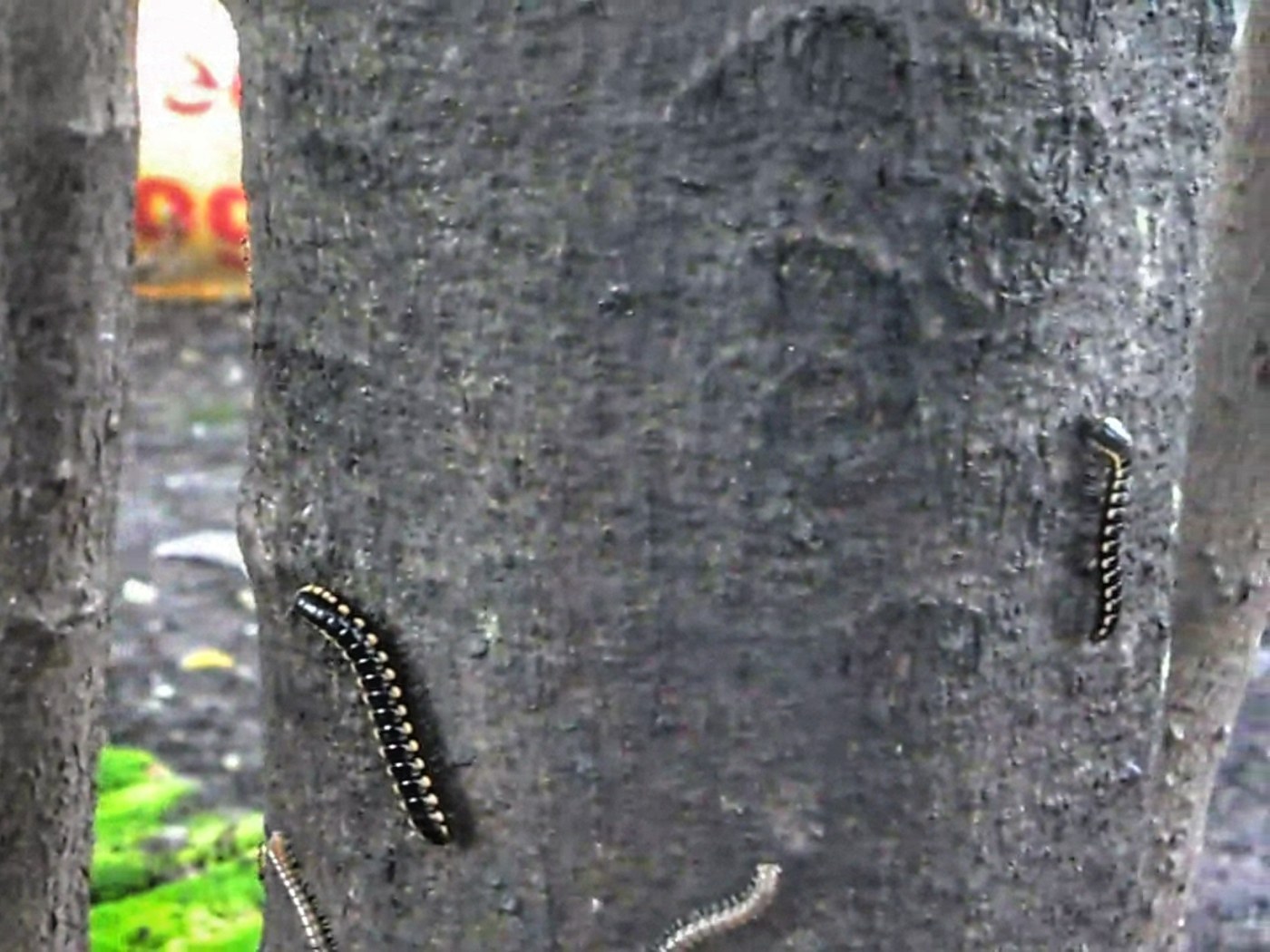
Key Visual Features
The yellow-spotted millipede is easily recognized among millipede species thanks to its bold, contrasting color pattern.
- Size: Adults commonly reach about 1.5 to 2 inches (4-5 cm) in length.
- Color: A dark brown to black body marked with rows of bright yellow or orange spots running along the sides and sometimes the top of each segment — the standout feature for identification.
- Body shape: A cylindrical, segmented body typical of many millipedes, though with visible ridging along the segment edges where the spots are positioned.
- Legs: Two pairs of short legs per body segment, generally dark to match the body color.
- Antennae: Short, segmented antennae at the front of the head, used to sense the environment.
- Defensive behavior: When disturbed, this species can coil into a tight spiral, and some related species in this group are known to produce a mild defensive odor as a deterrent, without any need for physical contact to observe.
Where and When You'd See It
Yellow-spotted millipedes are found in moist forested habitats, particularly among leaf litter, decaying logs, and damp soil in woodland areas. They are most active during humid, cooler conditions, often becoming visible after rainfall or during overcast, damp weather. Like other millipedes, they retreat from direct sunlight and dry conditions, staying within sheltered, moisture-rich microhabitats such as the underside of logs or thick leaf litter.
Similar-Looking Bugs
- Snake millipede: Lacks the bright yellow spotting, typically appearing as a plain dark brown, gray, or black cylindrical body.
- Flat-backed millipede: Has projecting side plates giving a flattened, ridged look, and is usually a plain brown or tan rather than boldly spotted.
- Stone centipede: Moves quickly with one pair of legs per segment and lacks the paired yellow spotting pattern, making it easy to distinguish by both color and movement speed.
Quick ID Checklist
- Dark brown to black body with bold yellow or orange spots along the sides
- Cylindrical, segmented body with two pairs of legs per segment
- Found in moist leaf litter, decaying logs, and damp woodland soil
- Coils into a tight spiral when disturbed
- Most visible after rainfall or in humid, overcast conditions
Frequently asked questions
What is the key identifying feature of the yellow-spotted millipede?
The rows of bright yellow or orange spots running along the sides of its otherwise dark brown to black body are the clearest identification feature.
Where does the yellow-spotted millipede typically live?
It favors moist forested habitats, especially leaf litter, decaying logs, and damp soil in wooded areas.
What does a yellow-spotted millipede do when disturbed?
It typically coils into a tight spiral shape as a defensive posture rather than fleeing quickly.
How can you tell it apart from a plain snake millipede?
The yellow-spotted millipede has bold contrasting yellow or orange spots along its body, while the snake millipede is a plain dark brown, gray, or blackish color without spotting.
Yellow-spotted Millipede identified by the community
Recent Yellow-spotted Millipede finds identified with Bug Identifier.