
Zebra Longwing Identification Guide
Identify this slow-flying tropical butterfly by its narrow black wings striped boldly with yellow.
Read the full Zebra Longwing encyclopedia entry →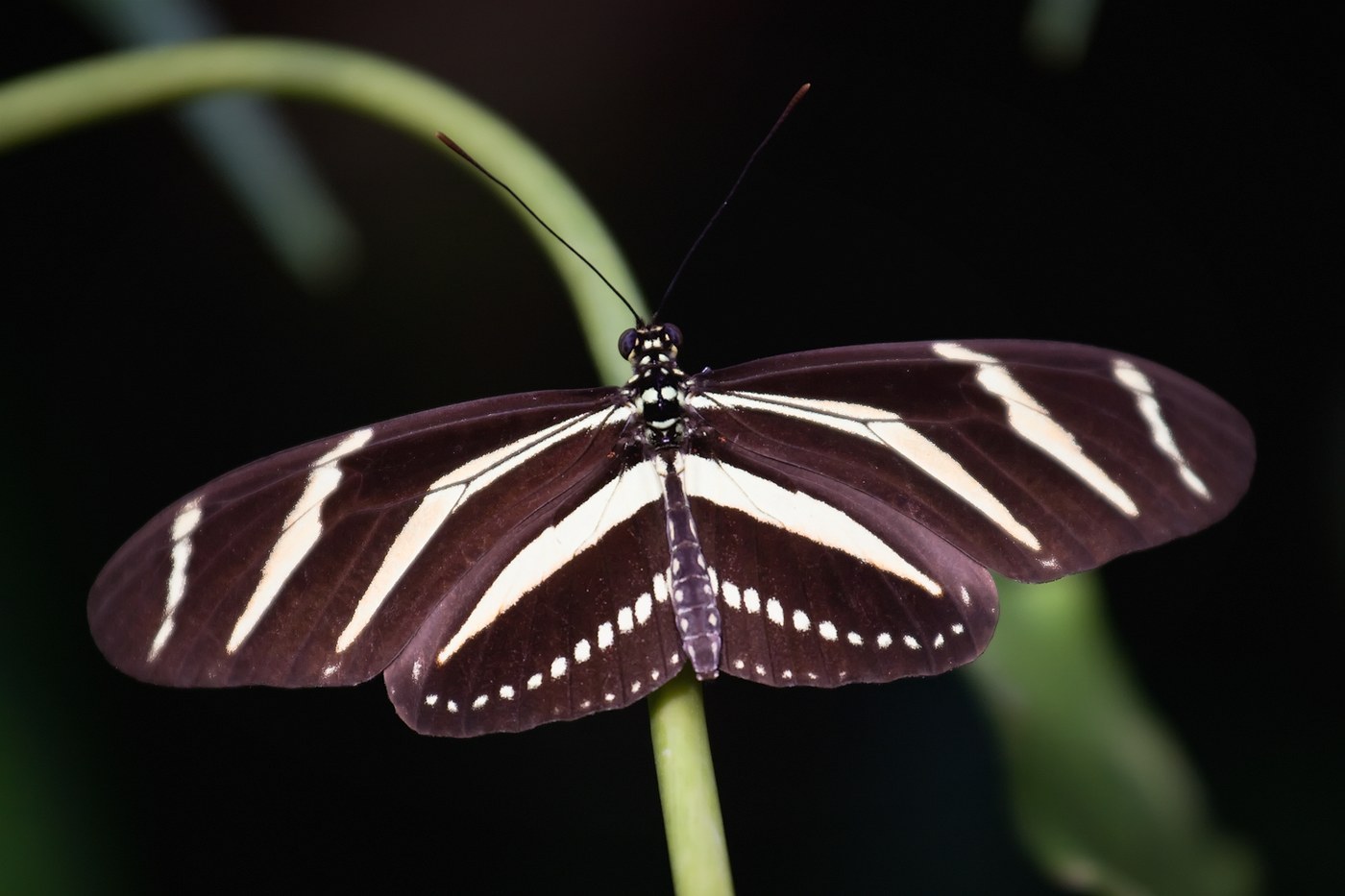
Key Visual Features
The Zebra Longwing (Heliconius charithonia) has an elongated, narrow-winged silhouette unlike most other butterflies.
- Color and pattern: Wings are black with bold, wide cream to yellow stripes running across both the forewing and hindwing.
- Wing shape: Wings are long and narrow relative to body size, giving the butterfly an elegant, slender look in flight.
- Body: Black body with small yellow spots; the abdomen is notably slender.
- Antennae: Long, prominent antennae compared to many other butterflies.
- Flight style: A distinctive slow, floppy flight pattern with shallow wingbeats, quite different from the quick darting flight of many other species.
- Size: Wingspan of about 3 to 4 inches.
Where and When You'll See It
Zebra Longwings inhabit tropical and subtropical hammocks, shaded gardens, and edges of woodlands, especially where passionflower vines (their larval host plant) grow. In North America they're most common in Florida, southern Texas, and along the Gulf Coast, with occasional strays farther north. They are active during the day and often remain active later into dusk than many other butterflies. A notable behavior is communal roosting, where groups gather together on the same twigs or branches at night, often returning to the same roost site repeatedly.
Similar-Looking Species
- Julia Butterfly: Bright solid orange rather than striped black and yellow, with a similarly elongated wing shape but a completely different color pattern.
- Gulf Fritillary: Orange with black markings and silver-spangled spots on the underside, lacking the bold stripe pattern.
- The Zebra Longwing's striped pattern is distinctive enough that it is rarely confused with any other species once seen clearly.
Quick ID Checklist
- Long, narrow black wings with bold yellow/cream stripes
- Slow, floppy flight with shallow wingbeats
- Long antennae
- Found near passionflower vines in shaded tropical habitat
- Often seen roosting communally at dusk
Frequently asked questions
What makes the Zebra Longwing's flight distinctive?
It has a slow, floppy flight style with shallow wingbeats that is noticeably different from the fast, direct flight of many other butterflies.
Where in North America are Zebra Longwings most commonly found?
They are most frequently seen in Florida, southern Texas, and other warm areas along the Gulf Coast, especially near passionflower vines.
Do Zebra Longwings gather together at night?
Yes, they are known for communal roosting behavior, gathering in small groups on the same twigs or branches to rest overnight.
How is a Zebra Longwing different from a Julia Butterfly?
The Zebra Longwing has bold black and yellow stripes, while the Julia Butterfly is largely solid bright orange with thin black markings along the veins.