
Zebra Swallowtail Identification Guide
Recognize this striking triangular swallowtail by its bold black-and-white stripes and unusually long tails.
Read the full Zebra Swallowtail encyclopedia entry →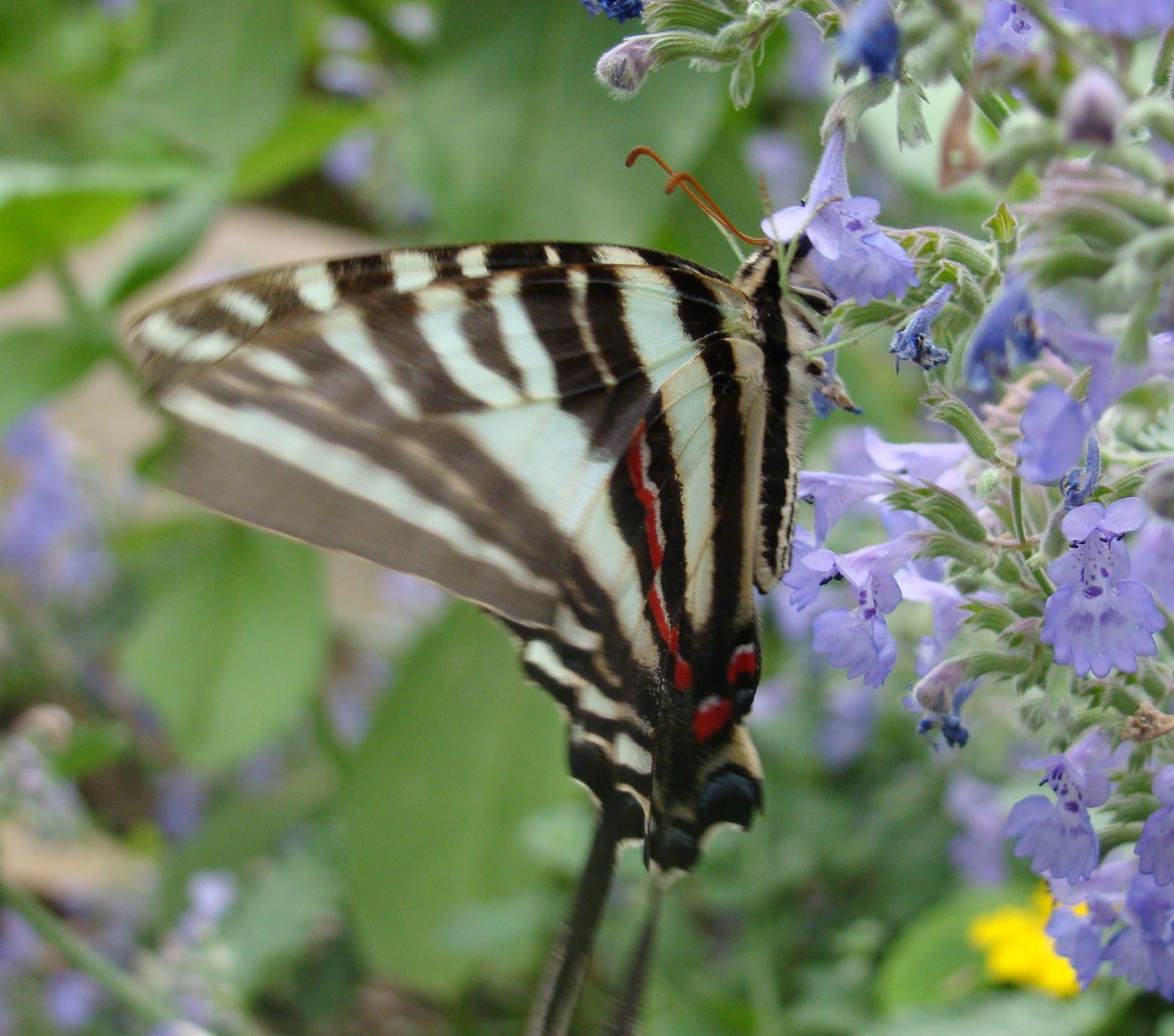
Key Visual Features
The Zebra Swallowtail (Protographium marcellus) is one of the most distinctive butterflies in North America thanks to its unmistakable striping.
- Color and pattern: Wings are pale greenish-white to white, crossed by bold, evenly spaced black stripes running lengthwise, giving a true "zebra" look.
- Wing shape: Wings are notably triangular and angular compared to other swallowtails.
- Tails: The hindwings carry extremely long, thin tails, proportionally the longest of any North American swallowtail.
- Underside markings: The ventral hindwing shows a reddish stripe and small red and blue spots near the base of the tails.
- Body: Slim black body with thin white striping along the sides.
- Seasonal forms: Spring individuals are smaller, paler, and shorter-tailed; summer individuals are larger, more boldly striped, and have longer tails.
Where and When You'll See It
Zebra Swallowtails are closely tied to pawpaw trees, their sole larval host plant, so they're found in and around moist woodlands, forest edges, and streamside habitats throughout the eastern and central United States. Adults fly from early spring through summer, with multiple broods producing the seasonal size and color differences described above. Look for them gliding along woodland edges and clearings, often visiting flowers at low to mid-height.
Similar-Looking Species
- No other North American swallowtail shares this bold black-and-white striped pattern, making the Zebra Swallowtail one of the easiest species to identify at a glance.
- At a distance or in fast flight, it might briefly be mistaken for other pale swallowtails, but the long thin tails and triangular wing shape are reliable giveaways once the butterfly is seen clearly.
- Fresh spring-form individuals with shorter tails can look slightly less dramatic but retain the same stripe pattern.
Quick ID Checklist
- Bold black stripes on white to pale green wings
- Extremely long, thin tails
- Triangular, angular wing shape
- Red stripe and small red/blue spots on the ventral hindwing
- Found near pawpaw trees in moist woodland habitat
Frequently asked questions
Why do Zebra Swallowtails look different in spring versus summer?
They have seasonal forms: spring individuals are smaller with shorter tails and paler markings, while summer-brood individuals are larger with longer tails and bolder black striping.
What plant should I look near to find a Zebra Swallowtail?
Pawpaw trees are the key indicator, since they are the only host plant used by this species' caterpillars, so adults are usually found nearby.
Could a Zebra Swallowtail be confused with any other butterfly?
It's unlikely, since the combination of bold lengthwise black stripes and very long thin tails is unique among North American butterflies.
How large is a Zebra Swallowtail?
Wingspan generally ranges from about 2.5 to 4 inches, with summer-brood individuals typically larger than spring-brood ones.