
Community identification
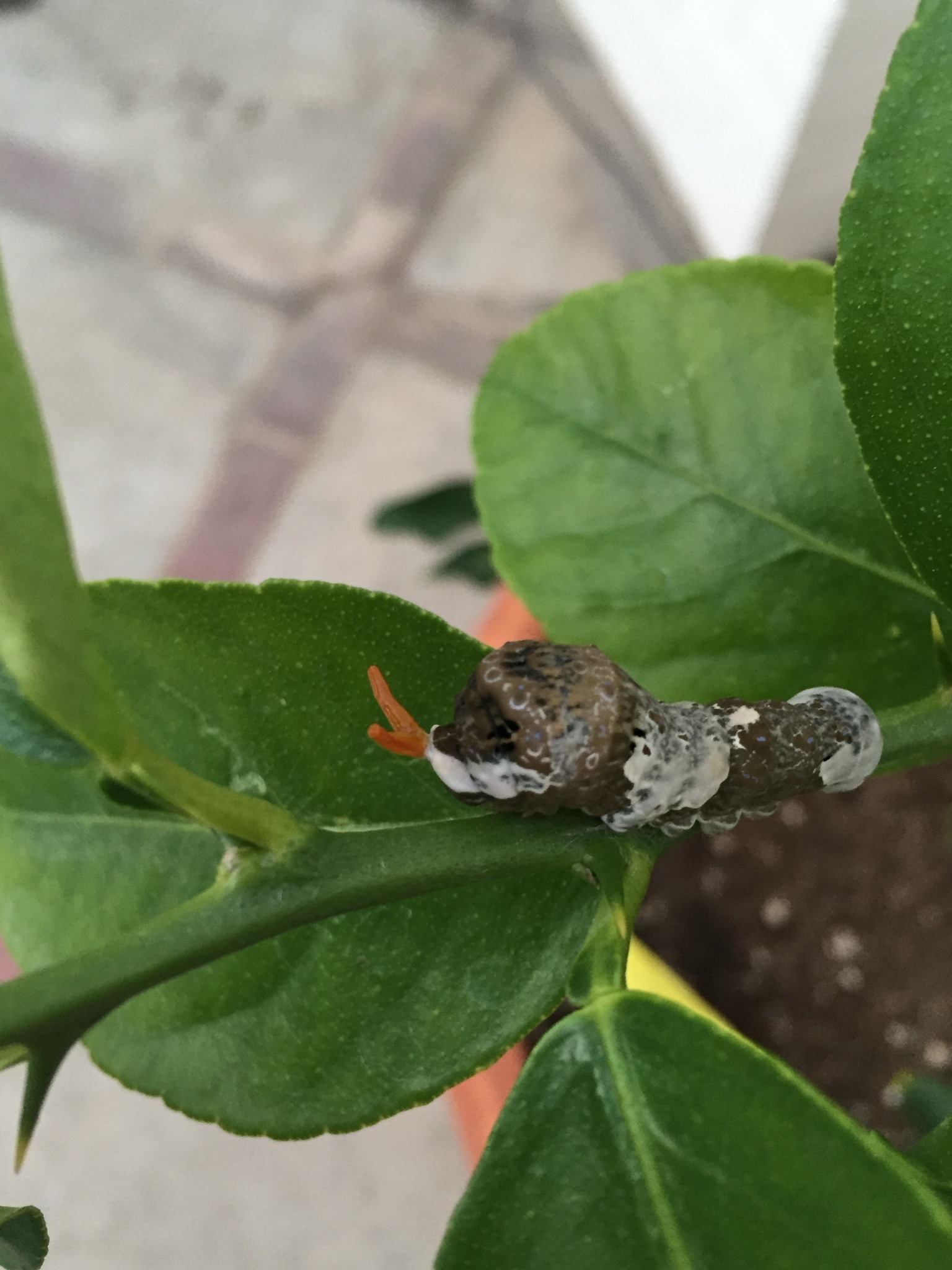
Early instar swallowtail caterpillar (likely citrus swallowtail)
Papilio sp., likely Papilio demoleus
- Order & Family
- Lepidoptera; Papilionidae
- Size
- Usually 10–40 mm as larvae; adults have wingspans of roughly 70–100 mm, depending on species.
Natural Habitat
Larvae occur on citrus and other Rutaceae plants in gardens, orchards, and subtropical woodland.
Diet & Feeding
Chews leaves, primarily on citrus and related host plants. Young larvae often consume leaf margins and new growth.
Behavior Patterns
The caterpillar appears bird-dropping-like, a form of camouflage common in early swallowtail stages. When disturbed, it may evert an orange, forked osmeterium that releases defensive odors; it later pupates attached to vegetation.
Risks & Benefits
Harmless to people and nonvenomous, though it can defoliate young citrus plants. Adults are important flower pollinators, and larvae support predators and parasitoids.