
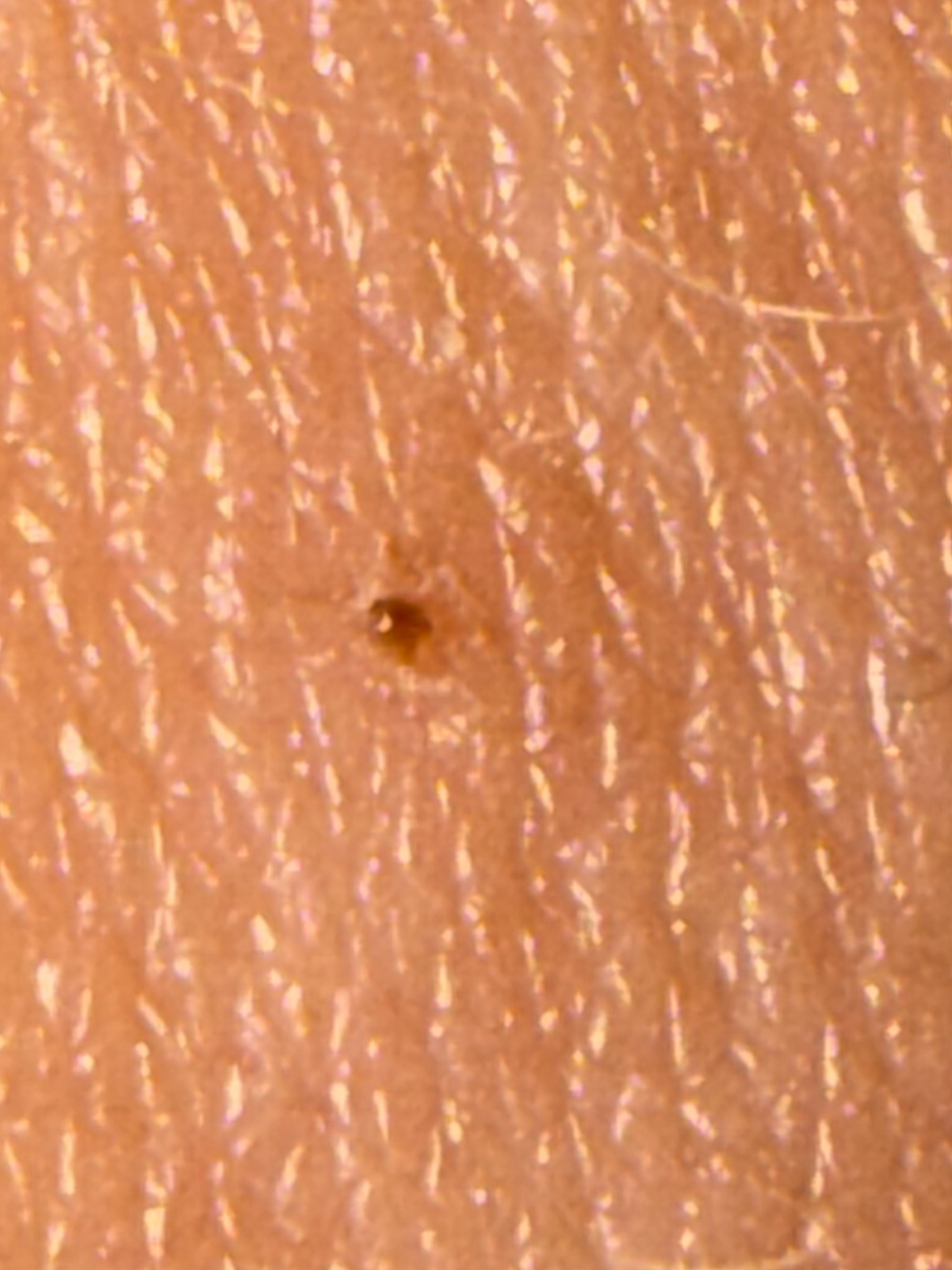
Community identification
Possible chigger (harvest mite larva)
Trombiculidae, likely genus Neotrombicula
- Order & Family
- Arachnida: Trombidiformes; family Trombiculidae
- Size
- Usually about 0.15–0.3 mm, often barely visible without magnification.
Natural Habitat
Leaf litter, grass, soil, and low vegetation, especially in warm, humid areas. Larvae attach temporarily to passing animals, including humans.
Diet & Feeding
Larvae feed on liquefied skin tissue and lymph by injecting digestive enzymes; adults and nymphs feed mainly on small arthropods and organic matter.
Behavior Patterns
Six-legged larvae quest on vegetation and attach to hosts, commonly causing delayed, intensely itchy red welts. They do not burrow into skin and typically detach after several days.
Risks & Benefits
Bites can cause severe itching and dermatitis; some species may transmit scrub typhus in endemic regions. Adults and nymphs help regulate small soil-arthropod populations.