
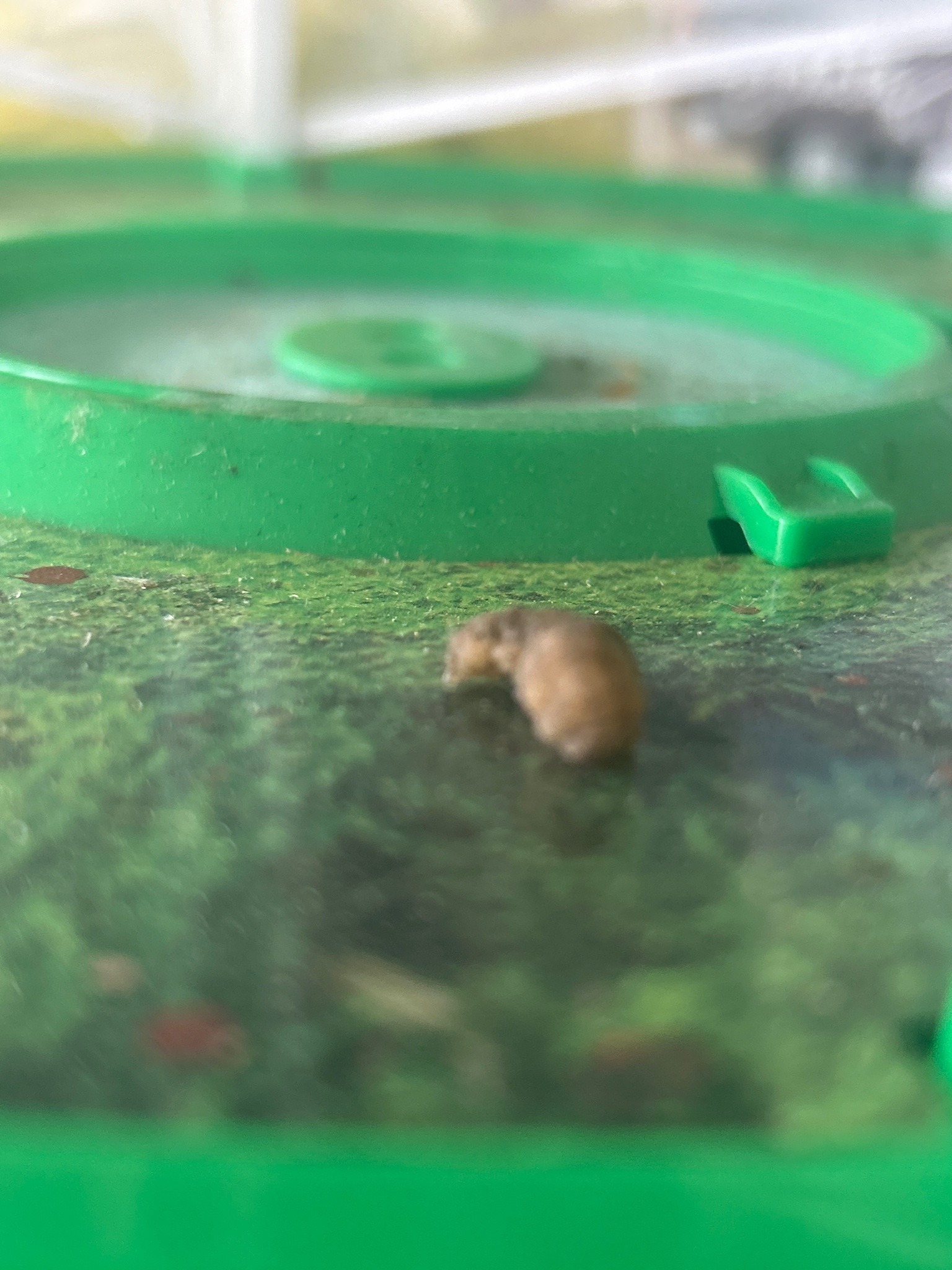
Community identification
House Fly Pupa
Musca domestica (pupal stage)
- Order & Family
- Order: Diptera, Family: Muscidae
- Size
- 6 to 8 millimeters in length
Natural Habitat
Found in warm, decaying organic matter such as manure, garbage, compost, and soil where larvae have fed before pupating.
Diet & Feeding
Non-feeding stage. The pupa undergoes complete metamorphosis inside a protective casing called a puparium.
Behavior Patterns
Immobile during this stage as tissues break down and reorganize into the adult fly. After development is complete, the adult emerges by pushing open the end of the pupal case.
Risks & Benefits
Risks include acting as a structural and sanitation indicator of potential fly infestations; adult flies can transmit pathogens and bacteria. Benefits include serving as a food source for insectivorous animals in natural ecosystems.