
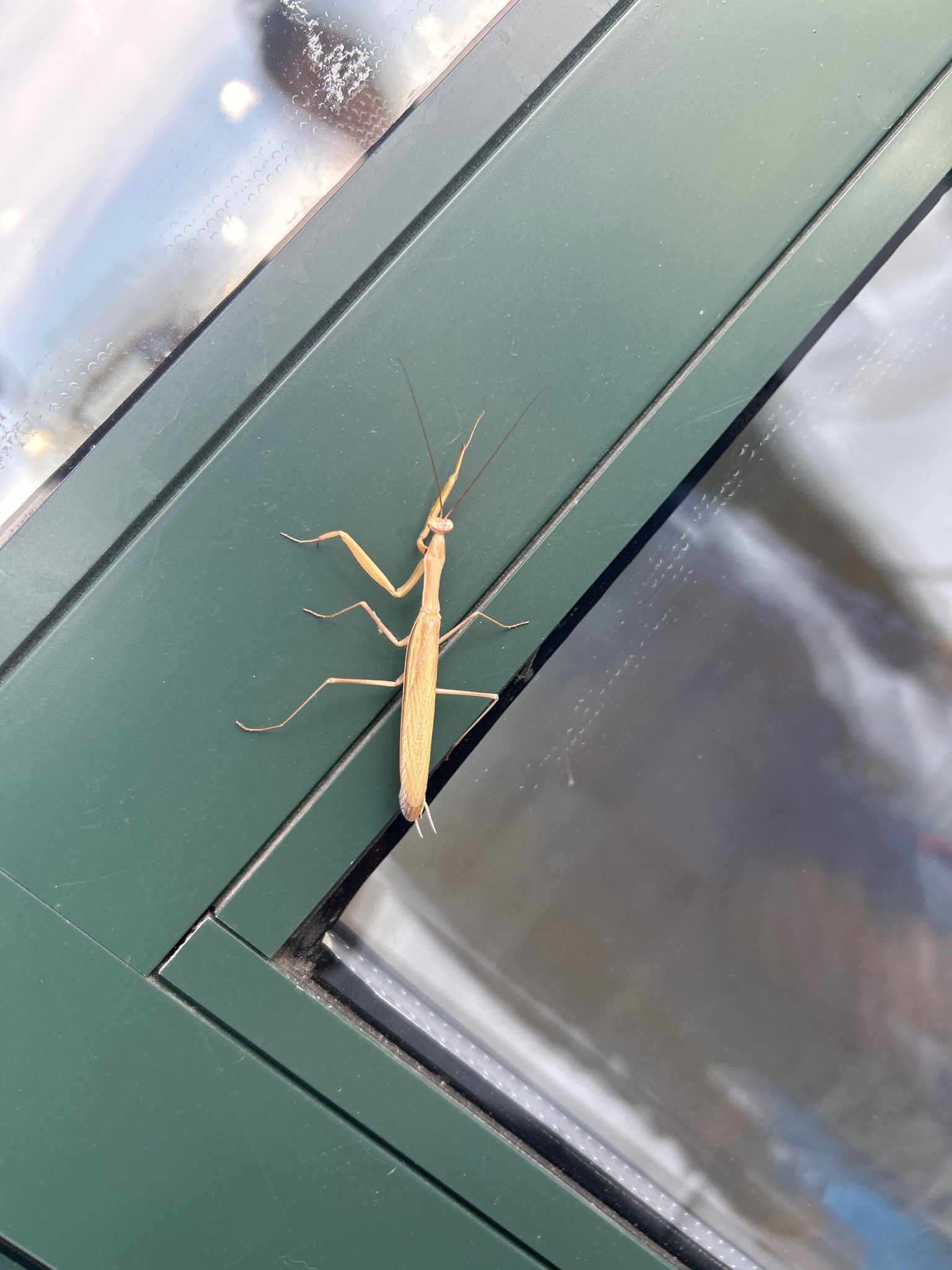
Community identification
Chinese mantis
Tenodera sinensis
- Order & Family
- Mantodea; Mantidae
- Size
- Typically 7–10 cm (2.8–4 in) as adults, with females larger than males.
Natural Habitat
Vegetation, gardens, woodland edges, and structures near outdoor lights across much of North America; native to East Asia and introduced elsewhere.
Diet & Feeding
A carnivorous ambush predator that seizes insects, spiders, and other arthropods with spined, grasping forelegs; large adults may take small vertebrates.
Behavior Patterns
Usually solitary and motionless, relying on camouflage before striking. It molts several times, mates in late summer or fall, and lays a foamy egg case (ootheca) on plants or structures.
Risks & Benefits
Generally harmless to people and does not damage buildings. It benefits gardens by eating pests, though it is a generalist and also consumes native bees, butterflies, and other beneficial insects.