
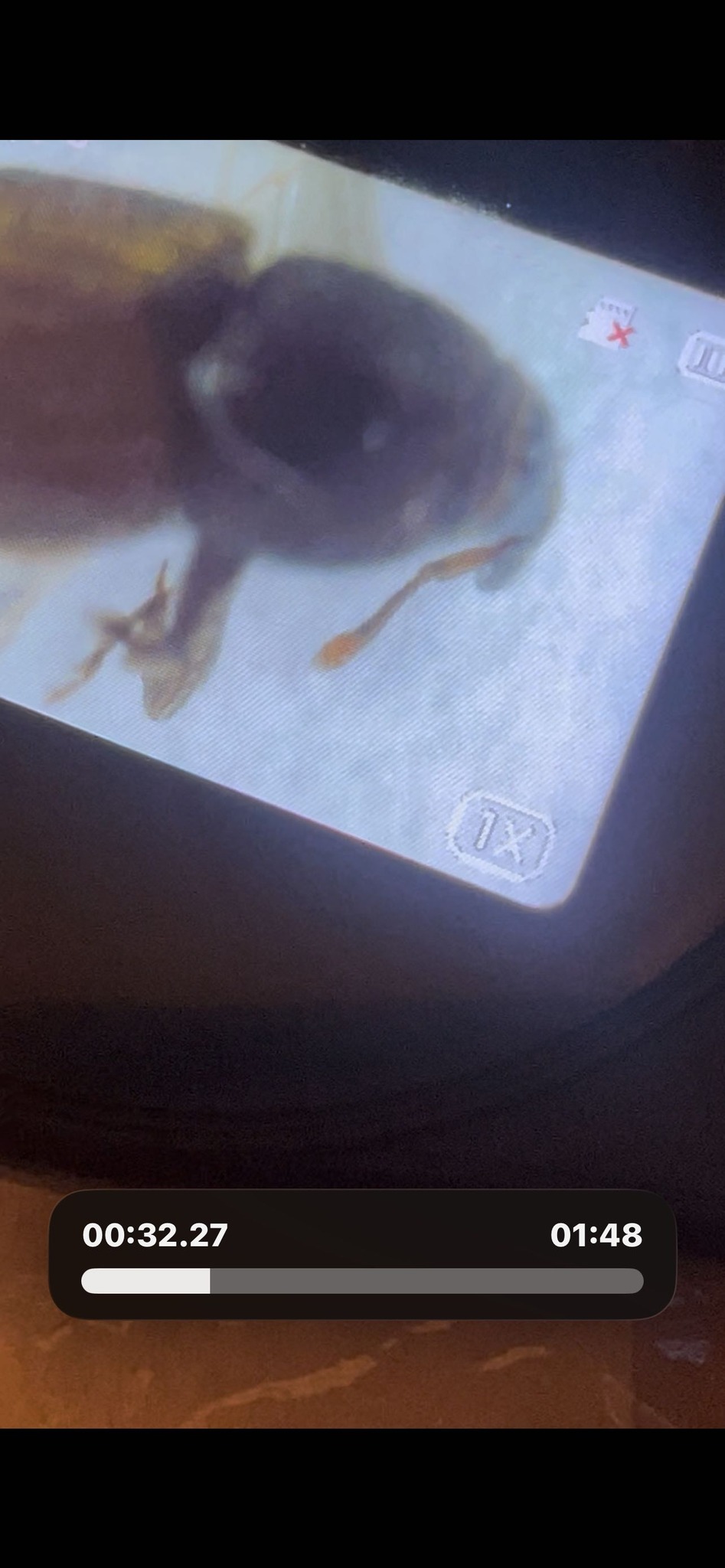
Community identification
Bumblebee (likely a worker)
Bombus sp.
- Order & Family
- Hymenoptera; Apidae
- Size
- Workers commonly measure about 8–18 mm long, depending on species and caste.
Natural Habitat
Meadows, gardens, woodland edges, and other flower-rich areas; nests occur underground, in cavities, or among dense vegetation.
Diet & Feeding
Adults feed mainly on nectar and collect pollen to provision larvae. They are important pollinators, using rapid wing vibrations to release pollen from some flowers.
Behavior Patterns
Usually social and colony-forming, with queens overwintering and founding colonies in spring. Workers forage during daylight and may defend the nest if disturbed.
Risks & Benefits
They are generally nonaggressive but can sting repeatedly when handled or when their nest is threatened. Bumblebees provide valuable pollination for wild plants and crops; the image is too blurred for species-level identification.