
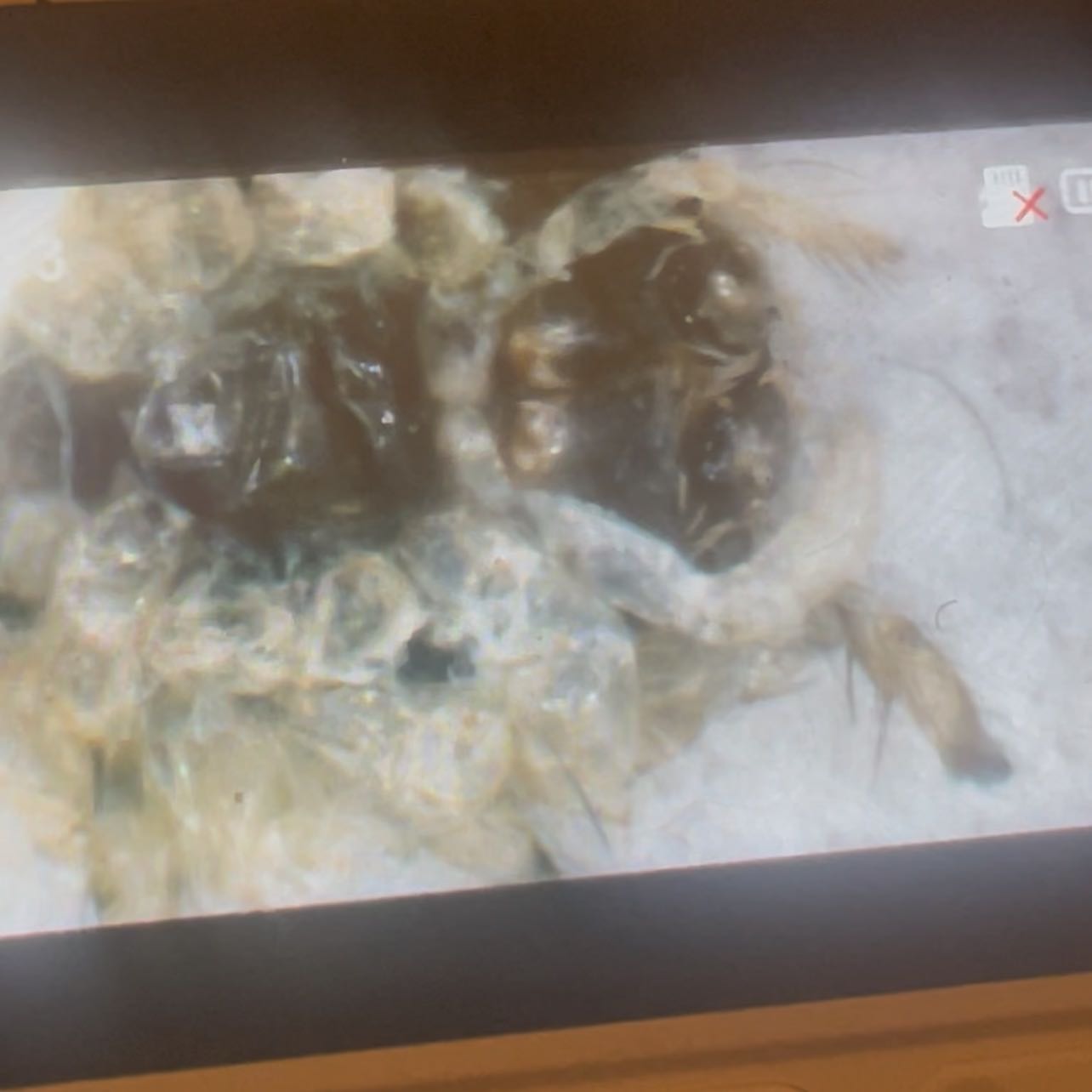
Community identification
Bed bug (likely, possibly a shed/exuvia)
Cimex lectularius
- Order & Family
- Hemiptera; Cimicidae
- Size
- Adults are about 4–7 mm long; nymphs are smaller and pale. The image is blurry, so species-level identification is not certain.
Natural Habitat
Mattresses, bed frames, upholstered furniture, cracks, and other sheltered indoor sites near sleeping hosts.
Diet & Feeding
Feeds primarily on blood, usually human blood, using piercing-sucking mouthparts. It may feed on other warm-blooded animals when necessary.
Behavior Patterns
Nocturnal and attracted to warmth, carbon dioxide, and host odors; it hides during daylight. Females lay eggs in crevices, and infestations spread by hitchhiking in luggage, clothing, and furniture.
Risks & Benefits
Bites can cause itching, allergic reactions, and sleep disruption, but bed bugs are not established major disease transmitters. They provide little meaningful ecological benefit indoors.