
Community identification
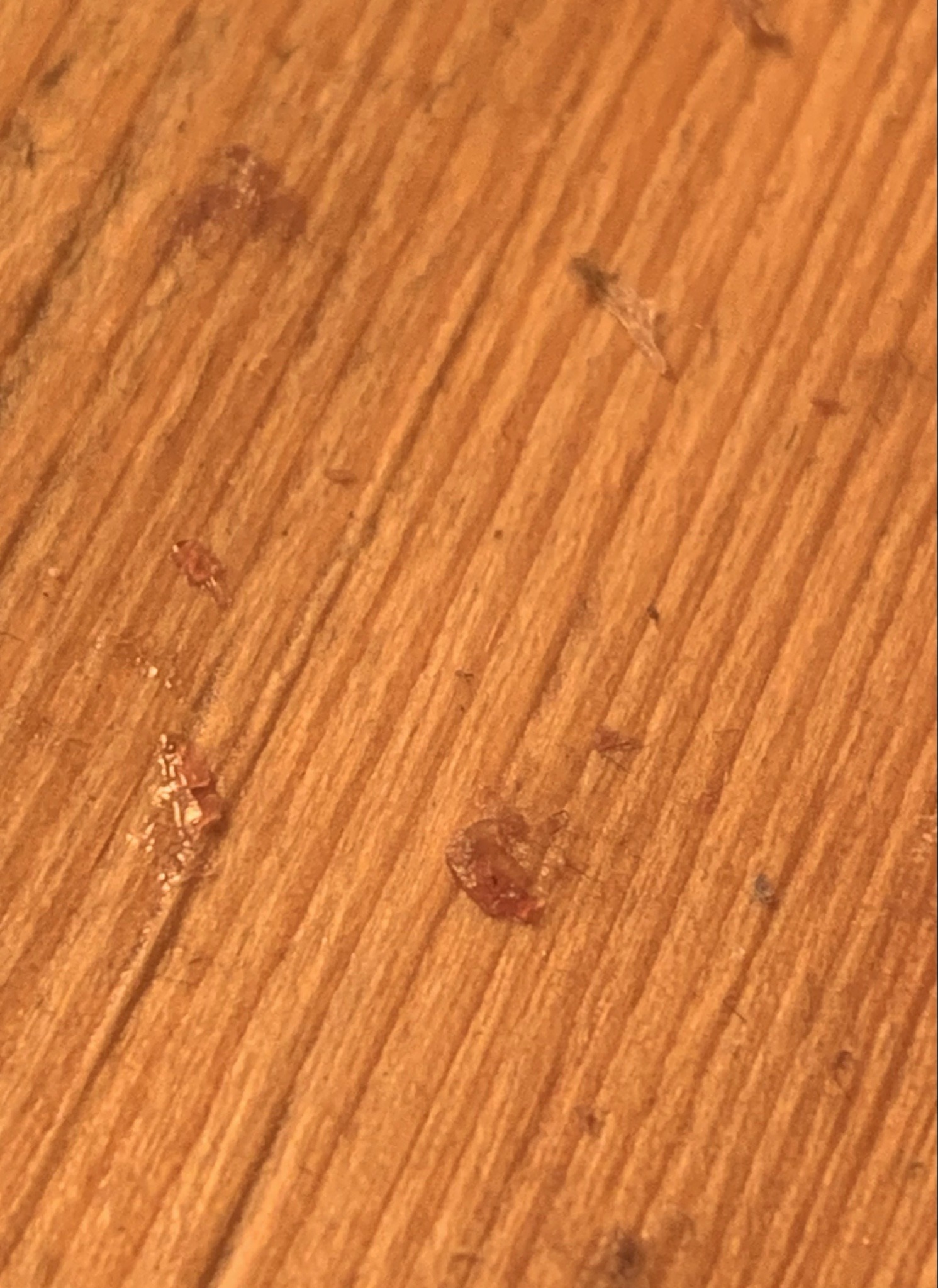
Bed bug (likely, with shed skins and fecal spotting)
Cimex lectularius
- Order & Family
- Hemiptera; Cimicidae
- Size
- Adults are about 4–7 mm long; nymphs are smaller and pale, becoming reddish after feeding.
Natural Habitat
Mattresses, bed frames, upholstered furniture, floor cracks, and other sheltered indoor crevices near sleeping areas.
Diet & Feeding
Feeds exclusively on blood, primarily from humans and occasionally other warm-blooded animals; it typically feeds at night.
Behavior Patterns
Nocturnal, wingless, and adept at hiding; it can survive months without feeding and spreads by hitchhiking in luggage, clothing, and furnishings. The pictured dark stains and pale cast skins are consistent with an infestation, though the insect itself is not clearly resolved.
Risks & Benefits
Bites can cause itching, inflammation, and allergic reactions, but bed bugs are not established vectors of disease. They provide little meaningful ecological benefit indoors.