
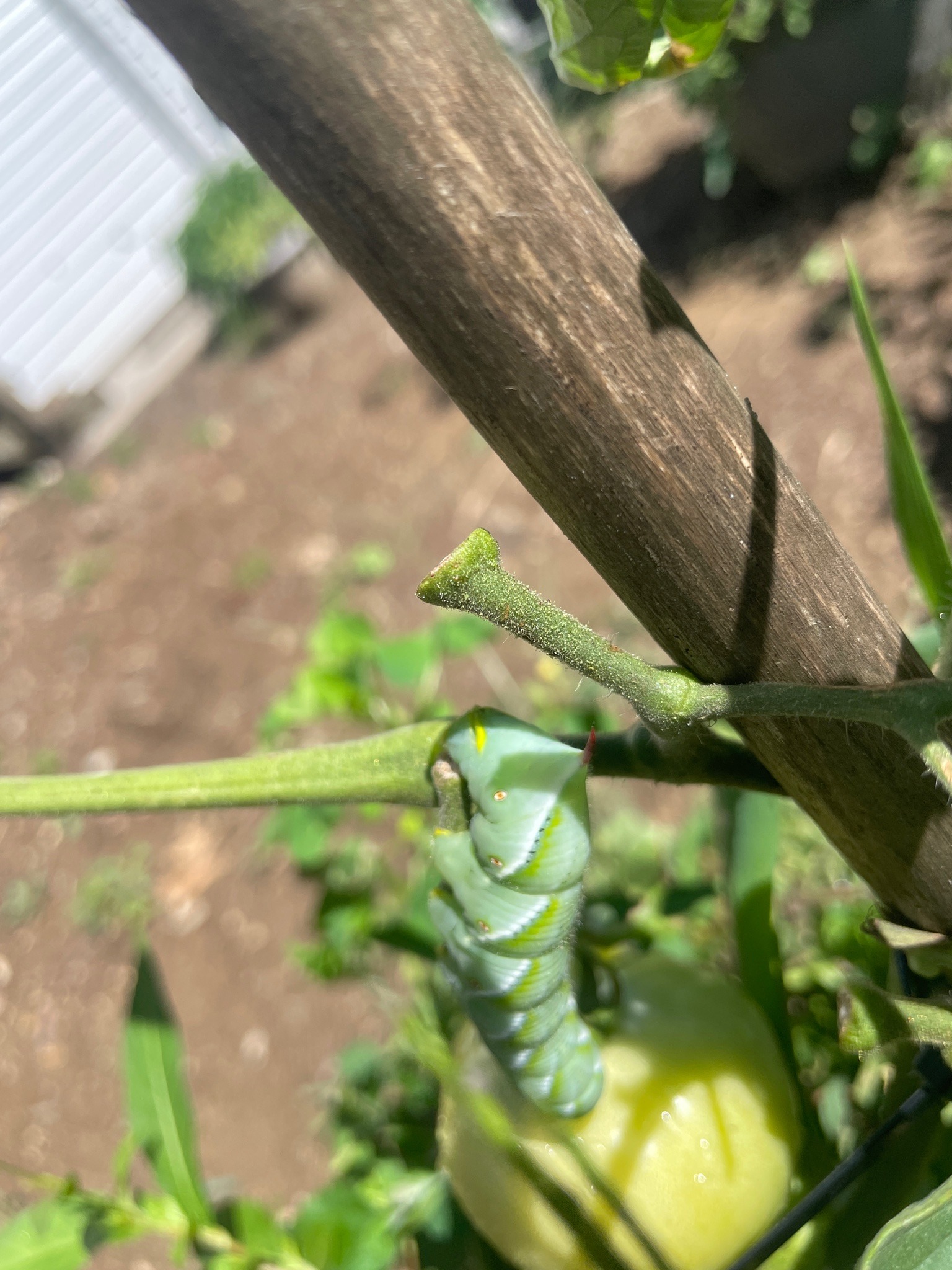
Community identification
Giant swallowtail caterpillar (possibly early instar)
Papilio cresphontes
- Order & Family
- Lepidoptera; Papilionidae
- Size
- Mature larvae reach about 5–6 cm (2–2.4 in); younger caterpillars are smaller.
Natural Habitat
Citrus trees and other members of the rue family in gardens, orchards, woodland edges, and subtropical habitats.
Diet & Feeding
Larvae chew citrus and related plants, including orange, lemon, lime, and prickly ash. Adults drink flower nectar.
Behavior Patterns
The caterpillar commonly rests along stems and resembles bird droppings when young; later stages become green and mimic leaves. When threatened, it everts a forked, foul-smelling osmeterium behind the head.
Risks & Benefits
It is harmless to people and does not sting or bite. Larvae can defoliate citrus shoots, while adults are important pollinators and contribute to food webs.